

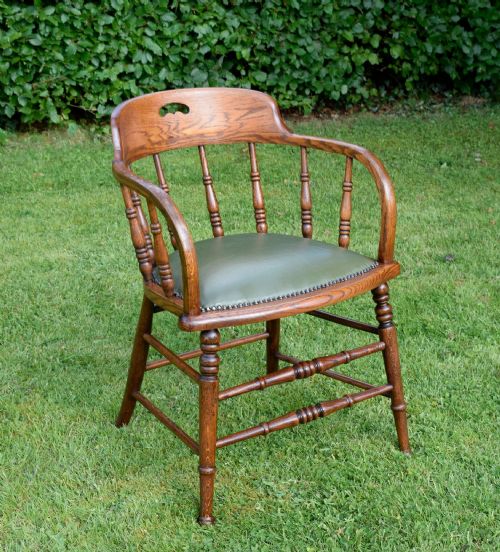


20th Century Oak Chairs
20th century oak chairs span utilitarian swivel seats to sturdy Edwardian dining sets, offering robust timber construction suited to daily use.
20th Century Oak Chairs
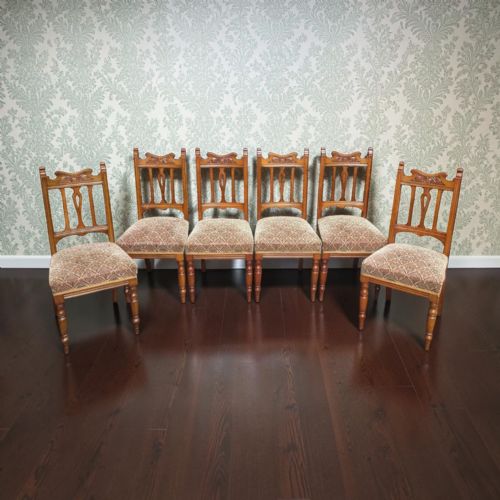
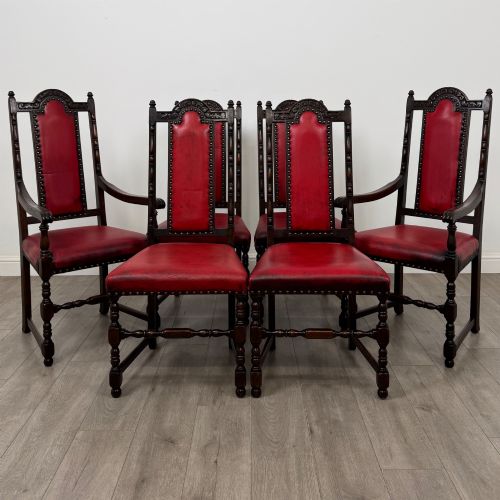
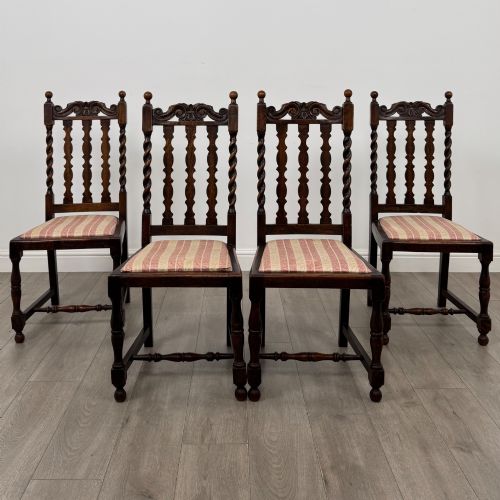
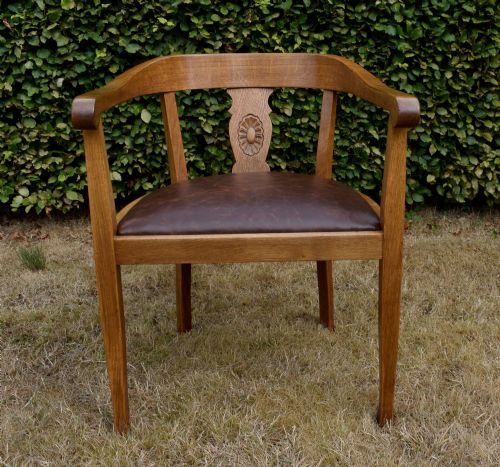
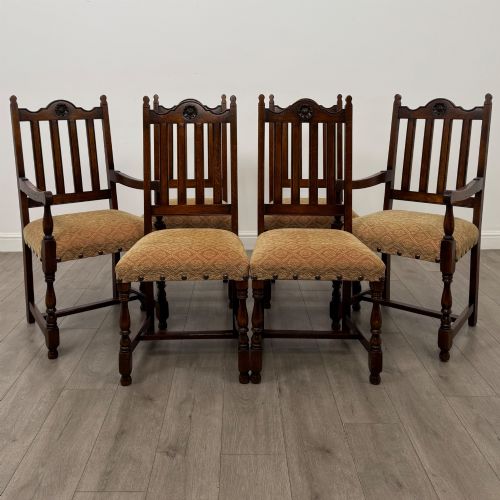
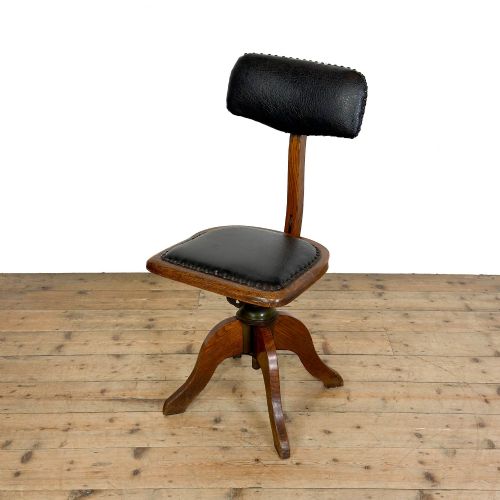
These 20th century oak chairs encompass a diverse range of forms, from formal dining sets in Edwardian and Jacobean Revival styles to sturdy office, desk, and industrial workshop seating. Buyers encounter everything from country kitchen armchairs and ladder-back models to specialised items like drafting seats, campaign chairs, and monks seats.
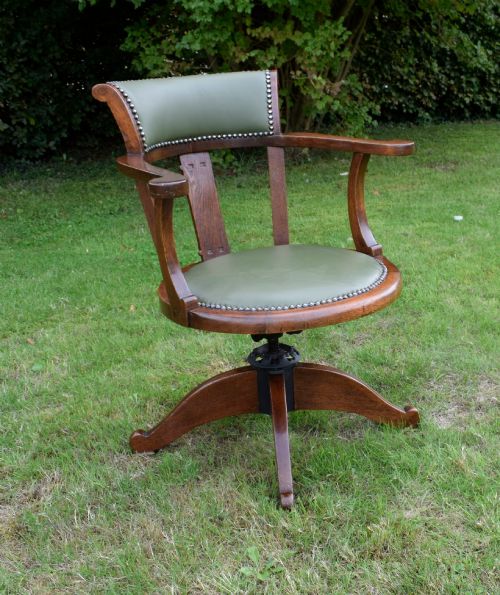
Dining chairs appear frequently, often in matching sets of four, six, or eight, alongside swivel desk chairs fitted with brass hardware and cast iron mechanisms. Regional variants such as Scottish School fireside designs and pieces from makers like Wheelers of Arncroach or Simpoles of Manchester also emerge within the selection.
Simpler vernacular seating shares space with revivalist decorative dining chairs featuring barley twist legs, bobbin turnings, or carved details. Whether intended for a boardroom, a domestic dining table, or an industrial desk, these chairs rely on heavy hardwood frames built to withstand decades of regular handling.
How they were made
Construction centres on solid timber frames, predominantly utilising oak combined with secondary woods like beech for internal structural components. Joinery relies on traditional methods such as mortise and tenon joints, often reinforced with turned spindles, barley twists, or bobbin frames.
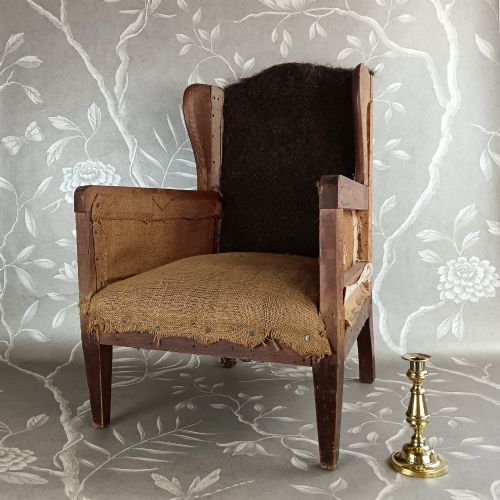
Upholstered elements incorporate leather, fabric, and horsehair stuffing secured with tacks, while swivel and adjustable desk chairs integrate functional brass and cast iron mechanisms. Industrial workshop and office models frequently pair wooden seats with iron supports, castors, and mechanical height adjusters.
Listings feature oak, beech, leather, and cast iron across Edwardian, Arts and Crafts, and industrial forms.
What varies in quality
Quality reveals itself in the selection of the timber grain, the tightness of the joinery, and the integrity of the original mechanical components found on swivel and industrial seating. Examples featuring hand-carved details, matched timber sets, and substantial framing sit higher in the hierarchy than utilitarian commercial batch productions.
The survival of original leather upholstery, patinated brass fittings, and maker stamps distinguishes finer workshop pieces from standard factory output. Consistency across a matching dining set dictates overall desirability, as uniform colour and unaltered turnings preserve the integrity of the original suite.
Wheelers of Arncroach·Simpoles of Manchester·Evertaut
The 20th Century Oak Chairs Glossary
- Barley twist
- A decorative turning technique resembling a spiral rope, frequently seen on the legs and stretchers of Edwardian dining chairs.
- Bobbin turned
- A style of furniture turning that creates a series of rounded, spool-like shapes along chair legs and framing timbers.
- Monks seat
- A convertible piece of furniture featuring a hinged back that folds down to form a table top over a box seat base.
- Ladder back
- A chair back construction formed by a series of horizontal wooden slats or rails set between two vertical uprights.
- Swivel desk chair
- A rotating office seat mounted on a central pivot, often incorporating adjustable height mechanisms and cast iron or brass hardware.
20th Century Oak Chairs: Frequently Asked Questions
How do I date a 20th century oak chair?
Dating relies on identifying stylistic markers like Edwardian proportions, Arts and Crafts simplicity, or early industrial iron mechanisms. Construction methods, such as the transition from handmade joinery to early factory production, also help narrow down the decade of manufacture.
Examining underlying wear patterns, timber finishes, and any maker stamps or workshop labels provides further chronological context. Comparing specific details like barley twist turnings against documented period examples ensures accurate attribution.
Are these chairs suitable for daily dining?
Most oak dining chairs from this era were built for heavy domestic use and remain structurally robust for everyday seating. Their solid timber frames and traditional joinery provide the stability required for regular mealtime gatherings.
Buyers should verify that joints remain tight and that any upholstered pads offer adequate support. Routine care keeps the hardwood conditioned and prevents the timber from drying out over time.
What is the difference between a desk chair and a side chair?
Desk chairs are engineered for active office environments, typically featuring swivel mechanisms, adjustable heights, and sometimes castors or armrests for mobility. They prioritise ergonomic support during prolonged periods of work.
Side chairs are stationary, armless seats designed primarily for dining tables or occasional placement around a room. Their lighter frames and fixed postures suit formal dining rather than extended desk use.
How should I care for antique oak furniture?
Oak benefits from occasional application of quality beeswax to nourish the timber and maintain its natural lustre. Avoiding direct sunlight and sudden temperature shifts prevents the wood from warping or splitting.
Cleaning should involve a soft, dry cloth to remove dust without abrasive chemicals. Keeping upholstery clean and checking structural fixings periodically preserves the long-term integrity of the piece.