


Black Upholstered Chairs
Black upholstered chairs bring a dark, grounded presence to a room, spanning formal dining sets and low fireside armchairs.
Black Upholstered Chairs
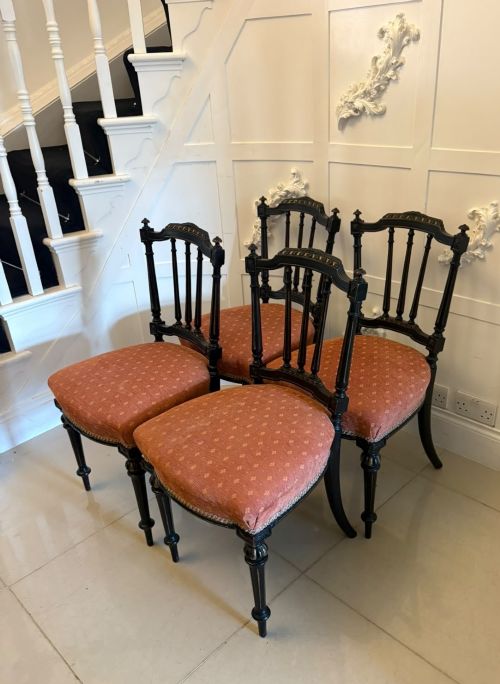
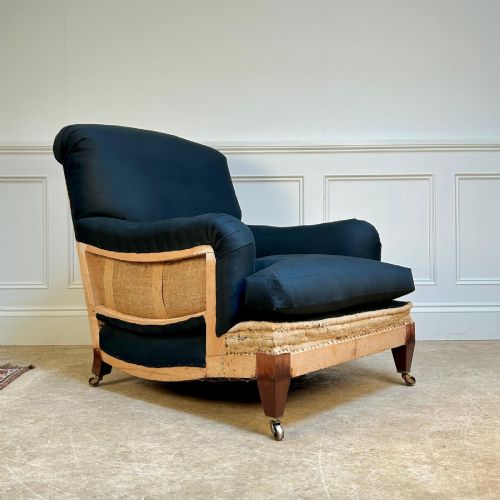
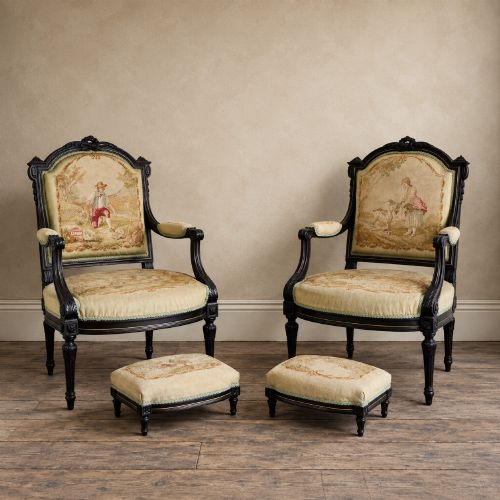
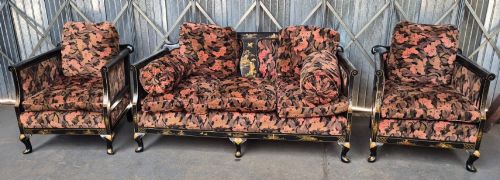
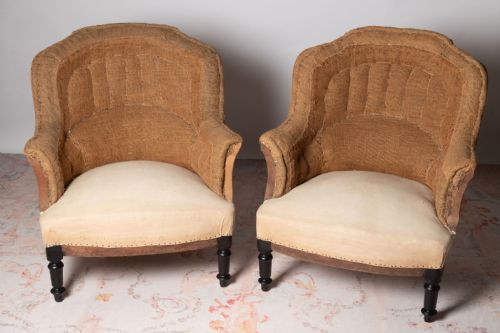
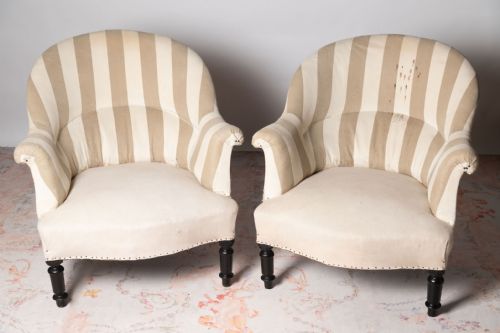
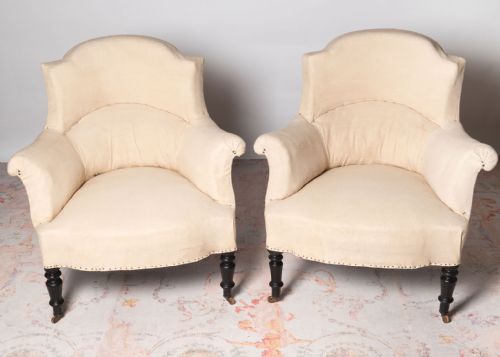
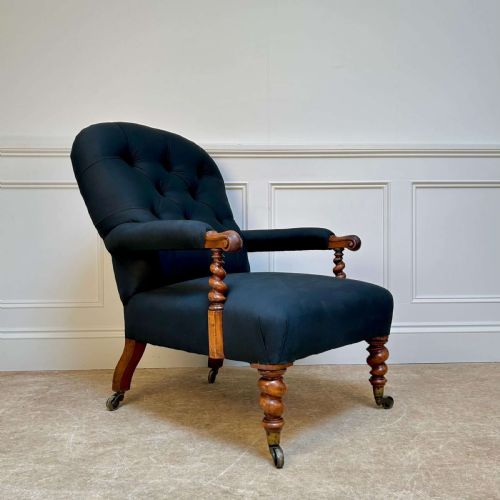
When searching for black upholstered chairs, you encounter a wide selection ranging from Victorian library armchairs to matched sets of dining chairs. The pieces on this page lean heavily toward nineteenth-century ebonised wood frames and dark leather or fabric coverings.
Dining chairs and sets of carvers appear frequently alongside single salon armchairs, slipper chairs, and low nursing chairs. These items bridge multiple stylistic revivals, including Regency, Gothic, and Aesthetic movements.
Origins vary from English workshops to French provincial makers, offering everything from formal mahogany dining suites to intimate boudoir seating. The underlying framework dictates the piece, whether constructed as a sturdy library seat or a lighter decorative bedroom chair.
Materials and Construction
Maker workshops relied on solid hardwoods like mahogany, walnut, oak, and beech, often treated with ebonising varnish to achieve a dense black finish. Gilt highlights and brass studs frequently accent these dark frames.
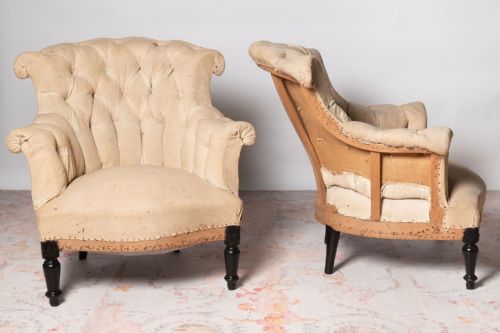
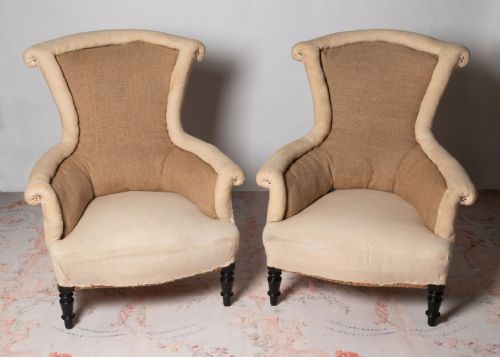
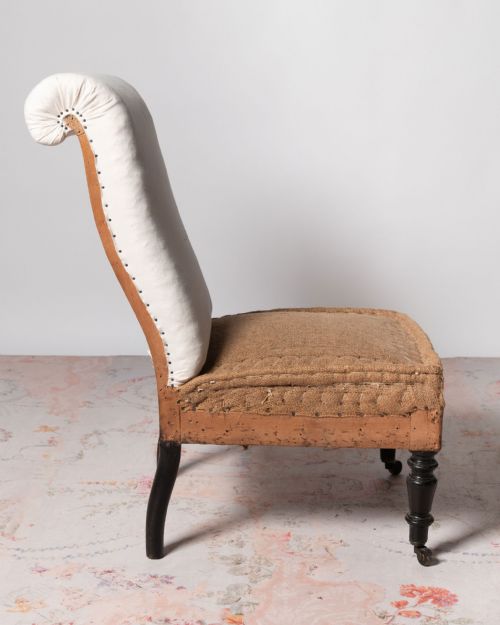
Upholstery techniques combined traditional stuffing materials such as hessian, horsehair, and calico beneath top layers of leather, silk, or heavy fabric. Frame construction involved mortise and tenon joints, sometimes reinforced with turned or faux bamboo detailing.
One extraordinary nineteenth-century armchair here is constructed entirely from stags' antlers, bringing deep forest drama indoors.
Assessing Quality
The distinction between ordinary and superior pieces rests on the crispness of the timber carving and the integrity of the frame. Ebonised finishes applied with depth and polish outlast simple painted surfaces.
Upholstery quality shows in the hand-stitched edge rolls and the retention of supportive tension beneath the leather or fabric. Original frames retain their structural rigidity without excessive movement at the joints.
Hindley & Sons·Gillows
The Black Upholstered Chairs Glossary
- Ebonised
- Wood stained or painted to imitate ebony. This dark finish gained immense popularity during the Victorian and Aesthetic periods.
- Carver chair
- An armchair designed to match a set of dining chairs, typically positioned at the table ends. These feature supportive armrests integrated into the frame.
- Prie dieu
- A low devotional chair featuring an elevated backrest designed for kneeling prayer. Victorian examples often display rich upholstery and turned woodwork.
- Slipper chair
- A low-seated bedroom chair designed for comfort while dressing. These lack armrests to accommodate bulky nineteenth-century garments.
- Faux bamboo
- Wood turned and carved to resemble natural bamboo stalks. This decorative technique appears frequently in Regency and Victorian seating.
Black Upholstered Chairs: Frequently Asked Questions
How do I date these chairs?
Dating relies on stylistic clues, timber choice, and construction methods visible in the frame and under-upholstery. Nineteenth-century pieces often show hand-tooling marks and period-specific revival motifs.
Comparing secondary woods and joining techniques helps narrow down the decade of manufacture. Consulting makers' stamps or numbers underneath adds precision.
Are these chairs suitable for daily dining?
Many dining sets and carvers remain fully functional for everyday use. Robust hardwood frames support modern seating demands when structurally sound.
Checking joint stability ensures the chairs withstand regular sitting. Professional upholstery restoration preserves internal support without altering external appearance.
How should I care for ebonised wood?
Ebonised surfaces require gentle dusting with a dry microfibre cloth to prevent scratching the dark finish. Avoid harsh chemical cleaners that strip the polished surface.
Applying occasional wax preserves the sheen on antique timber. Direct sunlight should be avoided to prevent fading the deep black tone.
What is an Aesthetic movement chair?
Aesthetic movement seating emphasises simplicity, form, and artistic refinement over heavy historical revivalism. Ebonised finishes with subtle gilt detailing characterise this late nineteenth-century style.
These chairs often feature slender proportions and flat-patterned textiles. They reflect a deliberate departure from mainstream Victorian ornamentation.