


Black Bracket Clock
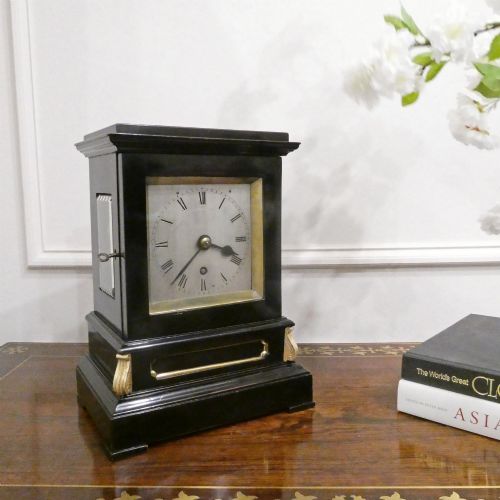
A black bracket clock sits firmly on a table or mantel, combining dark timber or slate with precision movement.
Black Bracket Clock
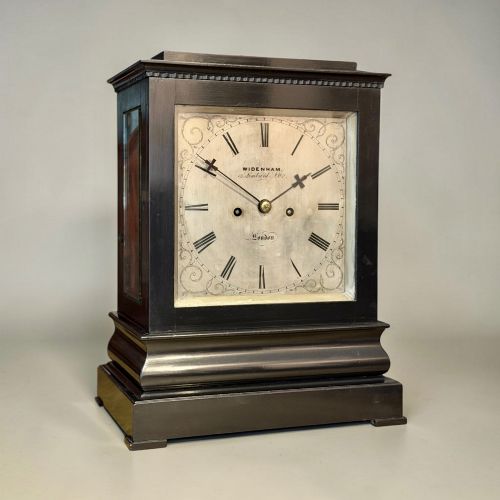
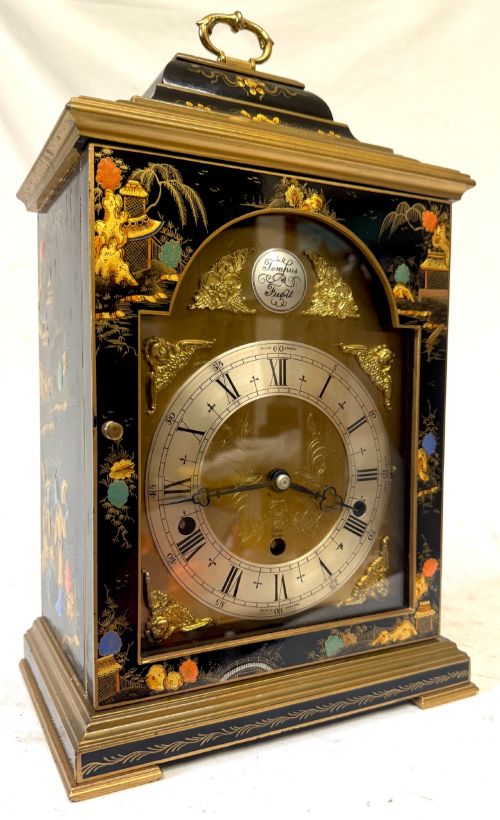
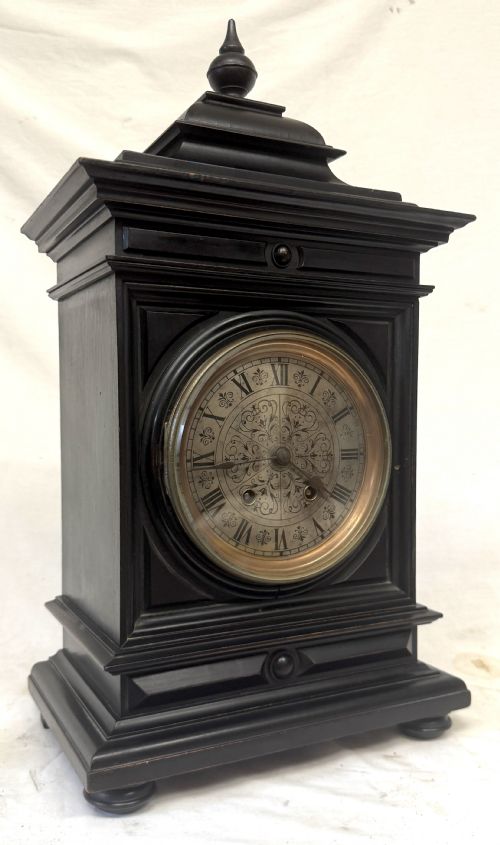
A black bracket clock is a portable timepiece housed in a dark case made from ebonised wood, ebony, or black slate, often featuring a brass dial or ormolu mounts. These clocks span periods from the 17th century through the Victorian era and into the 20th century, appearing in forms such as single fusee library clocks, musical three-train models, and balloon bracket cases.
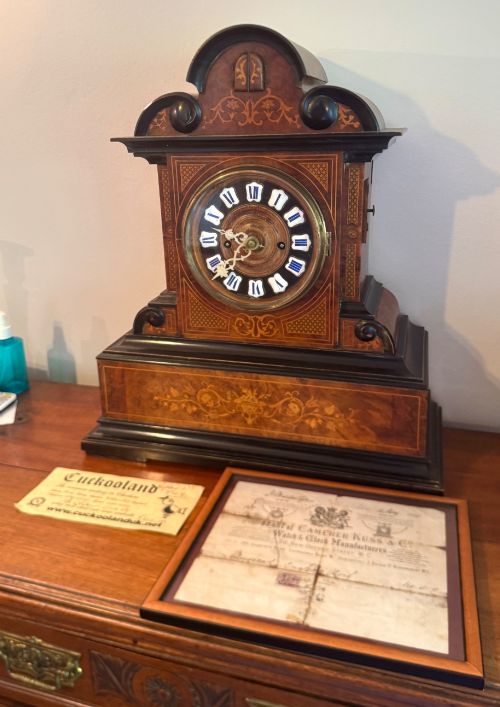
Buyers seeking this phrase encounter various regional interpretations and styles, including English examples by London makers, French movements, and German Black Forest walnut or stained pine designs. The physical format ranges from compact tabletop timepieces to massive musical bracket clocks with multiple bells and chimes.
Materials and construction
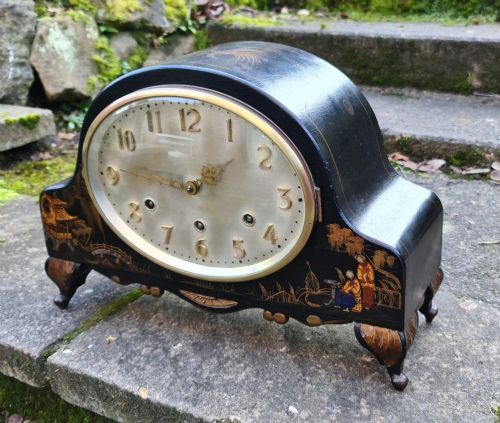
Cases rely on ebonised wood, solid ebony, black slate, or lacquered surfaces decorated with Chinoiserie motifs, paired with glass panels to protect the dial. Metal components include brass for movements, silvered dials, gilded brass accents, and ormolu or bronze mounts.
Internal mechanisms utilise fusee movements, verge escapements, or pendulum systems, with higher-end pieces incorporating quarter-striking trains, musical cylinders, or multiple bells.
Several clocks keep time alongside automated moving figures, musical chimes playing across eight bells, and the occasional cuckoo.
Evaluating craftsmanship and execution
Quality rests in the crispness of the ebonising, the depth of the lacquer work, and the precision of the brass or ormolu mounts fitted to the dark case. Superior examples display refined dial engraving, balanced proportions, and intricate movement complications such as musical chimes or quarter-repeating mechanisms.
The integrity of the original case timbers, the retention of signed plates on the movement, and the harmony between the dial and the dark housing separate standard production pieces from masterwork bracket clocks.
Widenham of London·Elliott London·Lenzkirch·John Witherston of Hereford·William Speakman·Henry Jones·Des Granges of London·Phillips Brothers·Thomas A Paris·Louis Recordon·Richard Rooker·Payne and Co·Grimaldi and Johnson·Somersall London·Andrew Marchant·Berguer·William Withers·John Fletcher·Barraud and Lunds·John Taylor·William Smith·Percy Webster·John Leroux·Desbois and Wheeler
The Black Bracket Clock Glossary
- Fusee
- A conical pulley used in spring-driven clocks to equalise the torque of the mainspring as it unwinds. This mechanism helps maintain consistent timekeeping throughout the power reserve.
- Ebonised
- Wood treated with a dark stain or finish to imitate genuine ebony. It provides a deep black surface popular in British and continental case design.
- Verge escapement
- An early type of clock escapement using a crown wheel and a vertical rod with pallets. It produces a distinct ticking rhythm in antique movements.
- Ormolu
- Gilded bronze used for decorative mounts on clock cases. The technique involves applying a gold-mercury amalgam to cast bronze.
- Chinoiserie
- European decorative style imitating Chinese artistic traditions. It frequently appears as painted or lacquered gold designs on black clock cases.
Black Bracket Clock: Frequently Asked Questions
Where should I place a black bracket clock?
These clocks suit sturdy surfaces like mantelpieces, sideboards, or dedicated wall brackets where their dark ebonised or slate cases contrast with lighter walls.
Ensure the location is level to keep the pendulum or balance wheel running truly without stopping.
How do I wind a fusee bracket clock?
Use the appropriate winding key inserted into the dial aperture, turning it gently until resistance stops the movement. Take care not to overwind antique mechanisms, as excessive force can snap the spring.
Move the hands only in the correct direction specified for the particular escapement type.
What is the difference between a bracket clock and a mantel clock?
Traditional bracket clocks were originally designed to sit on a matching wall bracket or table, often featuring a compact shape with a carrying handle or architectural top. Mantel clocks generally sit directly on a fireplace shelf and developed later in varied geometric and architectural stone or wood styles.
Both terms frequently overlap in modern descriptions for portable antique timepieces.
How do I care for ebonised wood and slate?
Dust the dark surfaces regularly with a soft, dry cloth to prevent grime buildup on the lacquer or polished wood. Avoid using liquid polishes or chemical cleaners that might damage delicate gilt mounts or aged finishes.
Keep the clock away from direct sunlight and heating vents to protect the timber and internal oils.