



Bevelled Table Mirror
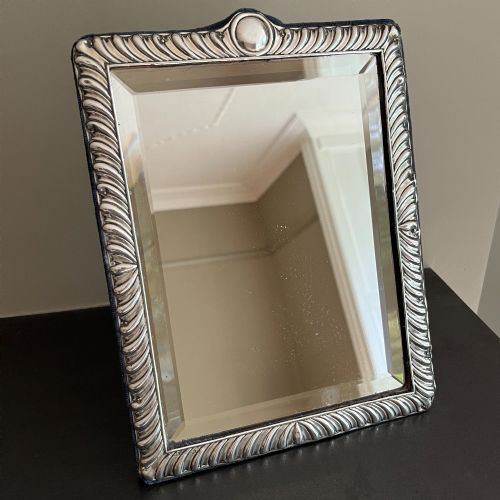
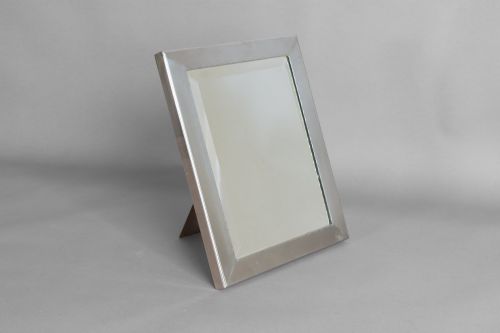
A bevelled table mirror sits on a dressing surface, catching the light across angled edges to bring depth and clarity to a room.
Bevelled Table Mirror
When you search for a bevelled table mirror, you are looking at portable looking glasses designed to sit on dressing tables, chests of drawers, and vanity units. These objects serve both a practical grooming purpose and a decorative role within domestic interiors.
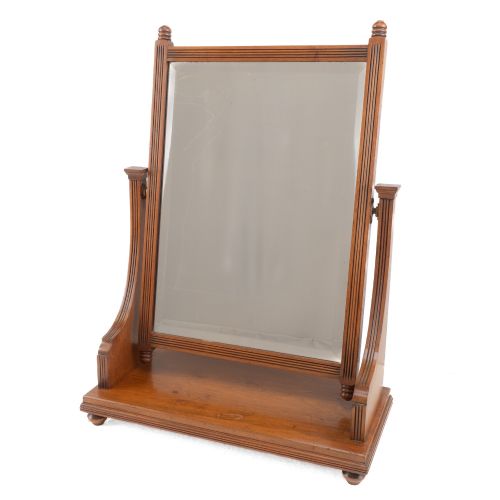
The pieces on this page span the Victorian, Edwardian, and Art Deco periods, alongside robust examples from the later nineteenth and early twentieth centuries. You will encounter forms ranging from simple swinging mahogany frames to elaborate silver triptychs and folding brass designs.
Makers utilised various object types including dressing table mirrors, vanity mirrors, and easel mirrors, often accompanied by supportive stands or velvet backs. The defining characteristic across the selection remains the distinctive slanted edge of the mirror glass.
How they were made
Makers fashioned frames from solid woods such as mahogany, satinwood, and oak, alongside cast and repoussé brass, sterling silver, and silver plate. Glass plates were cut and hand-ground at the edges to create the characteristic bevel, which softens the boundary and catches the light.
Backings frequently incorporate wooden struts, velvet linings, and brass easels to support the weight of the glass plate. Artisans applied gilding, silver plating, and intricate repoussé work to the metal mounts, while wooden frames benefited from polished finishes and delicate marquetry inlay.
Several mirrors include folding triptych wings, perfect for checking your hat from three angles simultaneously.
What varies in quality
The distinction between standard and superior pieces rests on the weight of the materials and the crispness of the framing details. Heavier gauge brass, solid hardwoods, and fully hallmarked sterling silver elevate a piece far above plated base metals and thin veneers.
The execution of the bevel on the glass plate itself indicates the level of craftsmanship involved in production. Clean, distortion-free mirror glass paired with robust hinges, pins, and tightening screws ensures the glass holds its angle securely over decades of use.
Henry Matthews
The Bevelled Table Mirror Glossary
- Bevel
- An angled edge ground along the perimeter of the mirror glass. This technique creates a prismatic border that catches and refracts ambient light.
- Strut mirror
- A looking glass supported by a hinged, folding arm attached to the rear. This allows the mirror to stand upright on a flat surface without wall fixings.
- Repoussé
- A metalworking technique where the artisan hammers the design from the reverse side to create a raised relief pattern on the front. It is frequently seen on Edwardian brass frames.
- Triptych
- A three-panel mirror featuring a central looking glass flanked by two smaller hinged wings. These movable sides permit the user to view angles from the side.
- Easel back
- A freestanding vertical support hinged to the back of the frame, functioning identically to the back of a photograph frame.
Bevelled Table Mirror: Frequently Asked Questions
How do I date a bevelled table mirror?
Examine the materials, hardware, and framing styles characteristic of specific eras like the Victorian period or the Art Deco movement. Hallmarks on silver mounts provide precise assay office dates and maker marks.
Secondary clues include the type of wood used for the carcass and the presence of original mirror plate, which often shows characteristic ageing and oxidation patterns.
Are these mirrors meant to be wall hung?
Most pieces designed as table mirrors rely on built-in easels, struts, or weighted bases to stand independently on a flat surface. Hanging them directly on a wall usually requires after-market fixings.
Using them on dressing tables or mantelpieces keeps the original structural integrity of the frame and easel mechanism intact.
What is a triptych dressing mirror?
A triptych incorporates three separate glass panels joined by hinges, allowing the outer wings to pivot inward or outward. This configuration offers multiple viewing angles for grooming.
They appear frequently in Edwardian and Art Deco designs, often mounted in brass, silver, or polished wood frames.
How do I care for antique mirror glass?
Clean the glass gently using a soft cloth and a mild, ammonia-free glass cleaner applied to the cloth rather than sprayed directly onto the surface. This prevents moisture from seeping behind the silvered backing.
Protect the surrounding wood, silver, or brass frames from excessive moisture and direct sunlight to preserve the original finishes.