




Antique Repousse Mirror
An antique repousse mirror brings tactile relief metalwork to a wall or dressing table, offering reflective depth framed in beaten designs.
Antique Repousse Mirror
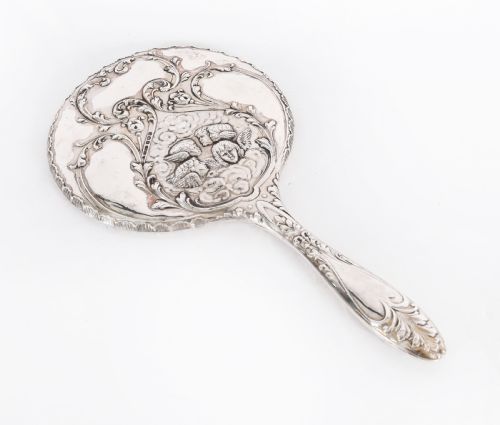
An antique repousse mirror displays raised surface patterns formed by hammering metal from the reverse side. These pieces range from compact hand-held dressing table accessories to large wall-hung frames intended for reception rooms and hallways.
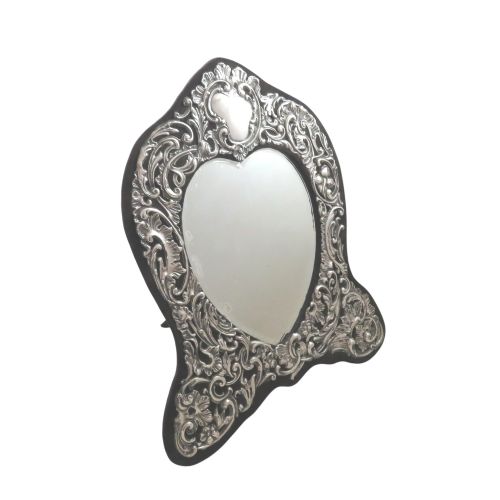
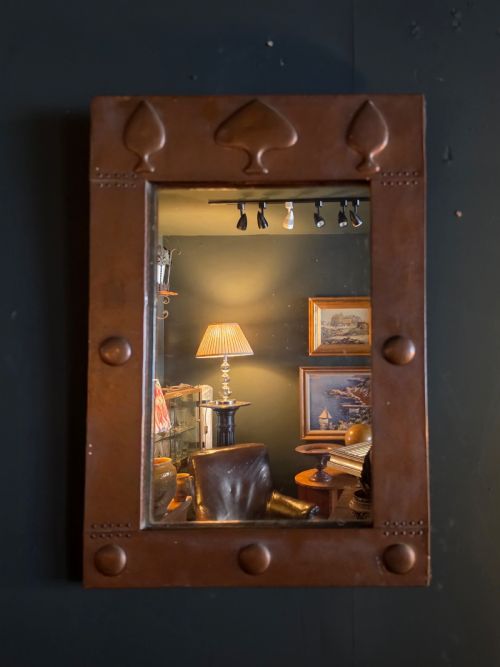
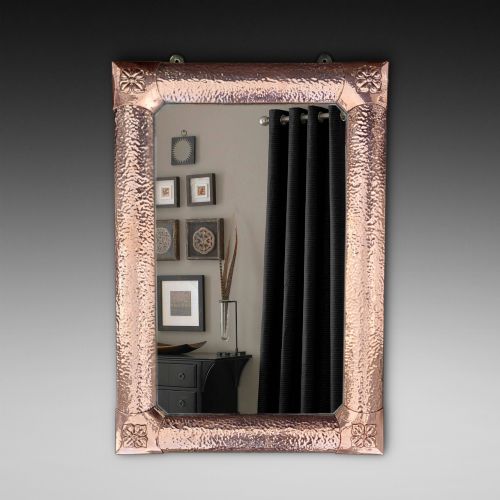
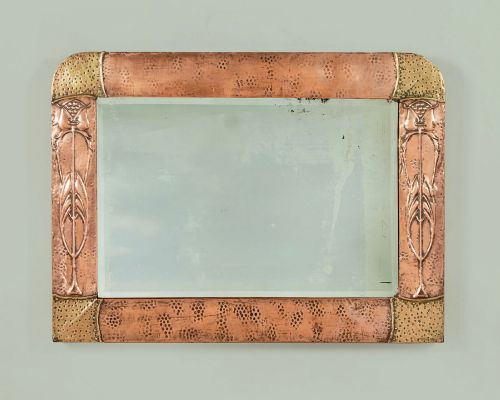
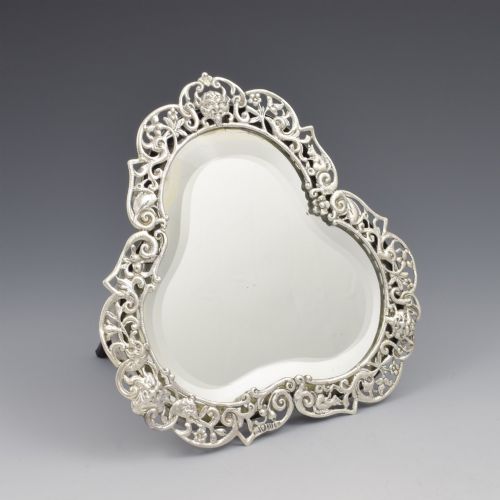
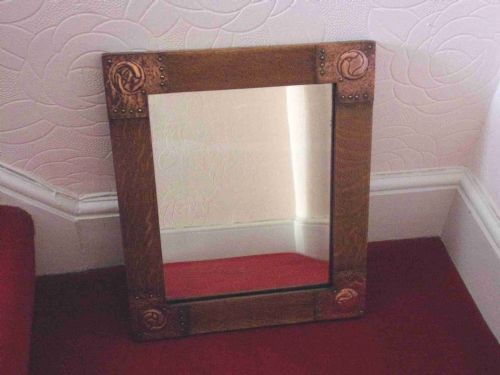
The selection on this page leans heavily toward the Arts and Crafts and Victorian periods, featuring copper, brass, and sterling silver. Wall mirrors and dressing table mirrors dominate the forms, alongside occasional easel supports and wall sconces.
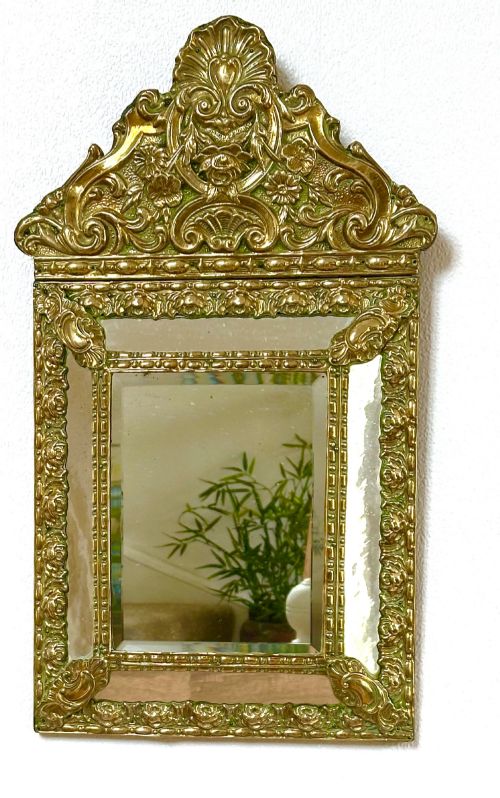
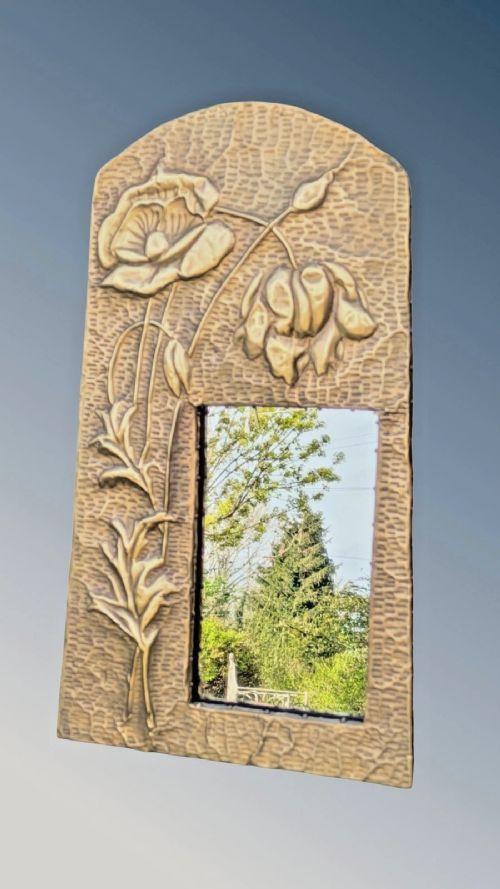
Origins stretch across British workshops, French ateliers, and Dutch traditions, capturing stylistic revivals from Flemish Renaissance to Art Nouveau. Buyers encounter everything from simple domestic brass frames to elaborate copper designs bearing stylized trees, dragons, and floral motifs.
How they were made
Craftsmen worked sheets of malleable metal such as copper, brass, and sterling silver, hammering the reverse to push designs outward in relief. This technique, known as repousse or chasing, allowed artisans to create intricate surface textures by hand.
Wooden cores or backing boards, often oak or other timbers, provided structural rigidity to support the metal frames and glass mirror plates. Velvet linings and easel stands completed the construction of tabletop and dressing table variants.
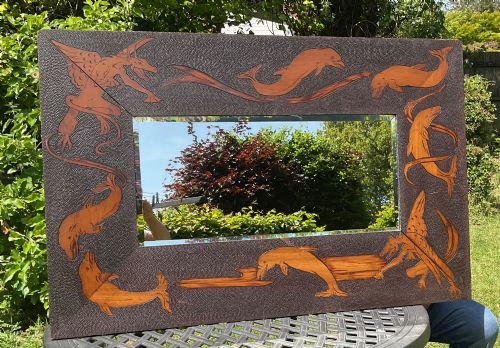
A brass wall mirror flanked by vigilant dolphins brings an unexpected marine guard to the hallway.
What varies in quality
Depth and definition in the beaten metal relief separate ordinary production from superior work. Crisp detailing in chased motifs shows the maker's control over the metal.
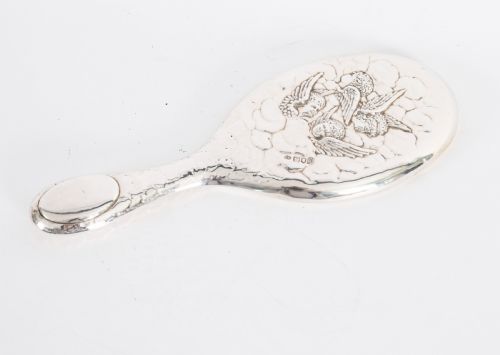
The integration of the frame with its wooden backing and original mirror glass dictates the integrity of the piece. Substantial gauge metal and clear hallmarks on silver elements indicate higher workshop standards.
Liberty & Company·Charles Boyton·S Blanckensee & Son·William Comyns
The Antique Repousse Mirror Glossary
- Repousse
- A metalworking technique where the artisan hammers sheet metal from the reverse side to create a raised design on the front. This method gives antique mirror frames their characteristic tactile depth.
- Arts and Crafts
- A design movement emphasising handcraftsmanship and simple forms over mass production. Many mirrors from this period feature beaten copper with stylized natural motifs.
- Cushion mirror
- A frame style with a rounded, padded profile that slopes inward toward the glass. These frames often use pressed brass over a wooden core.
- Easel mirror
- A tabletop dressing mirror supported by a hinged leg at the back. They allow users to adjust the viewing angle on a chest of drawers.
- Girandole
- A decorative wall mirror featuring attached candle sconces. The polished metal and glass help reflect candle flames across a room.
Antique Repousse Mirror: Frequently Asked Questions
How do I hang a heavy brass mirror?
Wall-hung repousse mirrors require secure fixings into wall studs or suitable masonry plugs. The weight of the timber backing and metal frame demands robust picture wire or brackets.
Check the integrity of the original hanging loops on the back of the frame before mounting. Older fixings may need reinforcement to support the piece safely.
How do I clean repousse copper?
Dust metal frames gently with a soft, dry brush to protect the aged patina. Avoid harsh chemical polishes that strip the historic character from recessed areas.
Preserving the dark tones in the hammered crevices maintains the visual depth of the design. Light dusting is usually sufficient for regular maintenance.
What is a dressing table mirror?
A dressing table mirror sits on top of a vanity or chest of drawers for personal grooming. These pieces often feature an easel back or a hinged frame for angle adjustment.
Examples in silver and brass frequently incorporate embossed details on the frame and backing. They serve both functional and decorative roles in a bedroom.
How do I date an antique mirror?
Examine the materials, construction methods, and any maker's marks or silver hallmarks on the frame. Sterling silver pieces often carry date letters and assay office stamps that pinpoint the year of creation.
Stylistic indicators, such as Art Nouveau curves or Arts and Crafts motifs, narrow down the period. The type of mirror glass and backing boards also offer clues to age.