

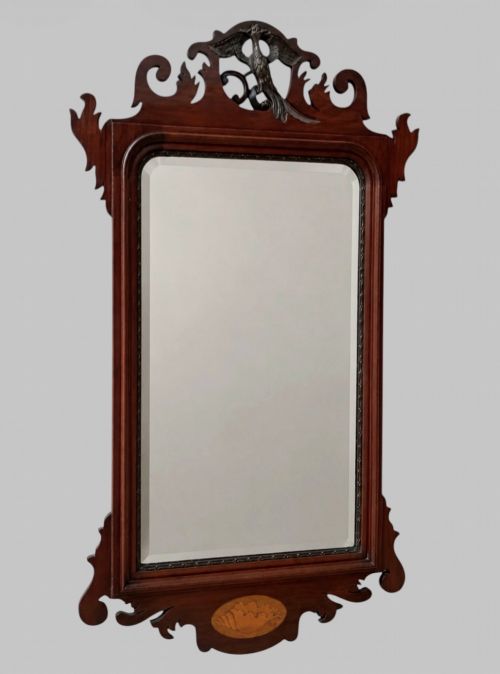


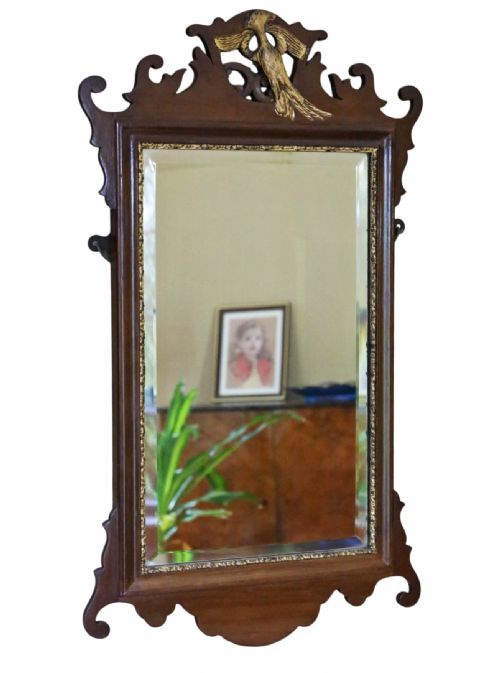

Bevelled Glass Carved Mirror
A bevelled glass carved mirror brings depth and ornate detail to a room, built from solid timbers and reflective plates designed to catch the light.
Bevelled Glass Carved Mirror
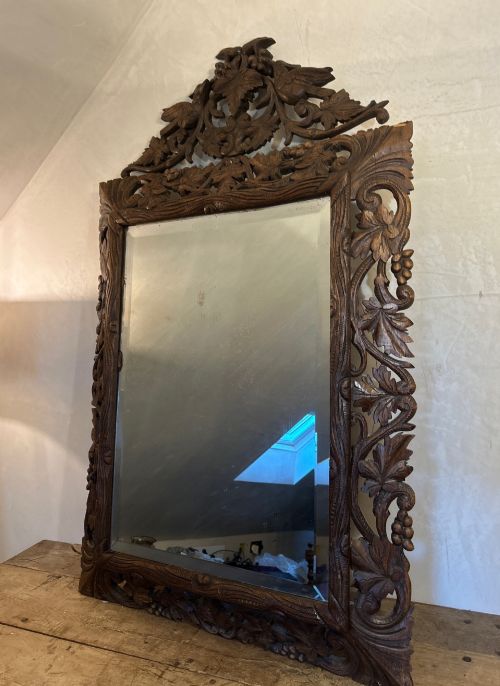
A bevelled glass carved mirror is a decorative looking glass set within a worked wooden frame, designed primarily for hanging on interior walls or placing above fireplaces. These objects emerge from periods spanning the Victorian era through the Edwardian years and into the early twentieth century, drawing on historical revivals such as Rococo and Chippendale.
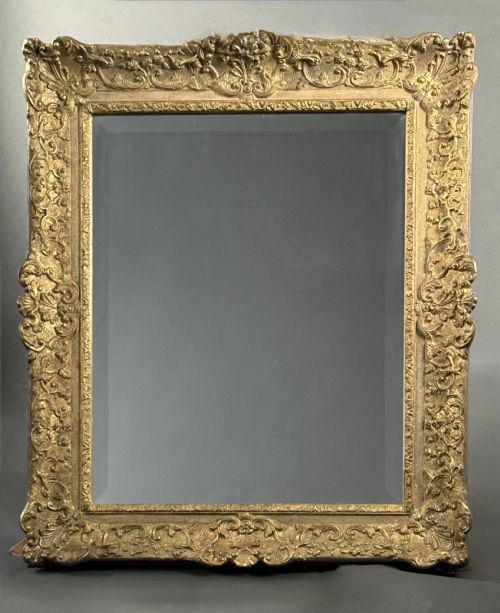
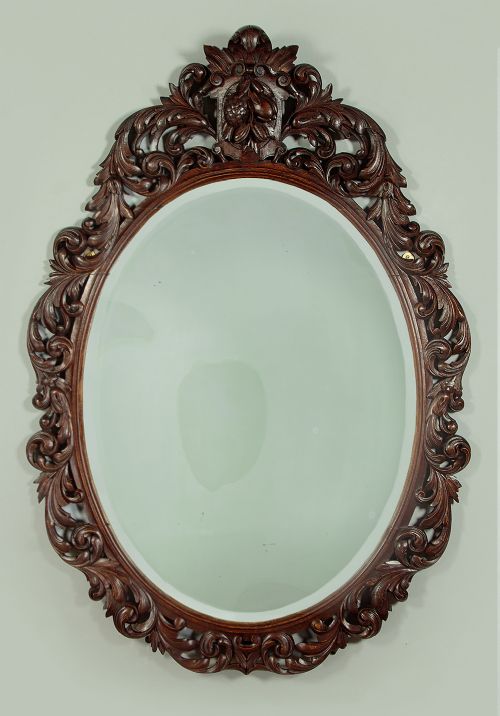
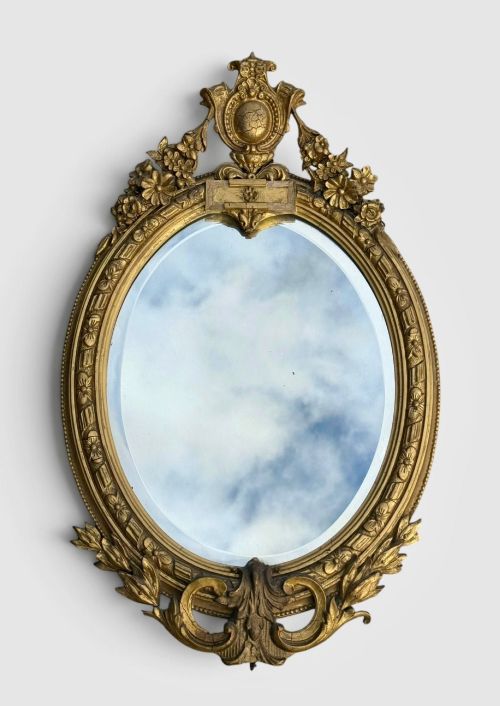
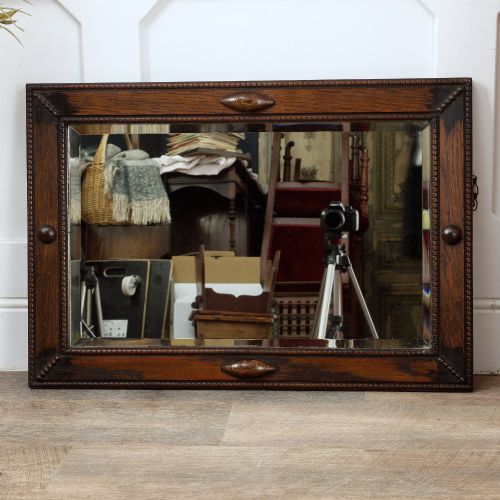
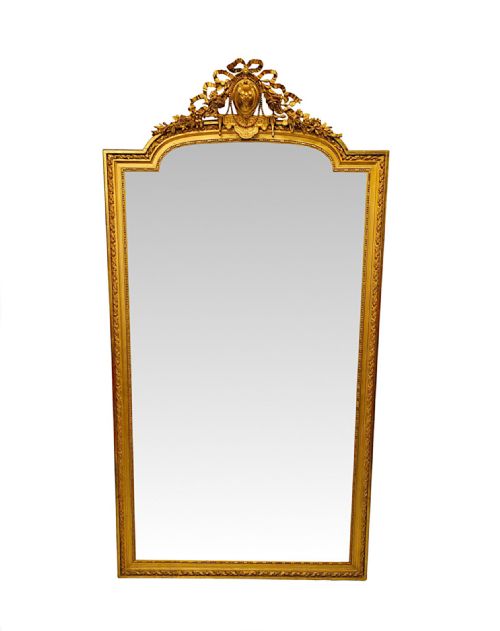
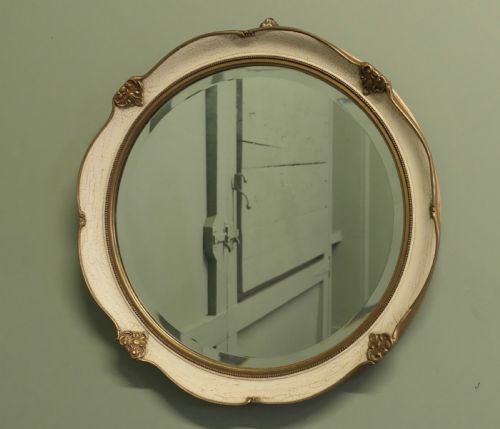
The most common examples on this page are wall mirrors and overmantel mirrors framed in carved oak or gilded gesso. Buyers frequently encounter rectangular and oval formats shaped by nineteenth-century workshops in English and French stylistic traditions.
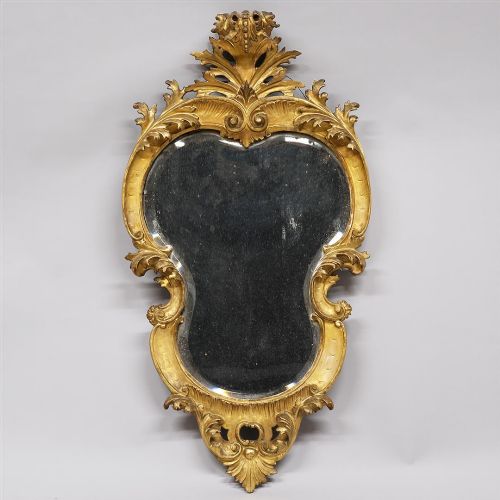
Originating as functional items for halls, dressing rooms and reception spaces, these pieces combine heavy wooden construction with angled glass edges that refract light into the room. Their forms range from simple cushion frames in dark timber to highly ornate giltwood creations covered in intricate relief decoration.
Materials and construction
Makers built these frames using traditional timber species including oak, mahogany, walnut and rosewood, often shaping the wood through deep hand-carving or steam-bending. Giltwood and gesso elements required layers of fine plaster applied over a wood base, sculpted into scrolls and floral motifs, and finished with gold leaf or paint.
The glass plates were produced with angled, bevelled perimeters created by grinding and polishing the outer edges of the reflective sheet down to a thinner margin. This edge treatment required considerable manual skill to achieve a uniform slope that catches ambient light cleanly without distorting the reflection.
Several examples include valet hooks or small ledges, serving as last look mirrors for nineteenth-century hallways.
Judging quality and execution
Quality rests in the depth and sharpness of the hand-carved woodwork, where crisp undercutting and well-defined relief separate superior frames from mechanical or shallow castings. The application of gesso and gold leaf also dictates the visual weight, with smoother burnishing and intact layers showing superior workshop standards.
The integration of the bevelled glass plate within the frame matters greatly, as thicker glass with original silvering displays better optical clarity. The cohesion between the frame's historical style, such as a French Rococo revival or a Georgian fret-cut design, and the execution of its joints determines the lasting integrity of the piece.
The Bevelled Glass Carved Mirror Glossary
- Bevelled glass
- A mirror plate with edges that are ground and polished at an angle to create a sloped, light-catching perimeter. This technique adds visual depth and framing to the reflective surface.
- Giltwood
- Timber that has been coated with a thin layer of gold leaf over a prepared gesso ground. It provides a bright, reflective metallic finish common on revival and decorative frames.
- Gesso
- A plaster-like mixture applied to wood frames to provide a smooth base for carving, gilding or painting. It allows intricate relief ornaments to be moulded directly onto the timber structure.
- Overmantel mirror
- A large horizontal mirror designed specifically to hang on the wall directly above a fireplace mantelpiece. These pieces often anchor the decorative scheme of a principal reception room.
- Pier mirror
- A tall, narrow looking glass intended to hang on the wall space between two windows. They make efficient use of light in traditional room layouts.
Bevelled Glass Carved Mirror: Frequently Asked Questions
Where should I hang a bevelled glass carved mirror?
These pieces suit spaces where they can reflect natural light and anchor the room's proportions, such as above a fireplace, in a hallway or opposite a window.
Ensure the wall structure supports the substantial weight of solid timber and thick glass frames by using appropriate fixings.
How do I identify the period of a carved mirror?
Dating relies on combining the timber species, the style of the carving and the construction of the backboards. Victorian and Edwardian examples often show machine assistance alongside handwork, while earlier pieces display hand-cut joinery.
Examining the silvering on the glass and the composition of the gesso underneath the gilding also helps confirm the era of manufacture.
Are these mirrors heavy?
Most of these frames are constructed from dense hardwoods like oak, mahogany or walnut combined with thick glass plates, making them surprisingly heavy. Proper wall anchors and secure mounting brackets are essential for safe installation.
Professional hanging is recommended for larger overmantel and wall formats.
Can I clean the original glass safely?
Original glass plates require gentle cleaning with a soft cloth and mild, non-ammonia cleaner applied to the cloth rather than directly onto the mirror. This prevents moisture from seeping behind the bevelled edges and damaging the historic silvering.
Avoid abrasive materials that might scratch the aged surface.