



Ornate Dark Brown Mirror
An ornate dark brown mirror brings depth and texture to a room, drawn from centuries of skilled woodcarving.
Ornate Dark Brown Mirror
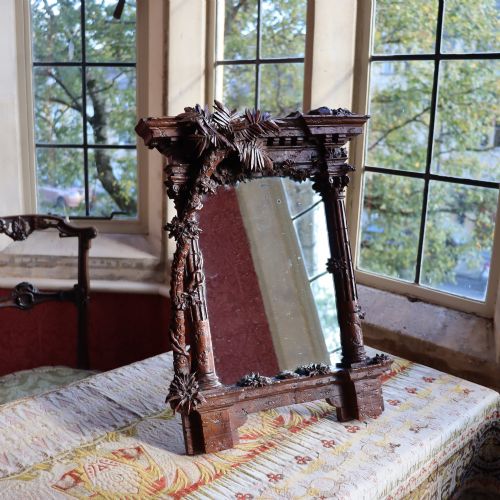
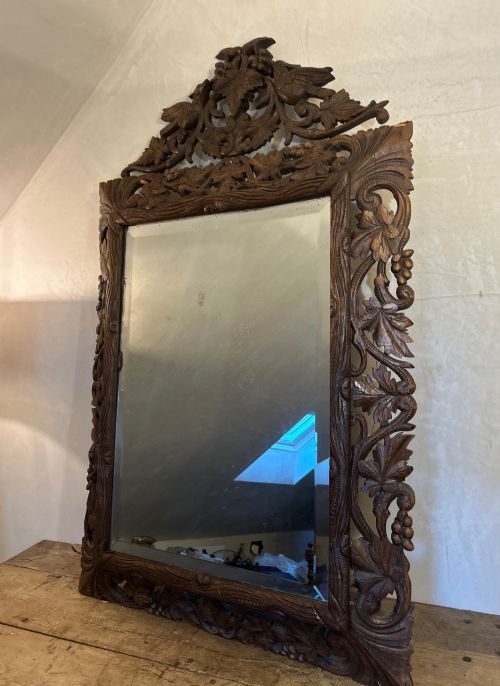
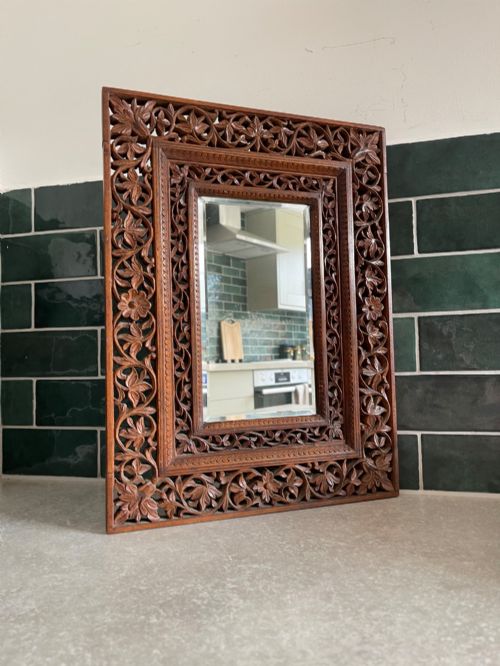
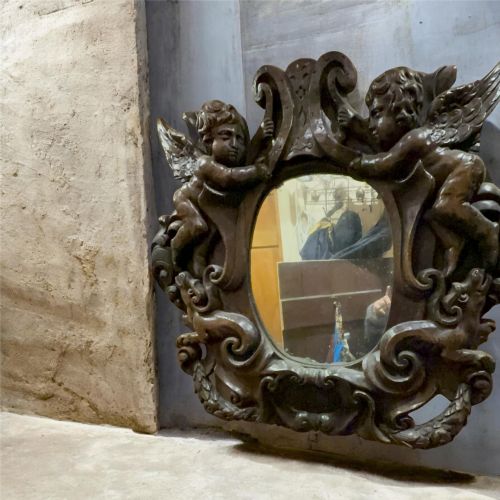
When you search for an ornate dark brown mirror, you encounter pieces shaped from deep-toned timbers like oak, mahogany, walnut, teak, and hardwood. These wall mirrors and hand mirrors date across the eighteenth and nineteenth centuries, spanning periods from the Georgian era through to 1900.
The styles range widely across historical revivals, including Baroque, Rococo Revival, Carolean, Renaissance Revival, French Provincial, and Anglo-Indian designs. You are most likely to meet heavily carved wooden frames with rich dark patination, often displaying significant craftsmanship in their ornamentation.
These pieces function primarily as wall mirrors, though hand mirrors also appear within the selection. Each item reflects the distinct aesthetic preferences of its period, from the structured symmetry of Georgian pieces to the exuberant foliage of French Renaissance and Rococo revivals.
How these pieces were made
Makers shaped these mirrors using solid timbers such as oak, mahogany, walnut, and teak, frequently applying extensive hand-carving techniques directly into the wood. Gesso was also utilised alongside wood to build up intricate relief ornamentation on the frames.
The glass panes are housed within these heavily carved wooden structures, with bevelled edges appearing on larger Renaissance-style wall mirrors. Joinery methods varied by region and period, supporting heavy hardwood frames designed for wall mounting.
Ornate Dark Brown Mirror Retail Price Guide 2026
Typical asking prices for ornate dark brown mirror among the pieces listed under this phrase on Sellingantiques today, from the lower quarter to the upper quarter. They describe what is for sale here now, not the wider market.
Design styles represented include Baroque, Rococo Revival, French Provincial, Renaissance Revival, Carolean Revival, and Anglo-Indian.
What varies in quality
Depth and precision of the hand-carving separate standard frames from superior examples, particularly in the crispness of foliage, scrolls, and figural details. Timber selection also dictates grade, with dense, well-figured woods holding sharper carved edges over time.
The integrity of the frame construction and the preservation of the original dark patination influence the standing of a piece. Finer mirrors display harmonious proportions between the heavy wooden frame and the central glass plate.
The Ornate Dark Brown Mirror Glossary
- Patina
- The surface sheen and deep coloration developed by timber and gesso over centuries of handling and exposure. It rewards close inspection with subtle variations in tone.
- Gesso
- A plaster-like mixture applied to wooden frames to create smooth surfaces or moulded low-relief ornamentation before gilding or finishing. It allows for crisp decorative details.
- Bevel edge
- A sloping angled edge cut around the perimeter of the mirror glass to catch and refract light. This feature indicates finer nineteenth-century production standards.
- Rococo Revival
- A mid-nineteenth-century design style characterised by asymmetrical C-scrolls, shell motifs, and naturalistic floral carvings. It produced some of the most elaborate wooden frames.
Ornate Dark Brown Mirror: Frequently Asked Questions
Where should I place a dark brown wall mirror?
Position these pieces opposite windows to maximise natural light reflection within darker rooms. The rich timber tones anchor feature walls in living spaces or hallways.
Consider eye-level placement to ensure the carved frame serves as a focal point rather than getting lost among other furnishings.
How do I clean an antique carved wooden frame?
Dust the intricate carvings gently using a soft, dry brush to prevent dirt buildup in the recesses. Avoid chemical polishes that can degrade the historic patination of the wood.
Microfibre cloths work well for glass maintenance without risking moisture transfer to nineteenth-century gesso or timber.
How do I identify a Georgian wall mirror?
Georgian pieces often display balanced proportions and meticulous carved wood details reflecting eighteenth-century classicism. Look for construction traits typical of the period, such as primary use of native hardwoods.
These mirrors generally eschew the heavier, exuberant ornamentation seen in later Victorian revival styles.