


Bergman Orientalist Statue
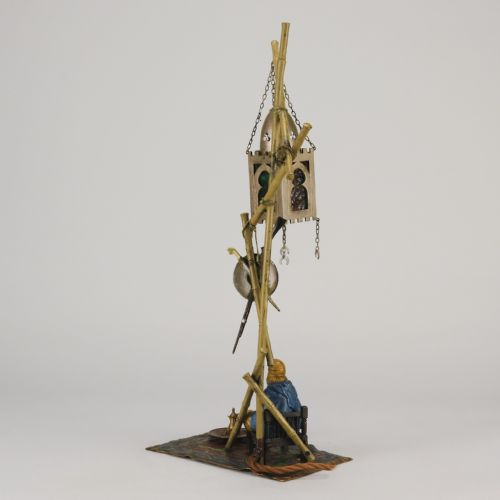
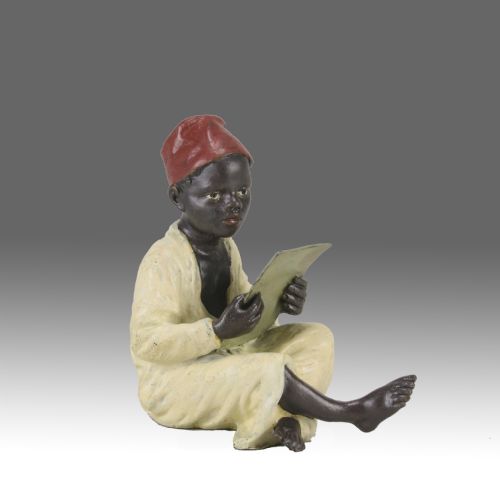
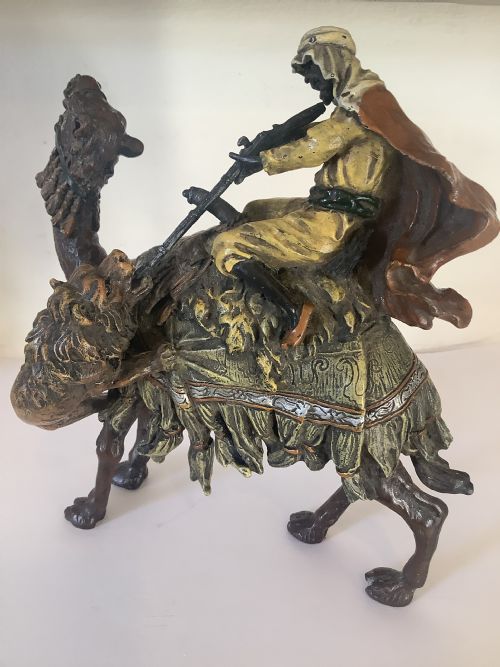
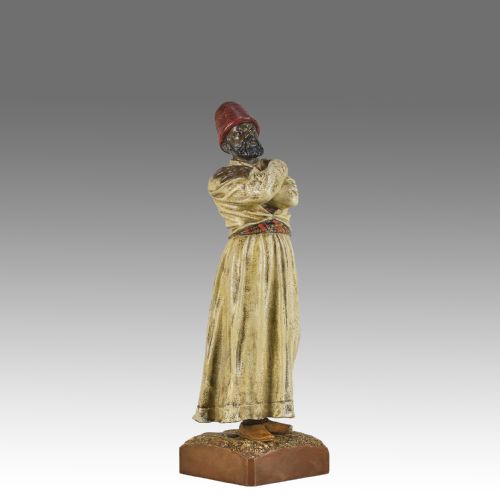
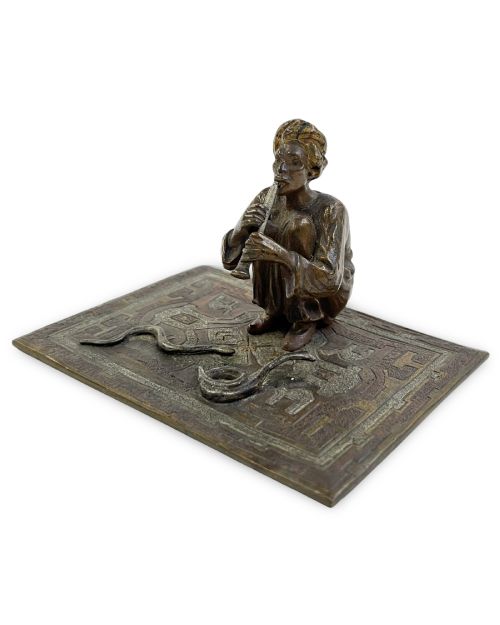
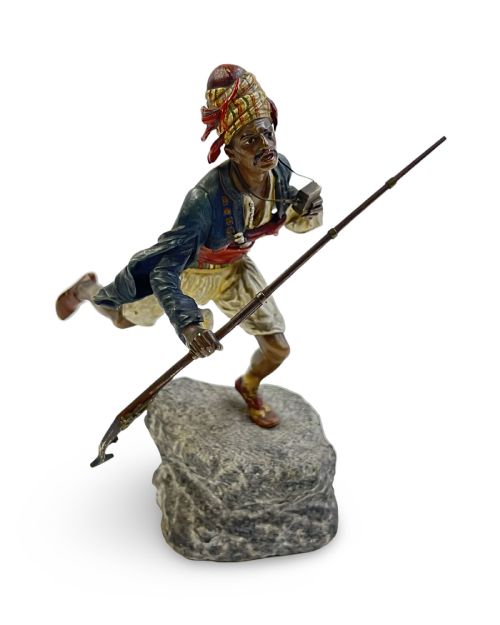
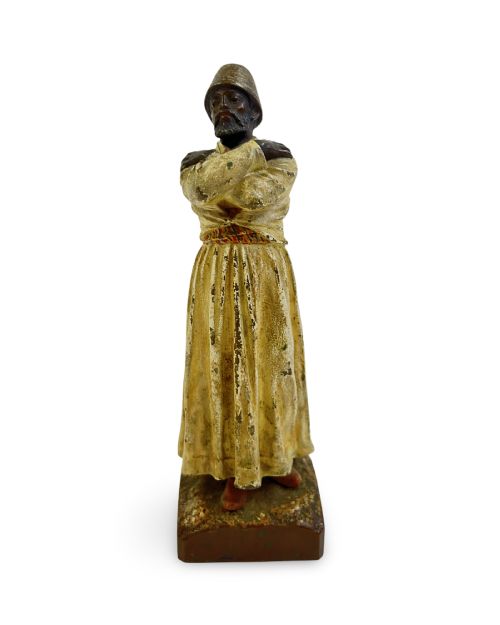
A bergman orientalist statue captures the dramatic character of the near east through detailed metalwork and vibrant colour.
Bergman Orientalist Statue
A bergman orientalist statue encompasses figures and table lamps produced in Vienna during the late Victorian and early twentieth-century periods. These works portray figures such as Arab merchants, dervishes, warriors, and female subjects in domestic or dramatic scenes.
The objects seen here belong to the broader movement of Austrian Orientalism, spanning the late nineteenth century through the nineteen-thirties. Formats range from small statuettes and figurines to functional lighting pieces incorporating sculptural elements.
How They Were Made
These pieces are cast in bronze before receiving layers of cold-paint, a technique where pigment is applied without subsequent kiln firing. Enamel and oil paints provide the rich surface colours that define the figures and their textiles.
Certain examples integrate marble or glass components to support the primary bronze sculpture or to form settings such as tables and lamps.
Some figures hide secret erotic scenes inside hinged sarcophagi, offering a playful surprise beneath a serious historical facade.
What Varies in Quality
The distinction between tiers rests on the precision of the casting and the crispness of the chisel work applied to the bronze before painting. Stronger examples retain intricate facial expressions and detailed patterns on garments.
The preservation of the original cold-painted surface dictates much of the standing of an individual piece. Finer works display complex polychrome schemes that survive without heavy retouching.
Franz Bergman·Franz Xaver Bergman
The Bergman Orientalist Statue Glossary
- Cold-painted bronze
- Bronze sculpture finished with paint applied to the cold metal surface rather than fired in a kiln. This technique allows for a high degree of polychrome detail.
- Vienna bronze
- Small, naturalistic or exotic bronze figures produced by workshops in Vienna during the late nineteenth and early twentieth centuries. They are typically cast in bronze and cold-painted.
- Orientalism
- The imitation or depiction of aspects of Eastern cultures in the West by writers, designers and artists. In sculpture, this translates into subjects drawn from North Africa and the Middle East.
- Patina
- The surface appearance of bronze acquired through age, wear, or chemical treatment. In these pieces, it sits beneath or alongside the applied cold-paint layers.
Bergman Orientalist Statue: Frequently Asked Questions
How do I clean a cold-painted bronze?
Cold-painted bronze requires gentle dusting with a soft, dry brush to protect the delicate pigment layers from moisture and abrasion.
Water, oils, and chemical solvents must be avoided entirely, as they easily strip or damage the original painted surface.
Where were these sculptures made?
These pieces were manufactured in workshops based in Vienna, Austria, which became the centre for cold-painted bronze production.
Artisans in the city exported these decorative objects across Europe and beyond during the late nineteenth and early twentieth centuries.
How are periods identified?
Periods are determined by stylistic cues, casting techniques, and the specific signatures or foundry marks stamped onto the bronze.
Earlier nineteenth-century examples often exhibit heavier casting and distinct patination compared to works from the nineteen-twenties and nineteen-thirties.