


Vintage Orientalist Decor
Vintage orientalist decor brings domestic rooms evocative pieces of nineteen-hundreds craft from distant lands.
Vintage Orientalist Decor
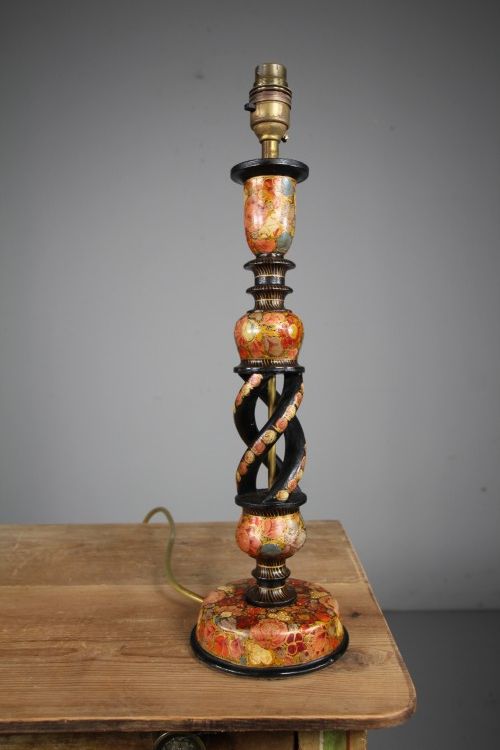
Vintage orientalist decor gathers nineteenth and early twentieth century items rooted in Middle Eastern, North African, and South Asian aesthetics, brought home by travellers and traders of the period. These objects span utilitarian furniture like folding tables and table lamps alongside decorative wall art, mirrors, and sculptures.
Regional origins shape these pieces significantly, moving from Anglo-Indian and Kashmiri workshops to Ottoman, Persian, and Afghani traditions. Each category reflects the material culture and artistic output of its specific geographic source during the nineteenth and early twentieth centuries.
Materials and construction methods
Makers utilised traditional regional materials, combining woods like papier-mache and timber with metals such as brass, bronze, and steel. Bone inlay frequently decorates wooden items, creating intricate geometric and floral patterns across surfaces.
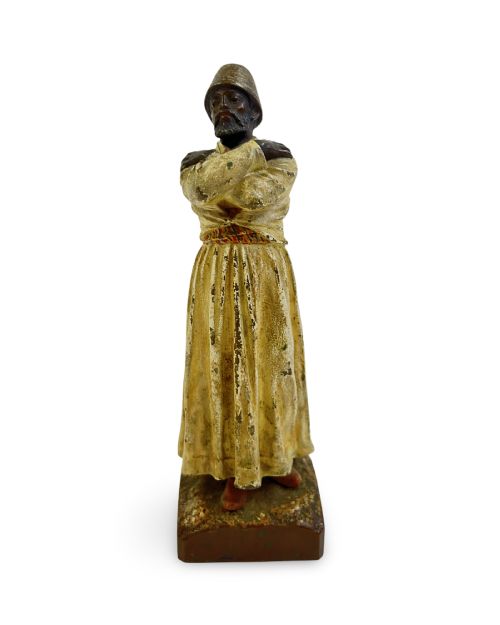
Metalwork often involves cold painting applied to bronze figures, alongside elaborate brass inlay embedded into wood for trays and mirrors. Painters employed encaustic techniques on canvas, while others used conventional paint on wooden columns and wall pieces.
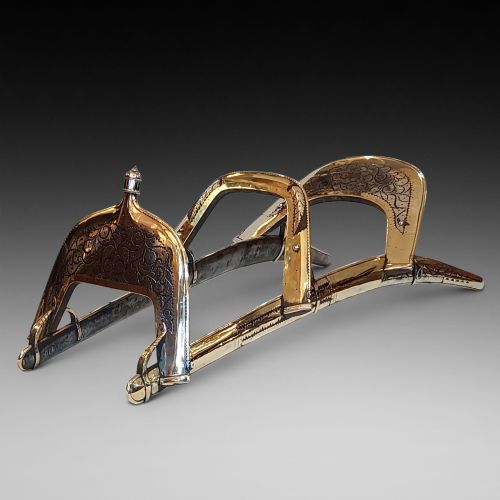
Camels carry history further through ceremonial saddles designed for nineteenth-century journeys.
Distinctions in craftsmanship and condition
Quality rests in the precision of the hand-carved detailing and the stability of inlaid elements across wood and metal. Pieces demonstrating finer execution retain crisp lines in calligraphy, secure bone or brass inlays, and well-preserved cold painted surfaces on bronze figures.
The integrity of the structural substrate dictates durability, especially in folding furniture, ceremonial saddles, and wall art. Items retaining original pigments, intact patination, and uncompromised structural joins represent the stronger examples within this aesthetic.
Franz Bergman·Girieud·Marguerite
The Vintage Orientalist Decor Glossary
- Cold painting
- A method where paint is applied to bronze without heat firing. This technique produces detailed polychrome finishes on small sculptures.
- Encaustic
- A painting medium involving heated beeswax mixed with coloured pigments. Artists apply this molten mixture to canvas or wood to create textured surfaces.
- Inlay
- A decorative technique where small pieces of contrasting materials, such as bone or brass, are embedded into a wooden base. This creates flat, patterned surfaces.
- Jezail
- A type of long-barrelled flintlock or percussion muzzle-loading rifle used in nineteenth-century Afghanistan. Stock variants often feature extensive bone or metal embellishment.
- Fauvism
- An early twentieth-century art movement characterised by strong colours and painterly brushwork. Adherents prioritised painterly qualities over realistic representation.
Vintage Orientalist Decor: Frequently Asked Questions
What defines orientalist decor?
This decor encompasses nineteenth and early twentieth century artefacts inspired by or sourced from Middle Eastern, North African, and Asian cultures. It includes furnishings, metalwork, and fine art produced during this era.
These objects reflect the cross-cultural exchange and artistic interpretations of distant regions popularised during the period.
How were folding tables used?
Persian and regional folding tables served practical purposes for serving tea and dining within domestic spaces. Their collapsible frames allowed for easy storage when not in use.
They often accompanied complete brass tea services, forming portable social hubs for households.
Where did brass inlaid mirrors originate?
Mirrors featuring intricate brass inlay frequently hail from regions such as Hoshiarpur in India. Artisans there developed distinct woodworking and metal-embedding traditions.
These pieces combined native timber frames with detailed geometric metalwork patterns.
How should I care for painted bronze?
Cold painted bronze figures require gentle dusting with a soft, dry brush to protect the unfired pigment. Avoid liquid cleaners and moisture, which can lift the delicate paint layer.
Keep these sculptures away from direct sunlight to prevent colour fading over time.