
Bentwood Hall Tree
A bentwood hall tree offers practical elegance, providing a slender frame for coats and hats that suits any hallway.
What a bentwood hall tree is
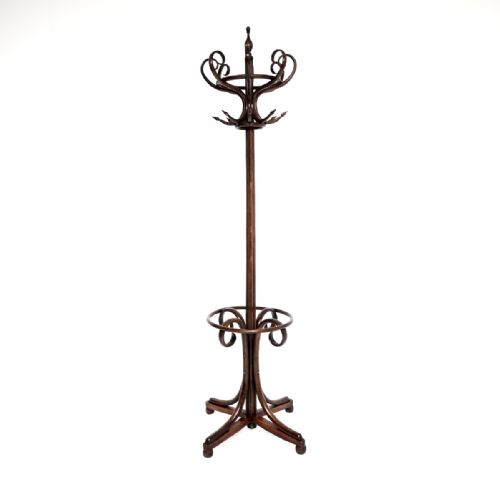
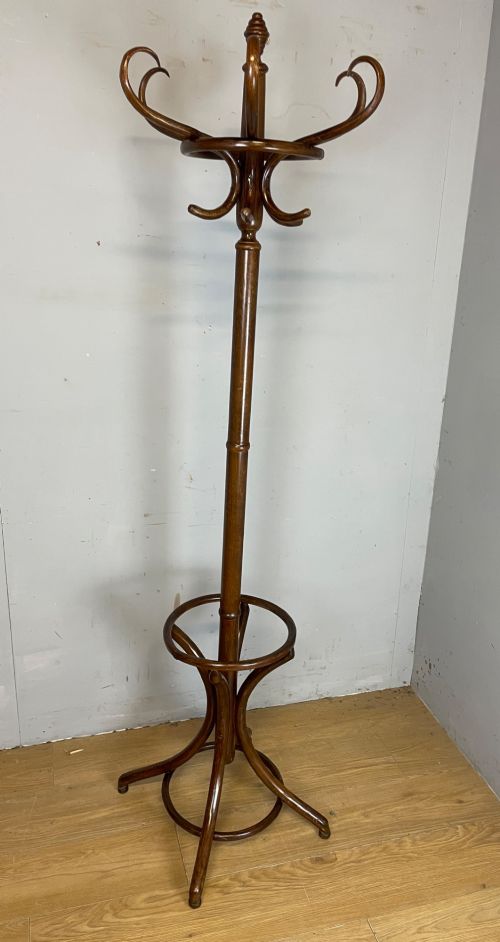
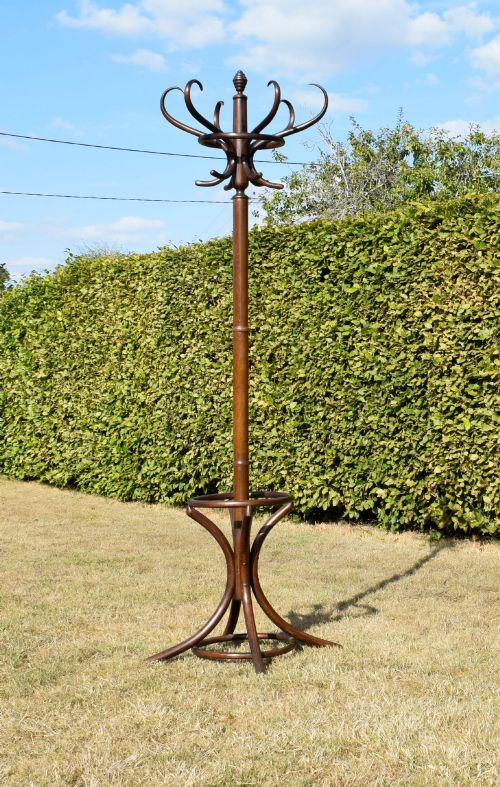
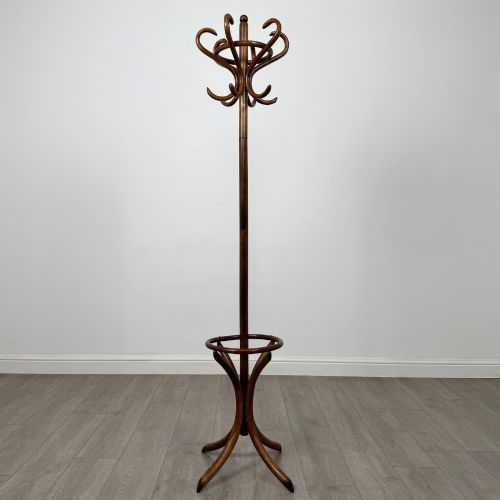
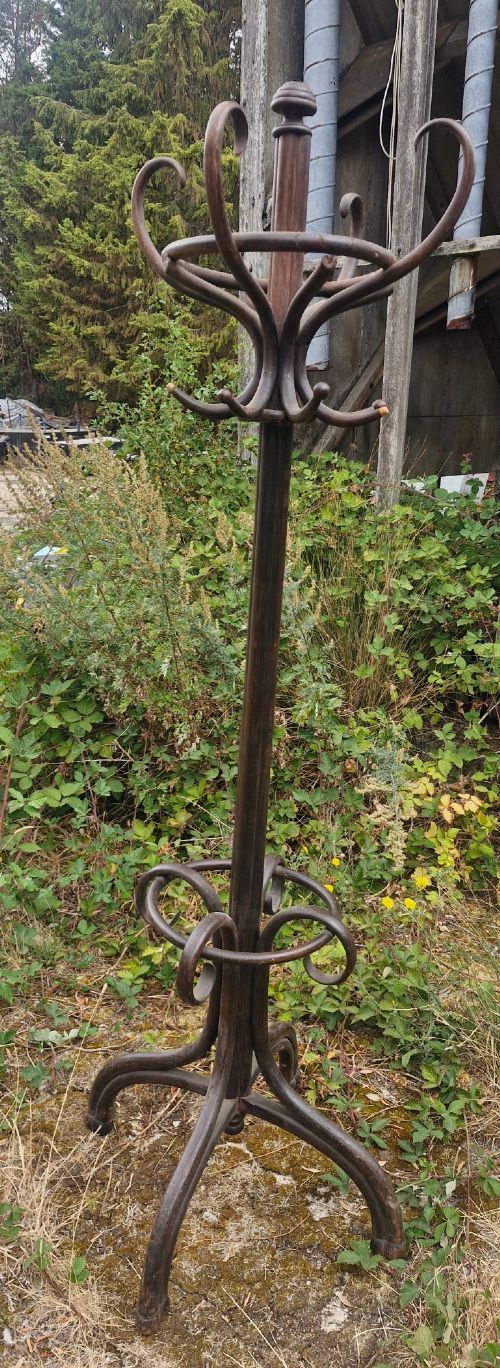
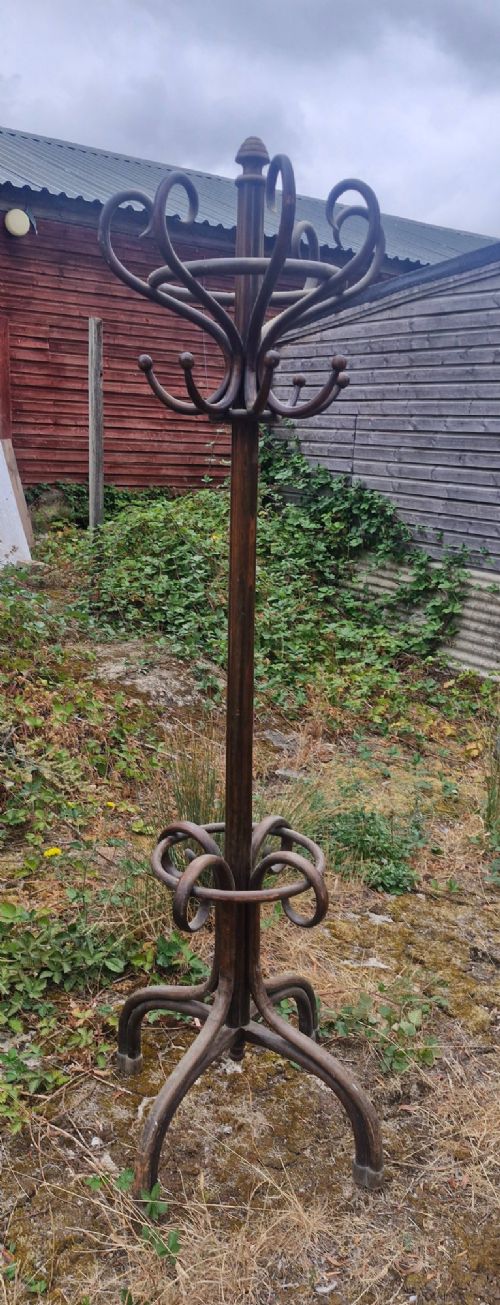
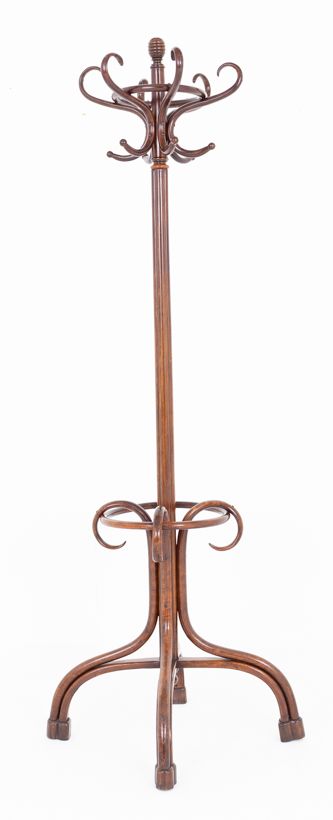
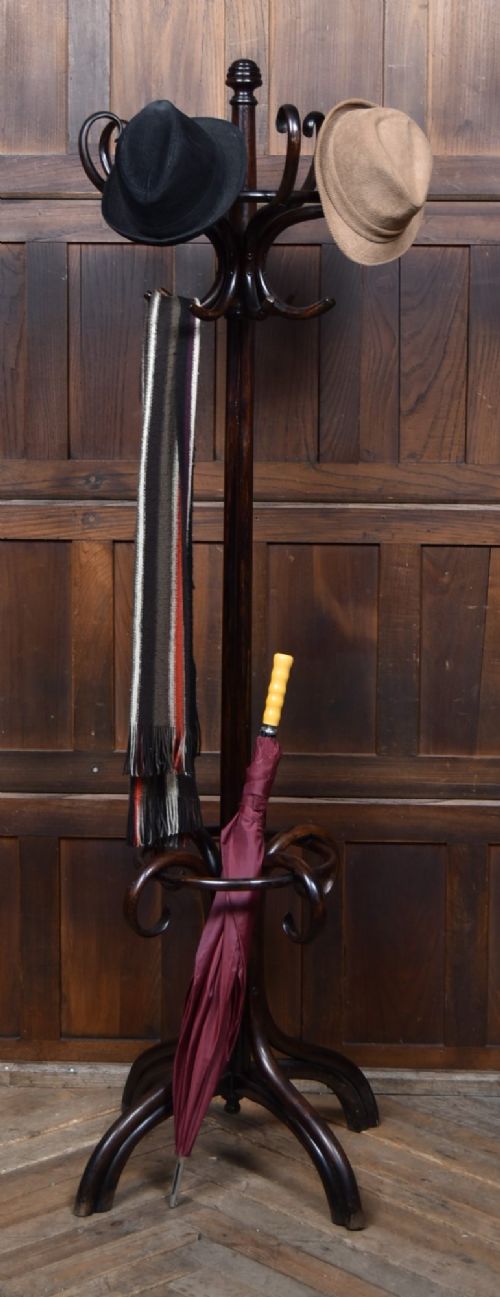
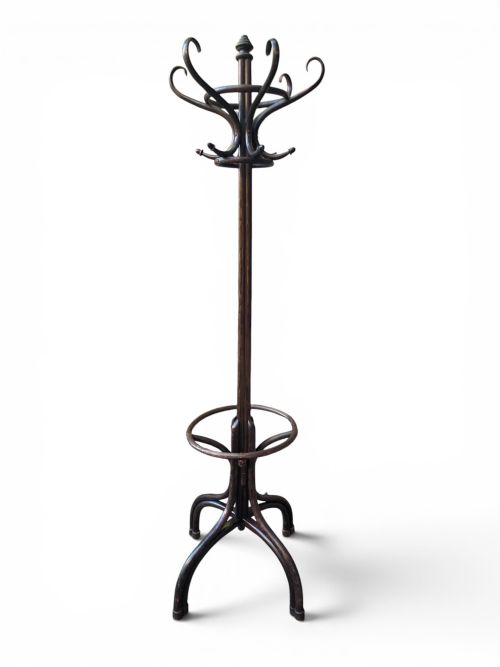
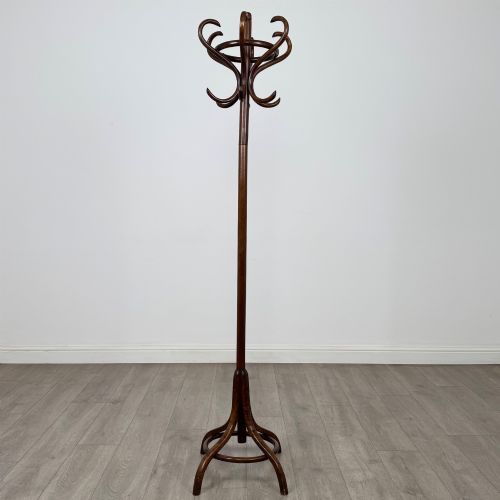
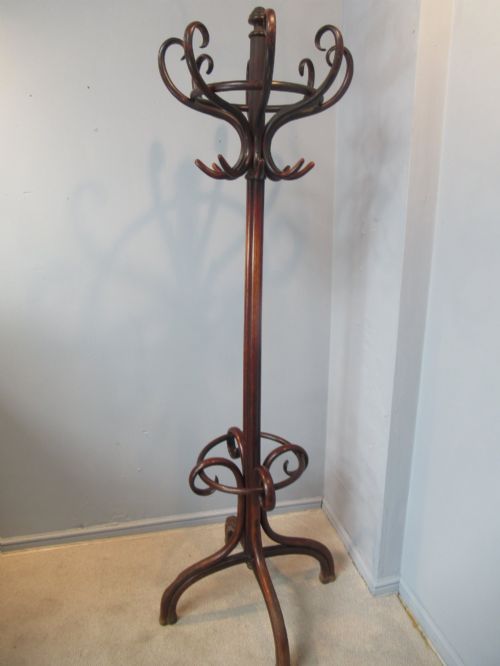
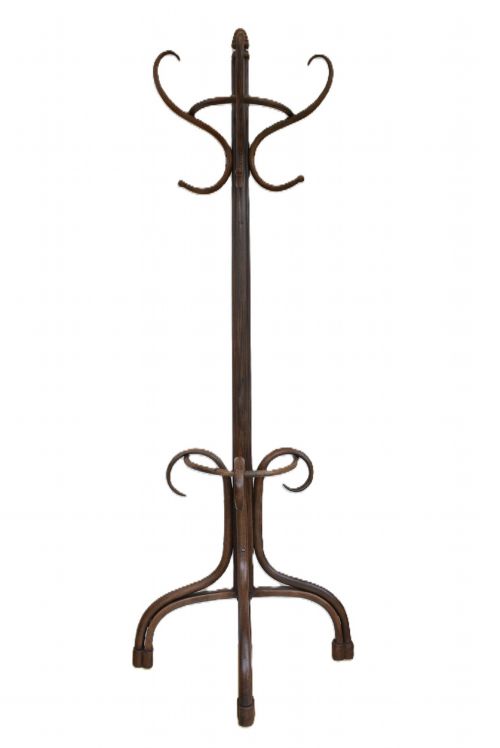
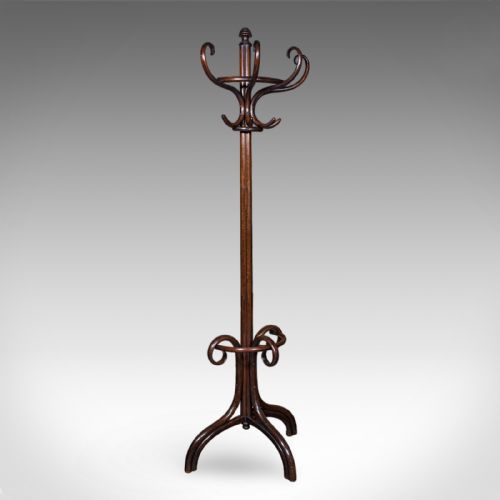
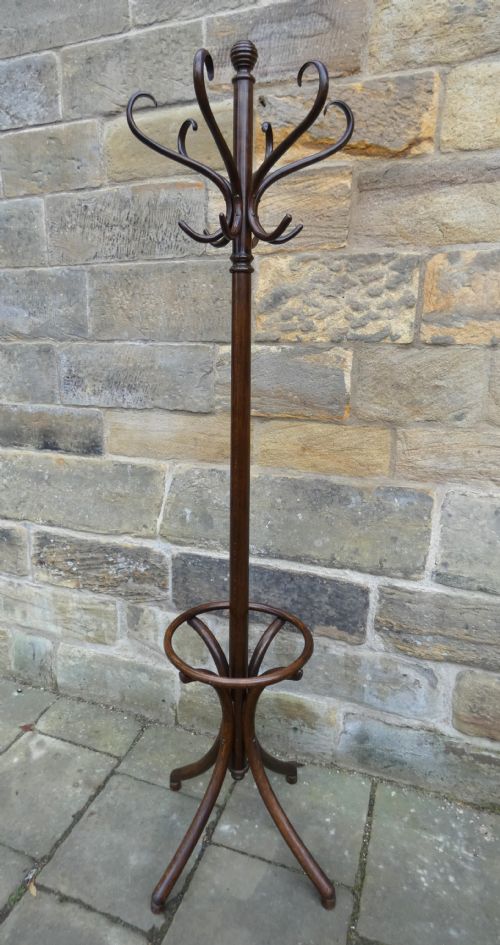
A bentwood hall tree is a vertical stand designed for hanging coats, hats and accessories in an entrance hall. These pieces combine utility with decorative form, standing tall to utilise minimal floor space while offering multiple hanging hooks at varying heights.
The most common examples encountered on this page date from the Edwardian period and around nineteen hundred, alongside nineteenth century pieces. They frequently manifest as revolving hatstands or large coat stands, often incorporating specific attachments or labelled by makers such as Fischel.
The aesthetic bridges Victorian practicality and Art Nouveau curves, reflecting a specific period of furniture design. Such items appear in Thonet style, showing the distinctive flowing lines characteristic of the genre.
How they were made
Makers utilised wood, specifically beech and beechwood, subjected to steam-bent wood techniques to achieve curves without joints. This process allowed straight timber to bend smoothly into loops and arches.
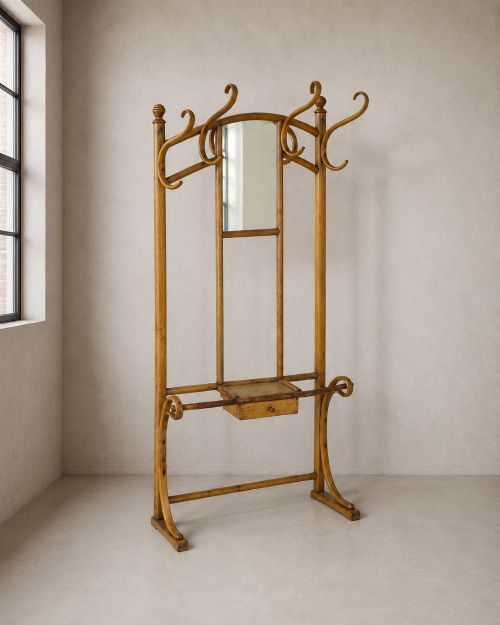
The resulting bentwood components were then assembled into rigid vertical structures capable of supporting heavy garments. Selected examples incorporate glass elements alongside the primary wooden framework.
Retail Price Guide 2026
Typical UK retail prices for bentwood hall tree, calculated from the Sellingantiques database of over a million retail prices indexed since 2003. This retail price guide relies exclusively on Sellingantiques data; no external sources or auction records are used, so the figures do not describe the wider market.
A revolving top means your hats can take a merry-go-round ride before going to work.
What varies in quality
Quality in a bentwood hall tree lies in the complexity of the bending and the presence of maker attribution. Pieces bearing a label, such as those by Fischel, stand apart from unlabelled workshop production.
The sophistication of the revolving mechanisms and the intricacy of the hat and coat attachments define the upper tier of the range. Fine quality is also evident in the preservation of the steam-bent curves and the overall structural stability of the tall frame.
Fischel
The Bentwood Hall Tree Glossary
- Bentwood
- Wood shaped by exposure to steam and pressure into curved forms. This technique creates strong, lightweight structural components without traditional joinery.
- Hall tree
- A freestanding piece of furniture placed in an entrance hall for hanging garments and hats. These structures maximise vertical space in narrow areas.
- Thonet style
- Furniture design following the pioneering bending methods developed by Michael Thonet and his firm. It is defined by flowing, curved wooden lines.
- Revolving hatstand
- A coat and hat stand featuring a rotating upper section for easy access to garments. This clever mechanism allows users to reach items from any angle.
Frequently Asked Questions
What is a bentwood hall tree used for?
A bentwood hall tree provides vertical storage for coats, hats and everyday garments in an entrance space. Its slender footprint allows it to fit neatly into narrow hallways.
Historically, these stands kept outerwear orderly and accessible near the primary entrance of a home. Today, they serve a similar practical function while adding period character to an interior.
How do I date a bentwood hall tree?
Dating relies on stylistic clues, construction methods and occasional maker labels found on the timber. Pieces from around nineteen hundred often display Art Nouveau tendencies.
Edwardian examples tend to feature refined turning and specific hardware attachments. Comparing the complexity of the steam-bent sections also helps determine the approximate period of manufacture.
Are these stands stable enough for heavy coats?
The steam-bent beech construction provides surprising strength and resilience for supporting multiple heavy garments. The wide base distributes weight effectively to prevent tipping.
Distributed loading across the various tiers ensures the tall frame remains balanced. Original designs were engineered specifically for daily household use.
What does Thonet style mean?
Thonet style refers to furniture created using the innovative steam-bending processes pioneered in the nineteenth century. This approach transformed straight timber into graceful, continuous curves.
Pieces designed in this manner are celebrated for their lightness, strength and organic aesthetic. The technique revolutionised domestic furniture production across Europe.