


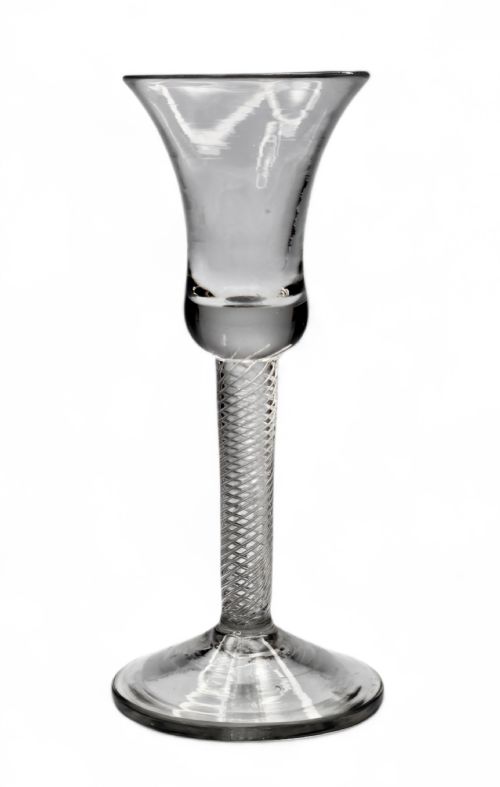
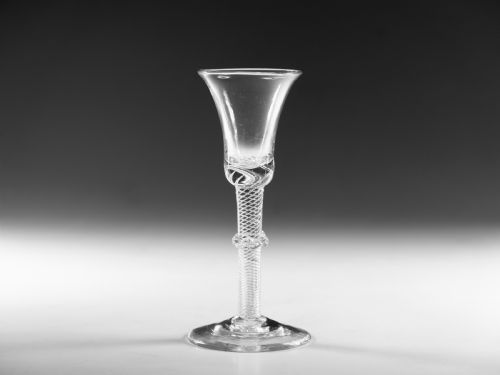
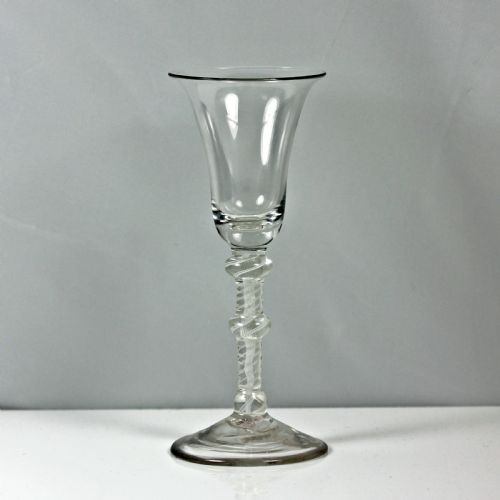


Bell Bowl Goblet
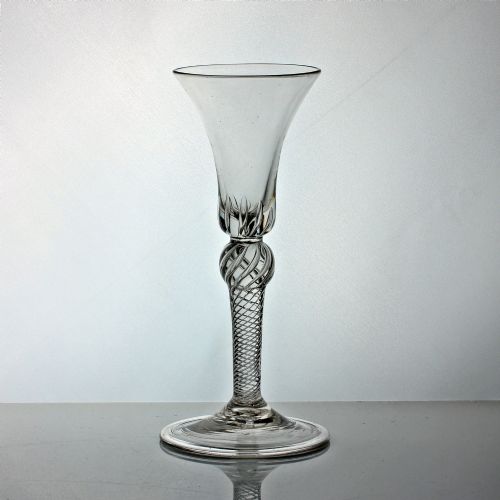
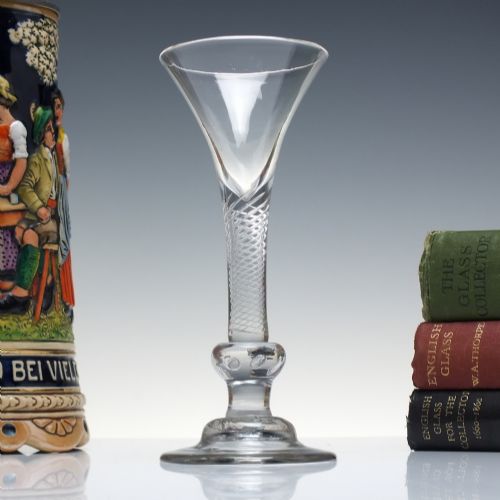
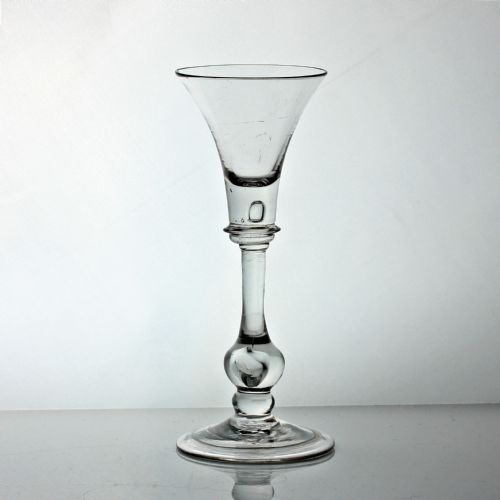
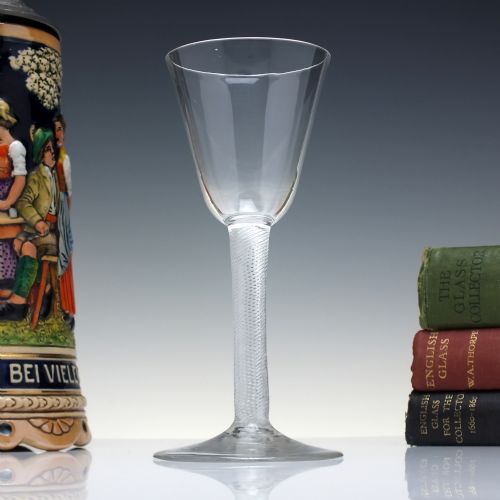
A bell bowl goblet is an English drinking vessel defined by its flared silhouette, found here primarily in eighteenth-century Georgian forms.
Bell Bowl Goblet
A bell bowl goblet presents a distinctive flared drinking vessel with a bowl resembling an inverted bell, most frequently encountered in eighteenth-century Georgian wine glasses. These pieces range from simple plain stems to complex opaque twists, air twists, and composite stems produced during the Georgian and Victorian eras.
The selections span clear lead glass and flint glass variants featuring folded feet, domed feet, and shoulder knops. Scottish opaque twist wine glasses from the Victorian period also appear among the predominantly eighteenth-century English items.
How they were made
These vessels are shaped from lead glass, flint glass, and clear glass using traditional blown glass techniques. Artisans manipulated the molten material to incorporate air twists, multi spiral air twists, and white enamel twists within the stems.
Specialised construction methods include the addition of double knops, triple knops, and composite stems on folded or domed feet. The integration of air tears within plain stems demonstrates the precise handling of hot metal during the manufacturing process.
Every twisted stem began as a straight line of trapped air before the maker gave it a spin.
What varies in quality
Clarity of the metal distinguishes finer examples, with exceptional pieces displaying high transparency in the lead crystal and clear glass. The precision and regularity of the internal air twists or opaque enamel threads indicate the skill of the glass house.
Proportion between the bell bowl, stem formation, and foot diameter dictates the visual balance of the goblet. Elaborate multi-part construction, such as composite stems with multiple knops, requires advanced manipulation compared to straightforward plain stem profiles.
The Bell Bowl Goblet Glossary
- Bell bowl
- A drinking vessel bowl shaped like an inverted bell with gently flaring sides. This form appears frequently on eighteenth-century English wine glasses.
- Air twist
- A decorative stem containing elongated spiral bubbles trapped within the glass. It is created by drawing air through hot metal before stretching and twisting.
- Opaque twist
- A stem featuring white enamel threads twisted into spirals within the clear glass. These are often categorized as single, double, or triple series depending on the complexity of the internal threads.
- Composite stem
- A stem combining two or more distinct glass-forming styles, such as an air twist section joined to a plain or knop section. These multi-part formations require advanced technical skill.
- Folded foot
- A glass foot created by turning the edge of the base back underneath to form a rim. This technique adds weight and stability to early drinking vessels.
Bell Bowl Goblet: Frequently Asked Questions
What is a bell bowl goblet?
A bell bowl goblet is a historical drinking glass featuring a distinctive flared bowl shaped like an inverted bell. These pieces date predominantly to the eighteenth century and encompass various stem treatments.
They serve primarily as wine glasses from the Georgian period, prized for their traditional forms and decorative twist stems.
How do I identify a Georgian wine glass?
Georgian wine glasses are identified by their eighteenth-century manufacturing traits, including heavy lead glass composition and pontil marks on the base. Their forms range from simple plain stems to complex air twists and opaque twists.
Examination of the metal clarity and foot construction helps confirm the period of origin.
What is an air twist stem?
An air twist stem contains spiral threads of tiny bubbles trapped inside the clear glass. Craftsmen created these by forming air channels in hot metal before twisting and drawing the stem.
This technique produces a shimmering internal pattern visible when held to the light.
How were folded feet made?
A folded foot was made by gathering molten glass for the base and folding the outer edge back underneath itself. This created a thickened, rounded rim on the underside of the foot.
The method provided extra weight and strength to early drinking vessels.
Can I use antique wine glasses?
These historical wine glasses can be used for special occasions with careful handling. Hand washing is essential to preserve the fragile historical glass.
Many collectors prefer to display them to protect the delicate stems and clear lead glass from accidental damage.