



Georgian Balustroid Stemware
Georgian balustroid stemware comprises heavy drinking glasses shaped with characteristic thickened lower stems, prized for their pleasing weight and tactile form.
Georgian Balustroid Stemware
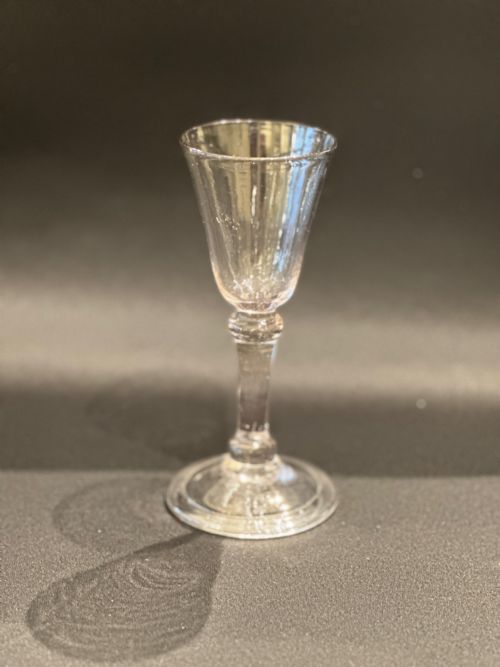
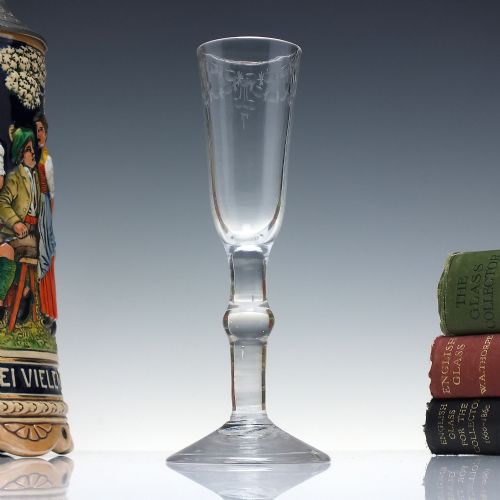
Georgian balustroid stemware consists of drinking glasses and wine glasses originating from the eighteenth century, encompassing the Georgian and George II periods. Buyers searching for Georgian balustroid stemware will encounter pieces primarily fashioned as wine glasses, alongside specialised variants like ratafia glasses.
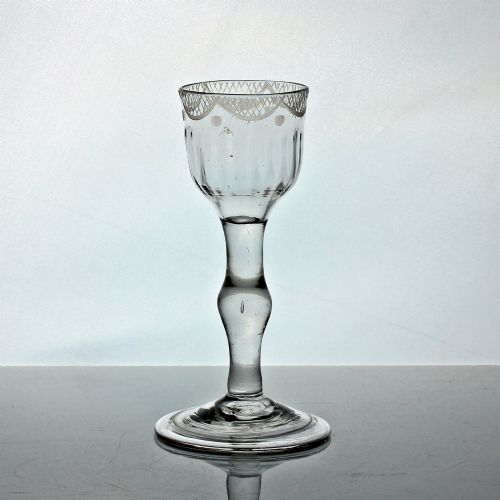
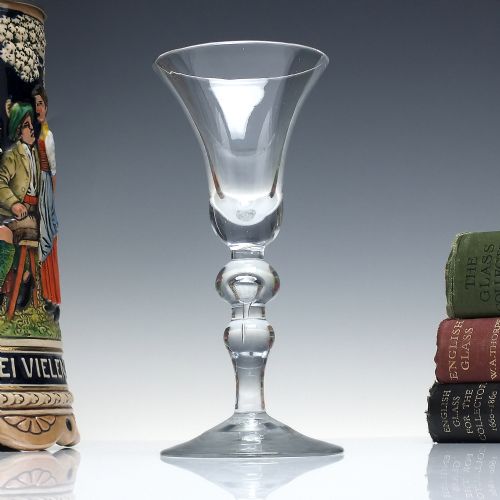
The forms on this page span the decades from around seventeen-thirty to seventeen-fifty, displaying English manufacture in clear glass, flint glass, and lead crystal. These drinking glasses combine sturdy proportions with refined details such as engraved swags and tails or domed feet.
Kit Kat balustroid examples and slender baluster variations appear frequently among the listings, demonstrating the specific stylistic preferences of the era. Each piece represents the drinking customs of eighteenth-century Britain through enduring craftsmanship.
Assessing Quality and Character
Quality in these drinking glasses rests upon the balance of the proportions between the bowl, the thickened balustroid stem, and the foot. Superior examples display harmonious weight distribution and clarity in the clear lead glass.
The crispness and depth of hand-engraving distinguish finer pieces from plainer versions, particularly when floral or drapery motifs are executed with precision. Additionally, specialised forms such as ratafia glasses or pieces featuring domed feet demonstrate greater ambition on the part of the glassmaker.
Current listings demonstrate production exclusively within the 18th Century, spanning the Georgian and George II periods using lead glass and clear glass.
The Georgian Balustroid Stemware Glossary
- Balustroid
- A stem form derived from the architectural baluster, featuring an expanded upper section tapering downwards towards the foot. This shape provides a reassuring weight in the hand.
- Flint Glass
- An early British term for heavy, high-clarity lead glass developed in the seventeenth century. It refracts light brilliantly and allowed makers to form thicker stems.
- Domed Foot
- A base rising centrally towards the stem rather than resting flat on the surface. This construction offers enhanced stability and a more sculptural profile.
- Ratafia Glass
- A tall, narrow drinking vessel designed for sweet cordials and liqueurs. Its slender bowl distinguishes it from standard wine glasses.
- Lead Crystal
- Glass containing metallic oxides that increase weight and brilliance. This material is characteristic of eighteenth-century English drinking vessels.
Georgian Balustroid Stemware: Frequently Asked Questions
What is balustroid stemware?
Balustroid stemware refers to drinking glasses from the eighteenth century featuring a stem thickened in the upper portion, resembling an architectural baluster.
These pieces were produced primarily in England using lead glass and flint glass, serving as functional vessels for wine and cordials during the Georgian period.
How do I date these glasses?
Dating relies on stylistic markers recorded in the evidence, such as specific stem configurations and bowl shapes characteristic of the seventeen-thirties and seventeen-forties.
Details like domed feet and engraved swags provide further indicators of the manufacturing period within the eighteenth century.
What were ratafia glasses used for?
Ratafia glasses served as drinking vessels for sweet, fruit-flavoured liqueurs and cordials popular in the eighteenth century.
Their narrow bowls accommodated smaller, more potent servings compared to standard wine glasses of the same era.
Are these glasses safe to use?
These eighteenth-century pieces are primarily collected as historical examples of early English glassware and decorative objects.
While constructed from durable lead glass, their age and scarcity mean many owners choose to display them rather than utilise them for daily dining.