





Beige Textile Wall Art
Beige textile wall art brings historic tapestries, suzanis and samplers into modern rooms for warmth and texture.
Beige Textile Wall Art
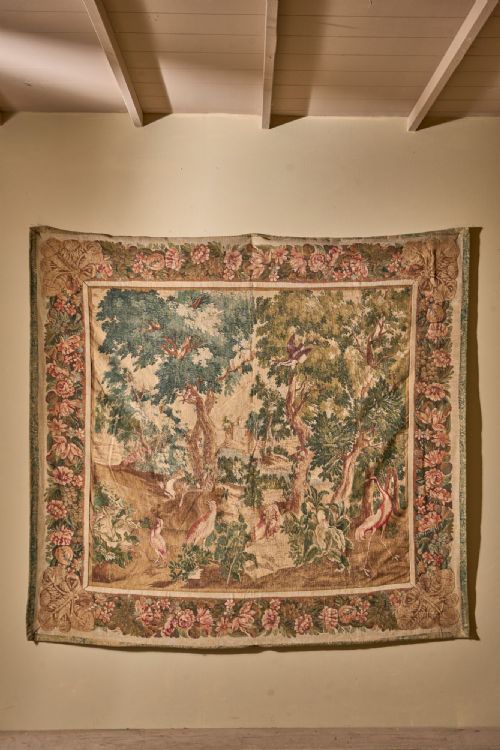
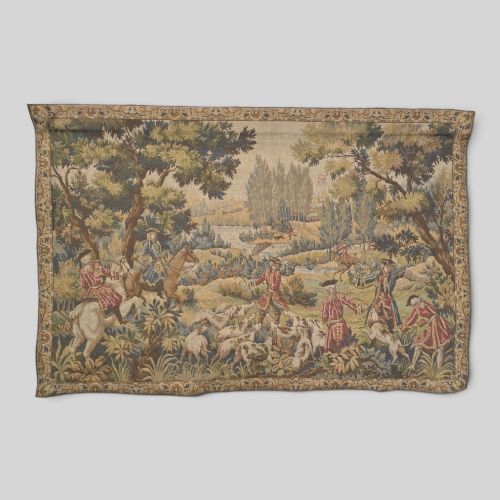
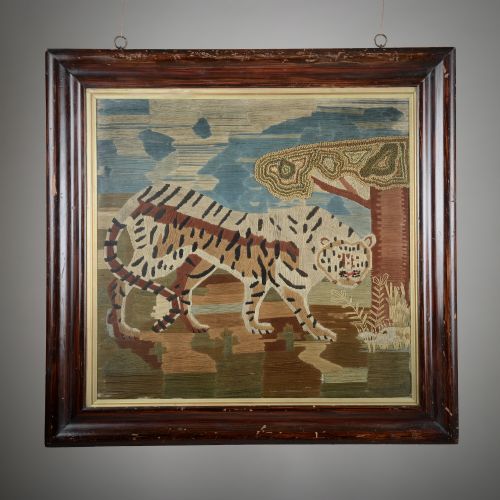
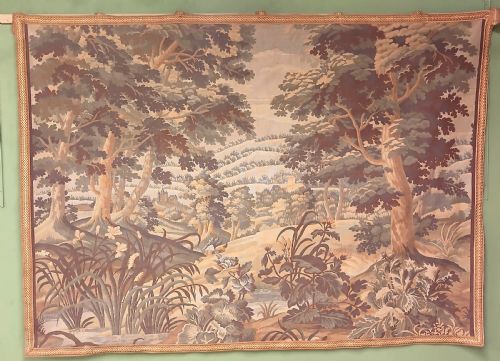
Beige textile wall art encompasses woven wall tapestries, embroidered suzanis, needlework samplers and framed textile panels from centuries past. Buyers seek these pieces to introduce tactile warmth, subtle neutral tones and historical depth to interior spaces.
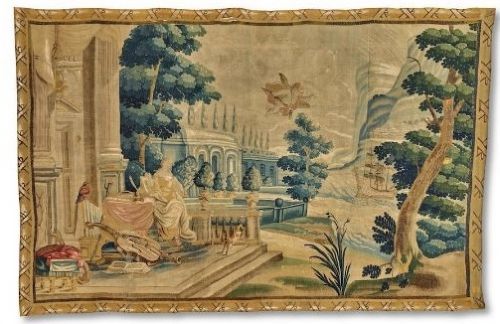
The selection ranges from grand Flemish and French mythological tapestries to folky stitched samplers and geometric Kuba cloth. French examples from the nineteenth century and earlier seventeenth century Flemish panels appear frequently among the options.
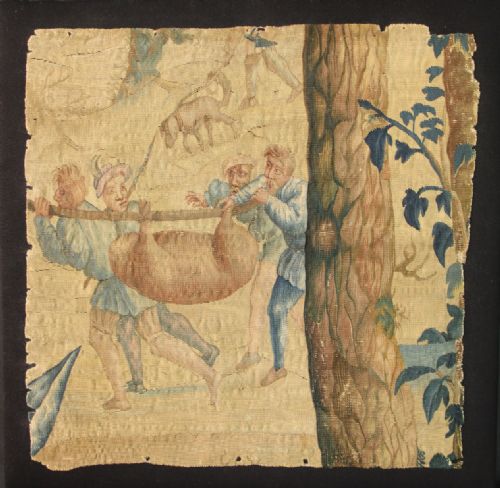
Forms vary from large wall hangings and entre-fenêtre panels to smaller framed embroideries and textile fragments. Each piece demonstrates traditional handwork intended to decorate and insulate domestic walls.
Materials and construction methods
Makers utilised natural fibres including wool, silk, cotton and linen, often worked with fine thread upon a canvas or woven ground. These materials provided durability and allowed for intricate pictorial detail in wall hangings and samplers.
Construction techniques combine traditional hand weaving, needlepoint, embroidery and stitching. Some textile panels retain wooden framing or glass protection to preserve the delicate aged fibres.
Listings feature works spanning from the seventeenth century through to the early twentieth century, utilising wool, silk, cotton, linen and canvas.
Assessing quality in antique textiles
Quality rests upon the fineness of the handwork, the complexity of the pictorial design and the structural integrity of the fabric fibres. Finer thread count and skilled execution distinguish superior tapestries and needlework from simpler pieces.
Condition and original context also determine distinction, where surviving panels maintain their structural clarity and original scale without excessive loss. Intact framing or well-preserved embroidery details elevate the visual impact of the textile.
The Beige Textile Wall Art Glossary
- Tapestry
- A form of textile art traditionally woven on a vertical loom using coloured weft threads to create pictorial scenes. These large wall hangings served both decorative and insulating purposes in historic interiors.
- Sampler
- A piece of needlework produced by a maker to demonstrate proficiency in various stitches and patterns. They frequently include alphabets, dates and maker names alongside pictorial motifs.
- Suzani
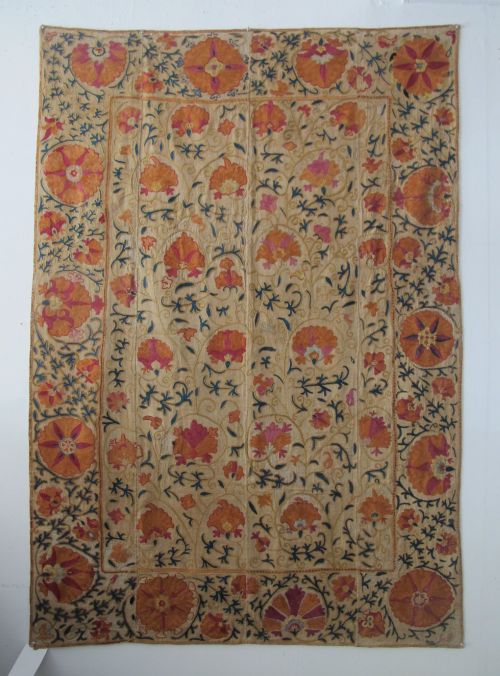
- A type of embroidered tribal textile originating from Central Asia, typically featuring bold floral and botanical motifs on a light ground. Silk thread is traditionally worked upon cotton or linen foundations.
- Aubusson
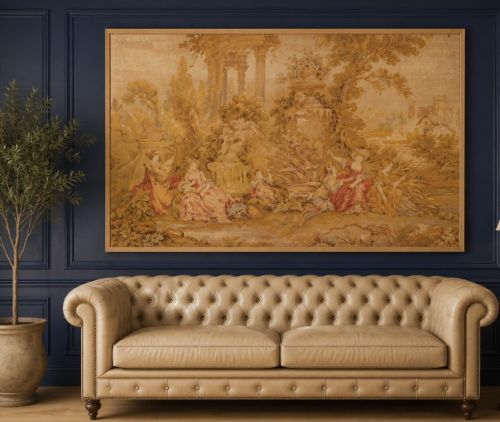
- A style of tapestry originating from the French town of Aubusson, known for pastoral or architectural scenes woven without a warp-weighted loom. These panels often decorated French chateaux and formal rooms.
- Kuba cloth
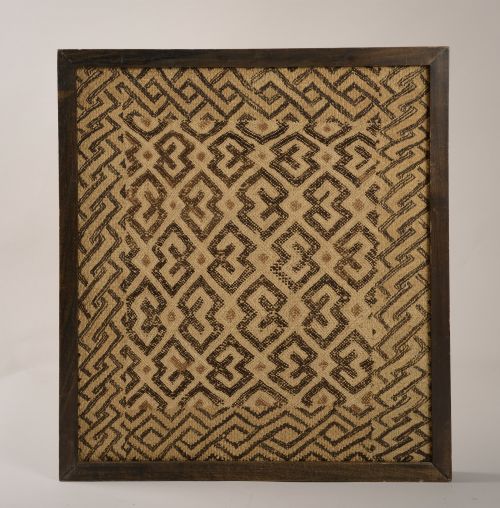
- A woven textile produced in Central Africa from raffia palm fibre, characterised by geometric patterns and textured surfaces. They offer a striking contrast to European needlework and tapestries.
Beige Textile Wall Art: Frequently Asked Questions
How do I hang antique textiles safely?
Wall tapestries and textile panels require weight distribution across a hanging batten or sleeve rather than direct pinning. This prevents undue strain on aged fibres.
Keep textiles away from direct sunlight and damp environments to protect wool, silk and cotton threads from fading and deterioration.
What is the difference between a tapestry and a sampler?
Tapestries are large woven pictorial wall hangings depicting mythological, pastoral or historical scenes. They require specialised weaving techniques on a loom.
Samplers are smaller needlework pieces worked by hand with various stitches, often recording alphabets, dates and names as exercises in skill.
How do I clean historic fabric wall art?
Historic textiles demand gentle care and professional conservation rather than standard domestic washing. Vacuuming through a protective mesh screen removes surface dust safely.
Avoid chemical detergents and water immersion, which can damage fragile threads and historic dyes found in older wool and silk pieces.
Where were suzanis made?
Suzanis originate primarily from Central Asian regions such as Uzbekistan, produced by skilled makers as part of traditional dowry furnishings. These embroidered textiles feature vibrant silk thread work on neutral or dyed grounds.
Their distinctive floral patterns reflect local cultural traditions and fine needlework skills from the nineteenth century and earlier.
How do I identify a Flemish tapestry?
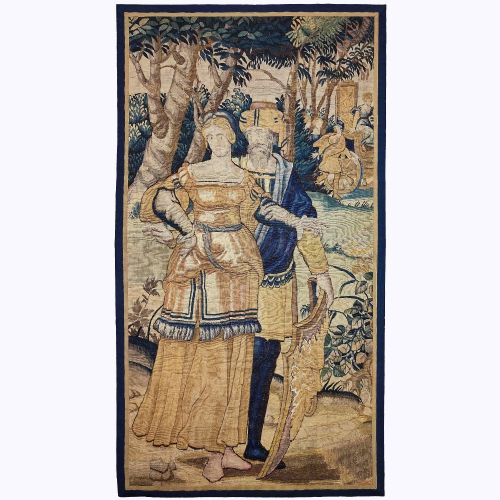
Flemish tapestries often date from the sixteenth and seventeenth centuries, displaying dense mythological, allegorical or landscape compositions. The weaving demonstrates exceptional technical skill with wool and silk threads.
Fragments or grand scale panels frequently exhibit the rich narrative detail characteristic of historic Flemish workshops.