


Beige Persian Rug
When searching for a beige persian rug, you are looking at room-sized carpets, runners, and village weaves shaped by centuries of textile tradition.
Beige Persian Rug
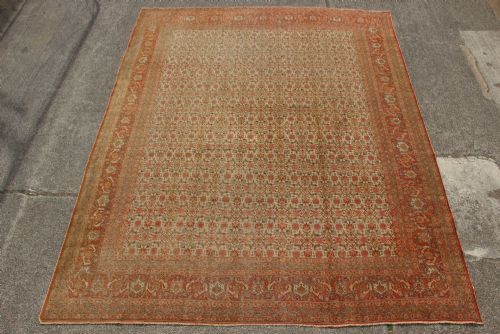
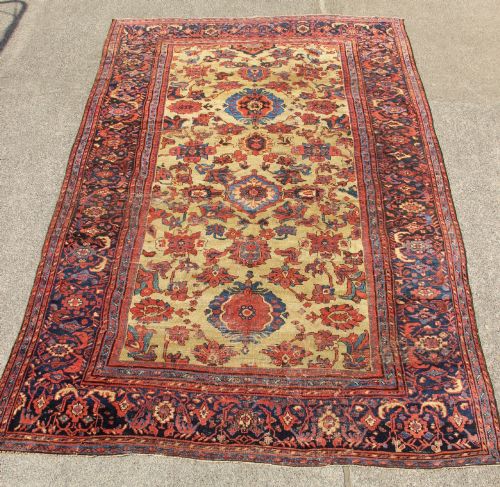
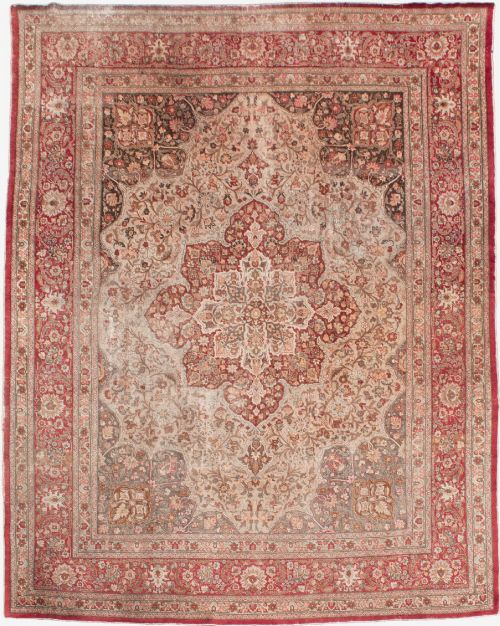
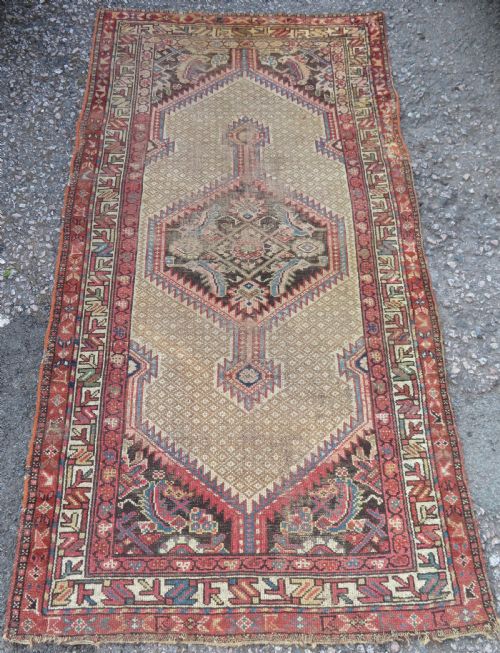
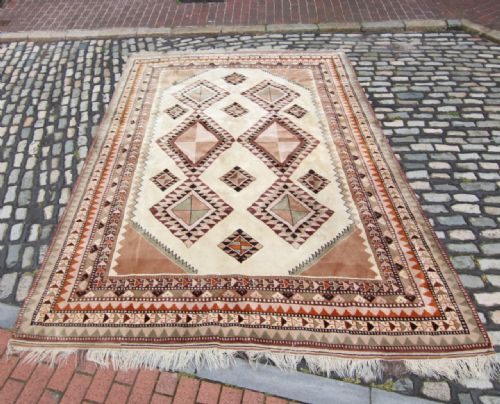
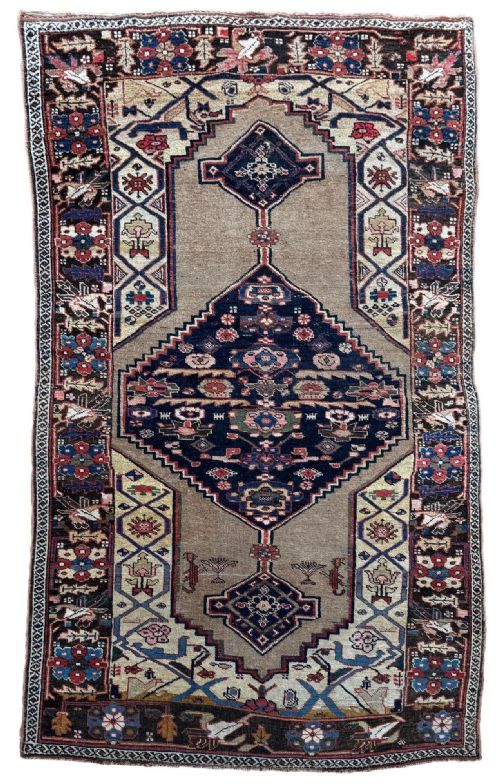
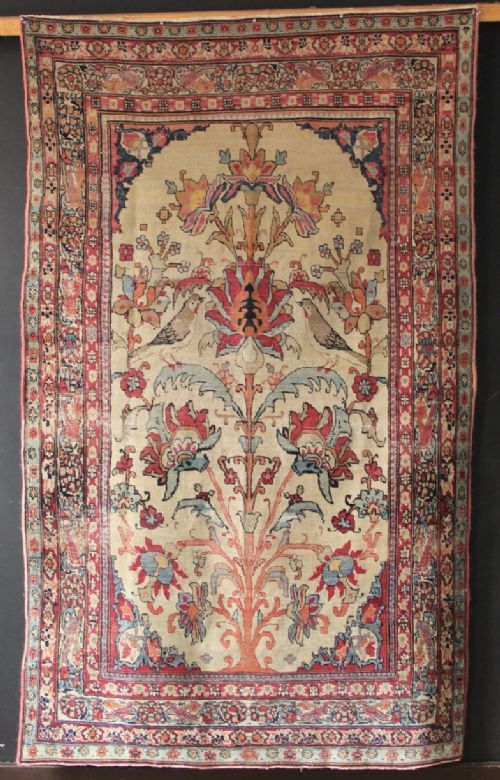
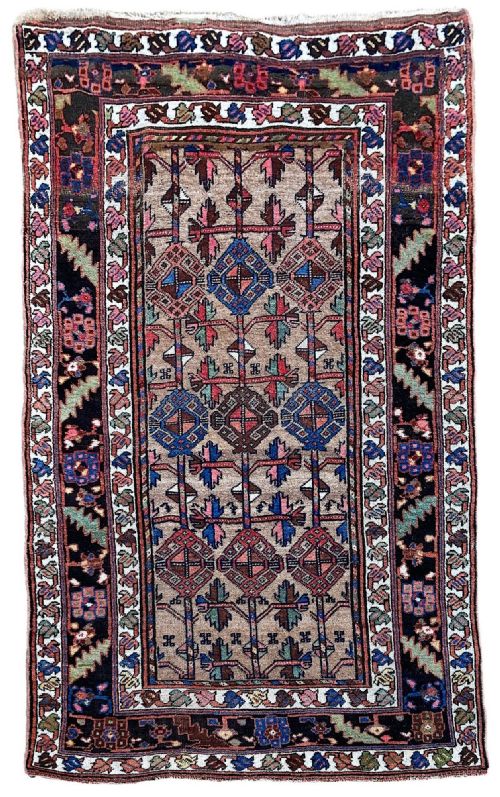
A beige persian rug encompasses a variety of room-sized carpets, village rugs, and narrow runners originating from distinct weaving centres across Persia. These pieces often feature neutral camel grounds, natural wool tones, and muted palettes created by traditional dyers.
The selection ranges from large country house carpets down to compact tribal scatter rugs and kilim cushions. Village pieces such as Sarab, Hamadan, and Baluch examples frequently display geometric motifs, while city productions like Tabriz and Kirman bring floral precision to neutral fields.
Dating primarily from the late nineteenth century through to the interwar period of the nineteen-thirties, these textiles reflect the enduring styles of Persian, Kurdish, and Qashqai makers. Buyers encounter diverse formats, from long hallway runners to grand carpets intended for principal reception rooms.
Materials and Construction
The foundation of these textiles relies predominantly on natural wool and cotton, with hand-spun wool providing resilience to the pile and cotton utilised for sturdy warps and wefts. Certain rural and tribal pieces incorporate camel hair or camel wool directly into the ground weave, imparting a distinctive tactile warmth and an authentic neutral tone.
Finer city carpets integrate silk alongside wool to achieve crisp detail and subtle lustre within complex floral and pictorial compositions. Artisans tied dense knots by hand onto vertical looms, securing the structures with tightly bound edges and flatwoven ends.
Beige Persian Rug Retail Price Guide 2026
Typical asking prices for beige persian rug among the pieces listed under this phrase on Sellingantiques today, from the lower quarter to the upper quarter. They describe what is for sale here now, not the wider market.
Several vintage kilim cushions share their construction with nineteenth-century nomadic baggage sacks, repurposed for modern lounging.
Evaluating Quality and Execution
Knot density and the fineness of the spin dictate the structural integrity of the weave, separating robust utility carpets from delicate city works. Superior examples demonstrate precise execution in intricate medallions and balanced borders, showing careful control over the loom.
The choice of materials significantly influences the character of the piece, as hand-spun wool and natural camel hair yield depth and variation that synthetic-free dyes enhance over time. The balance between pile thickness and structural suppleness determines how a heavy carpet settles upon the floor.
Benlian
The Beige Persian Rug Glossary
- Tabriz carpet
- A large woven floor covering originating from the major manufacturing centre of Tabriz in north-west Persia, known for intricate floral designs and fine knotting.
- Camel hair
- The natural fibre harvested from camels, frequently left un-dyed to form the warm neutral background common in tribal and village rugs.
- Runner
- A long, narrow carpet format traditionally woven for corridors, staircases, and narrow hallways.
- Kilim cushion
- A small decorative soft furnishing constructed from flatwoven textile panels rather than a piled carpet structure.
- Warp
- The stationary vertical threads stretched parallel on a loom that form the structural skeleton of the rug.
Beige Persian Rug: Frequently Asked Questions
How do I style a neutral rug?
Neutral floor coverings with camel grounds and muted wool tones integrate effortlessly into both traditional and contemporary interiors. Their subdued palettes allow them to anchor large rooms without competing with existing furniture.
Positioning a room-sized carpet beneath principal seating areas creates a cohesive focal point while protecting underlying flooring. Narrow runners work effectively in hallways and transitional spaces where texture is preferred over bold colour.
Where were these rugs made?
These textiles originate from diverse regions across Persia, encompassing major urban workshops in Tabriz, Kirman, Kashan, and Isfahan. Each weaving centre developed distinct aesthetic conventions and structural techniques.
Other examples stem from rural villages and nomadic tribal groups including the Sarab, Hamadan, Baluch, and Qashqai. These regional variations account for the broad spectrum of geometric patterns and tribal motifs found across the selection.
How do I care for wool carpets?
Regular gentle vacuuming without a rotating brush roll prevents dust accumulation within the wool pile. Professional cleaning suited to antique textiles preserves the natural lanolin in hand-spun fibres.
Keeping woven pieces away from direct, prolonged sunlight protects natural dyes from fading. Rotating the carpet periodically ensures even wear across high-traffic areas.
How do I identify village rugs?
Village and tribal rugs typically display bold geometric medallions, repetitive tribal motifs, and rustic borders woven from memory rather than strict cartoon templates. They frequently incorporate camel hair and have slightly irregular dimensions reflecting traditional domestic production.
City carpets present more formal, symmetrical floral layouts with finer knotting and structured cotton foundations. Comparing the structural rigidity and design symmetry helps distinguish rural tribal output from urban workshop output.