

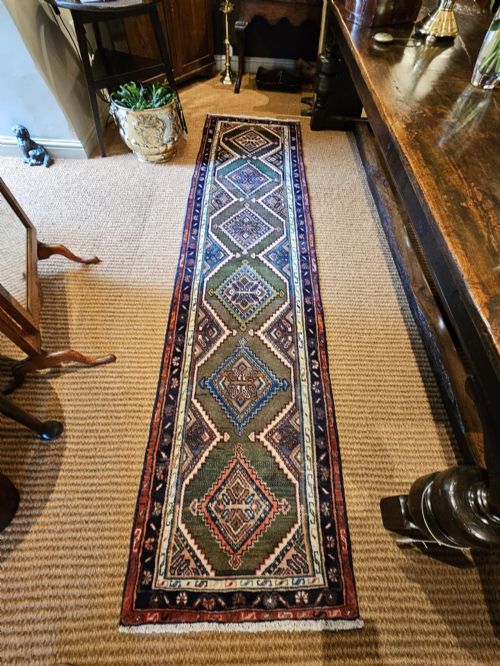
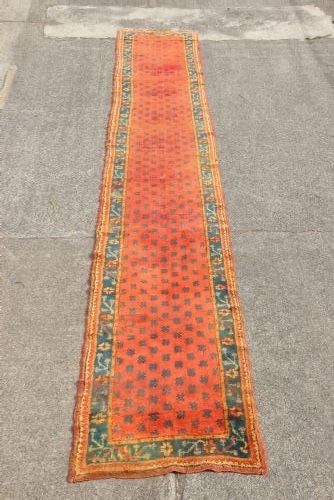
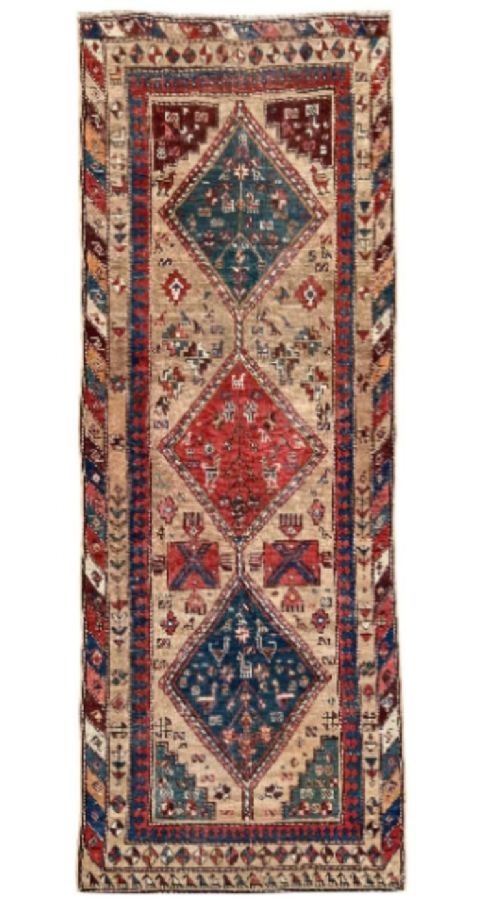
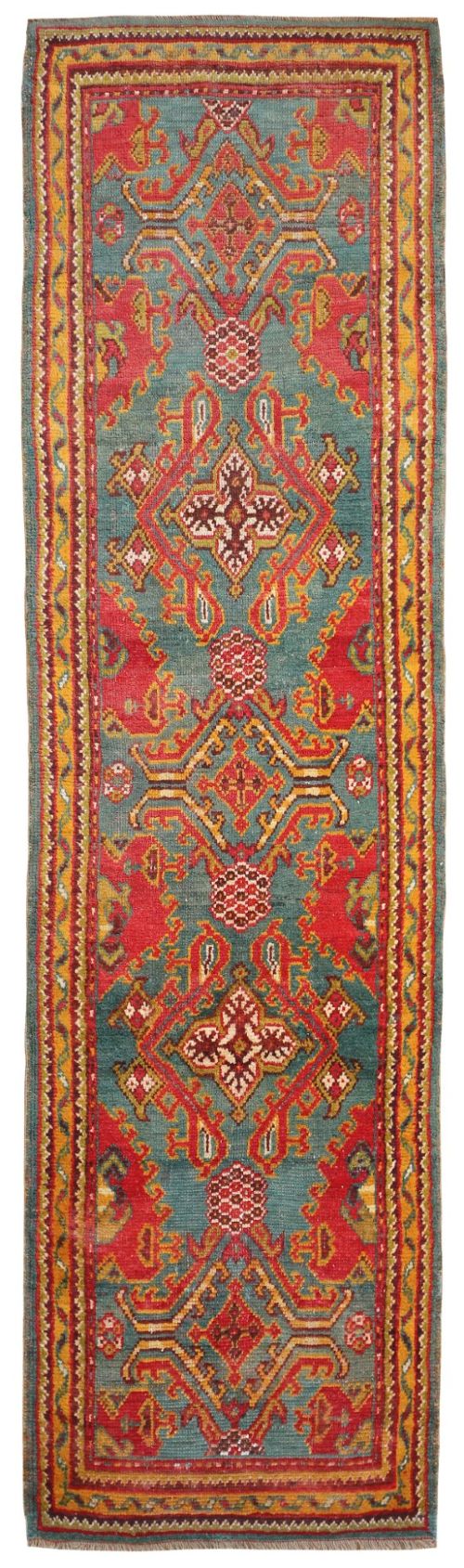

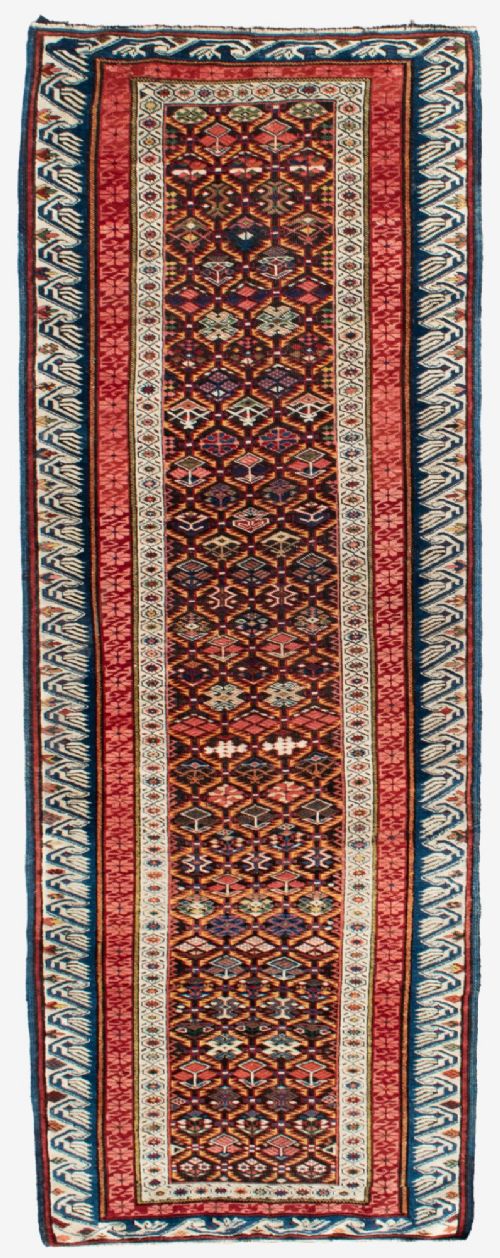
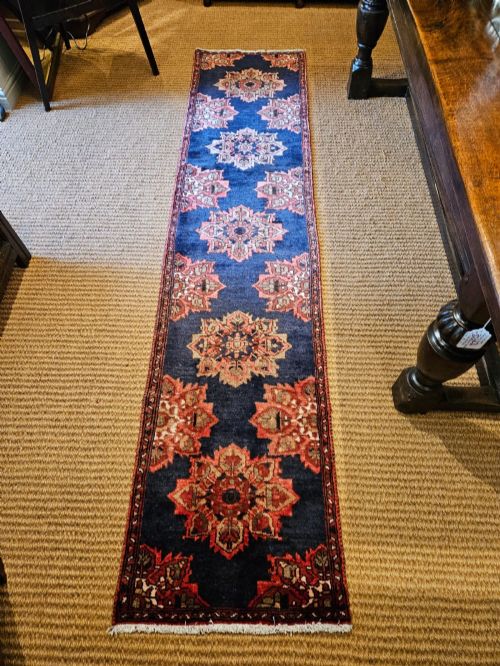
Corridor Carpet Runner
A corridor carpet runner brings deep texture, history and grounding presence to a long hallway or narrow passage.
Corridor Carpet Runner
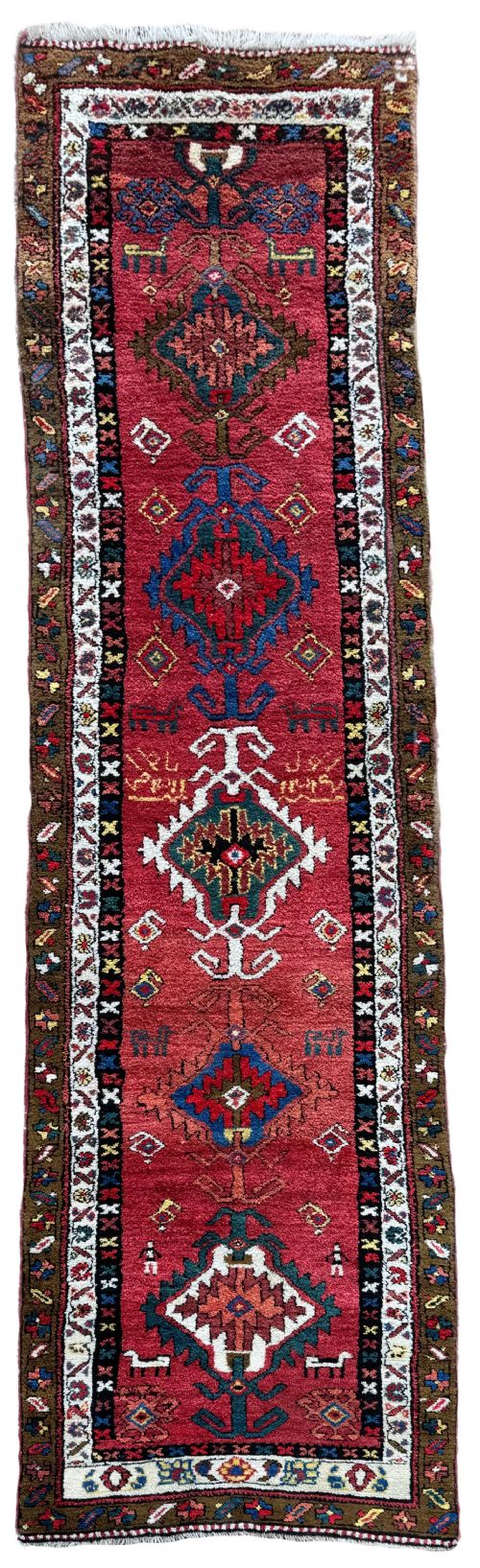
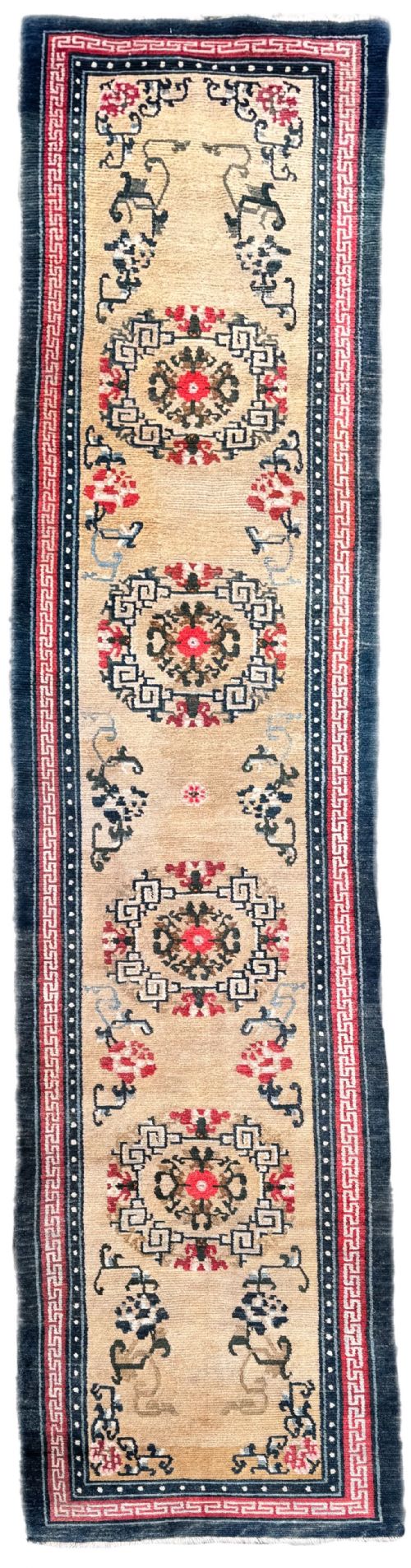
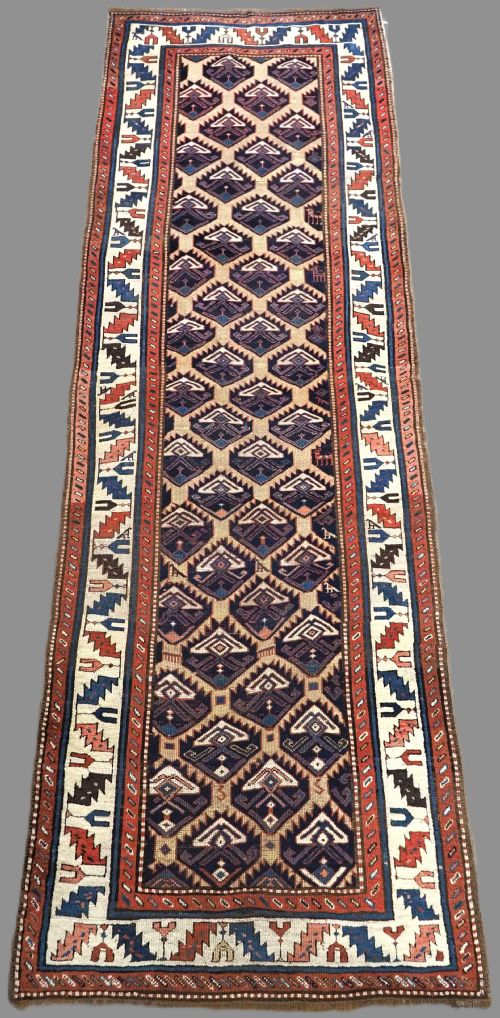
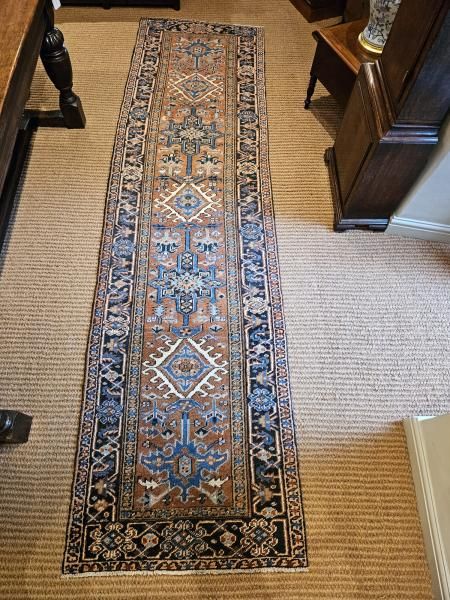
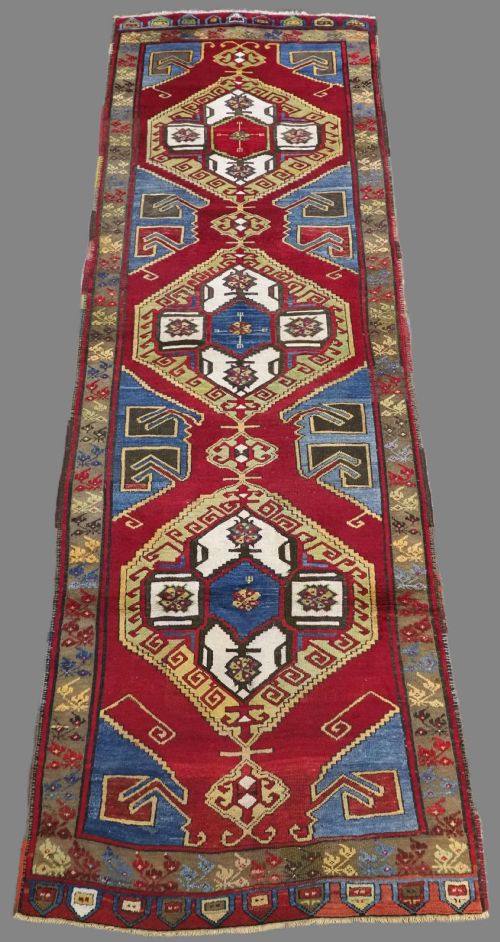
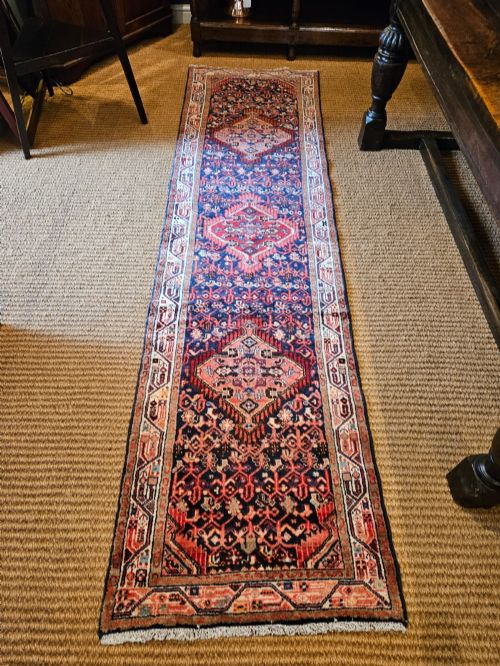
A corridor carpet runner is an elongated textile designed specifically to span narrow hallways, landings and transitional spaces in a home. The pieces found here span the nineteenth century into the twentieth century, bringing centuries of regional weaving traditions directly into domestic interiors.
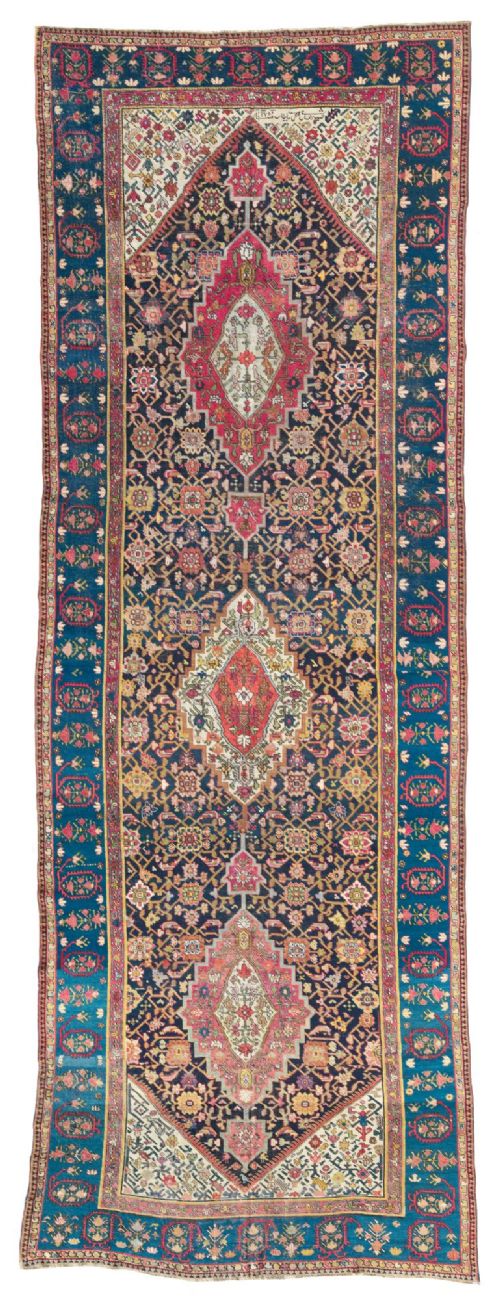
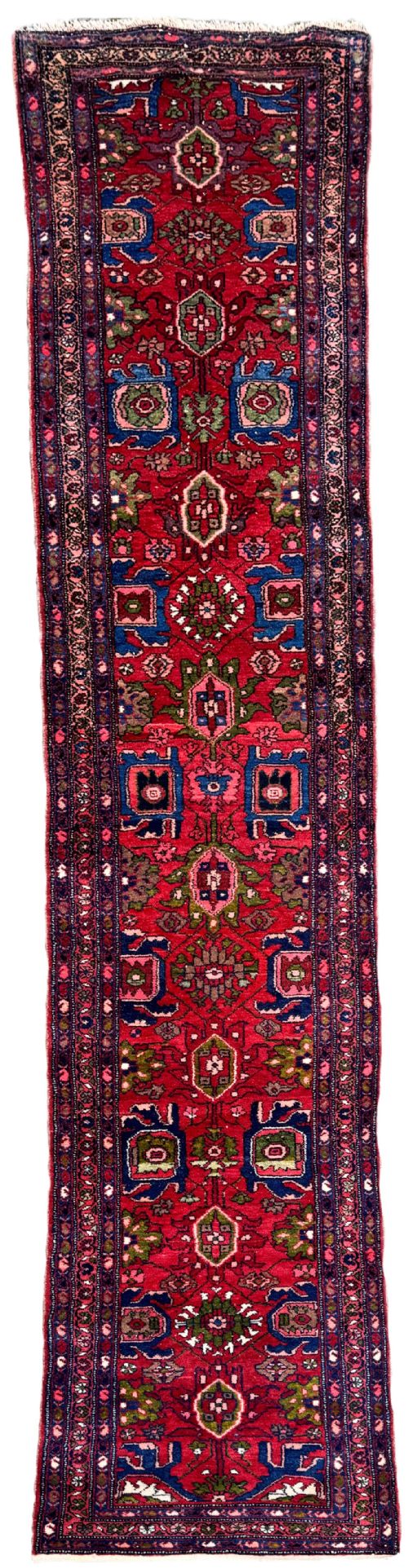
Buyers will encounter various regional styles, most notably Persian tribal and village formats such as Heriz, Hamadan and Kurdish pieces alongside Caucasian and Anatolian works. These textiles range from compact formats to exceptionally long formats reaching over five metres in length.
The predominant forms are narrow rectangular runners and long kelley formats that were originally woven to fit specific architectural corridors in country houses and town residences. Each piece displays distinct local motifs, from geometric lattice patterns to repeating medallions.
Evaluating Quality
Quality in these floor coverings rests upon the density of the knotting and the integrity of the wool fibres used in the pile. Tighter knot counts allow for sharper geometric definition and greater longevity under daily use.
The choice of dyestuffs significantly separates examples, with richer, more complex colour palettes deriving from traditional natural dyeing methods. The balance of proportion, wool lustre and structural straightness across long formats further defines the upper tier of these textiles.
The selection includes regional styles such as Persian tribal, Anatolian tribal, Kurdish tribal, Caucasian and traditional Persian designs.
The Corridor Carpet Runner Glossary
- Kelleh
- A large format rug or runner, typically longer and narrower than standard carpets, suited for spacious corridors.
- Pile
- The upright looped or cut yarn surface of a carpet that forms the tactile upper layer and carries the design.
- Warp
- The vertical structural threads stretched tightly on the loom before knotting begins.
- Weft
- The horizontal threads passed across the warp strands to lock the rows of knots in place.
- Medallion
- A central ornamental design motif placed in the field of the textile.
Corridor Carpet Runner: Frequently Asked Questions
Where should I place a runner?
These long textiles suit narrow entryways, corridors, hallways and stair landings where length and narrow proportions are required to protect flooring and define the walkway.
They also work effectively in long kitchens or alongside large furniture groupings where a linear floor covering anchors the spatial flow.
How do I care for an antique runner?
Regular gentle vacuuming without a rotating brush roll prevents dust and grit from settling deep into the wool pile.
Professional specialist cleaning is recommended when necessary to protect the natural fibres and dye stability of older textiles.
Are these runners durable for daily use?
Constructed from natural wool pile on sturdy foundations, these pieces were originally built to endure heavy foot traffic in domestic hallways.
Using an appropriate underlay helps secure the textile in place and cushions the structure against wear on hard floors.
How do I identify regional carpet styles?
Regional attribution relies on examining the specific palette, border arrangements and characteristic geometric or floral motifs unique to weaving groups.
Kurdish, Heriz, Caucasian and Anatolian traditions each employ distinct structural foundations and knotting habits that reveal their geographic origin.