




Bedroom Floor Mirror
A bedroom floor mirror is a freestanding cheval glass designed for dressing, offering full-length reflection in mahogany, satinwood, and brass.
What these pieces are
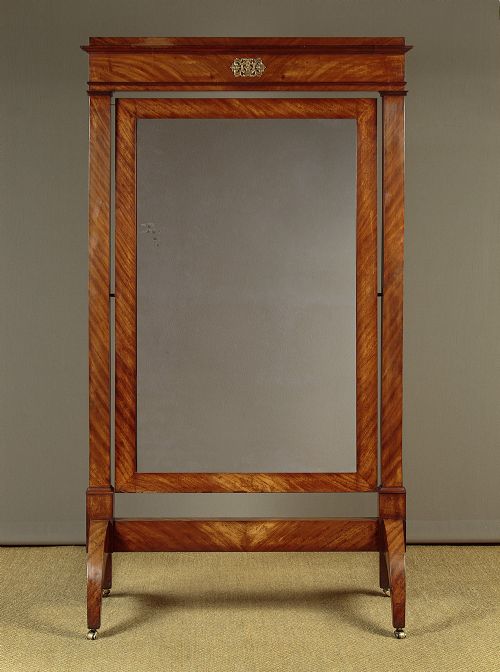
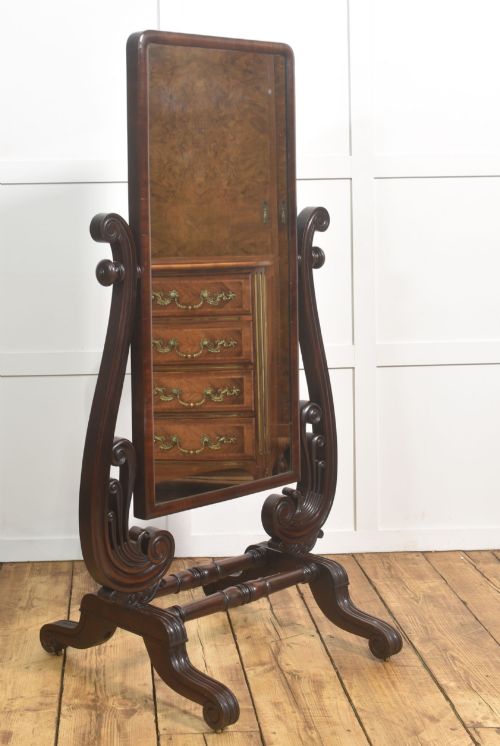
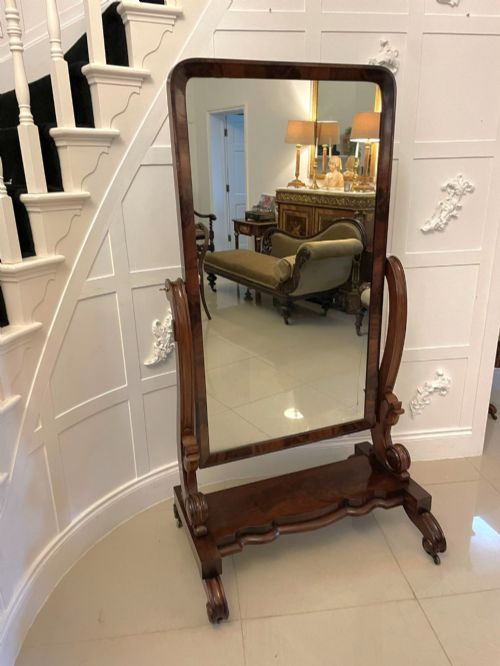
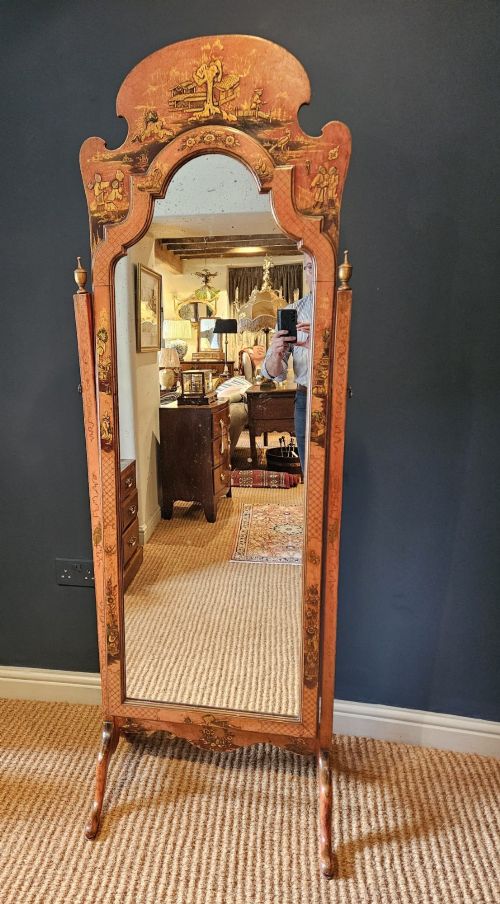
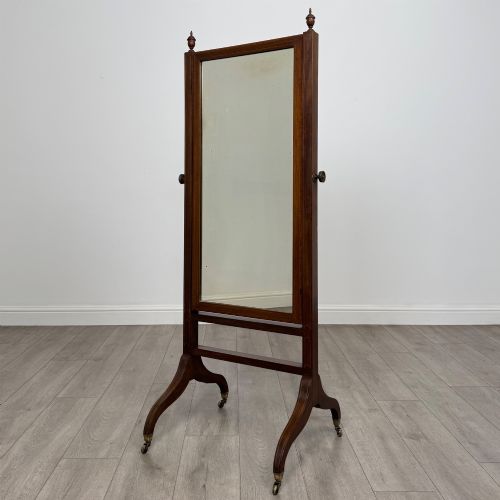
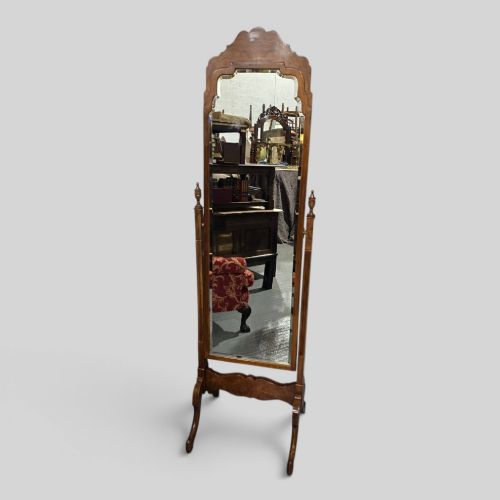
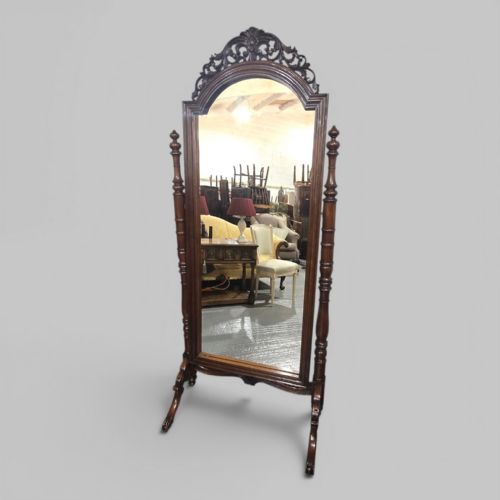
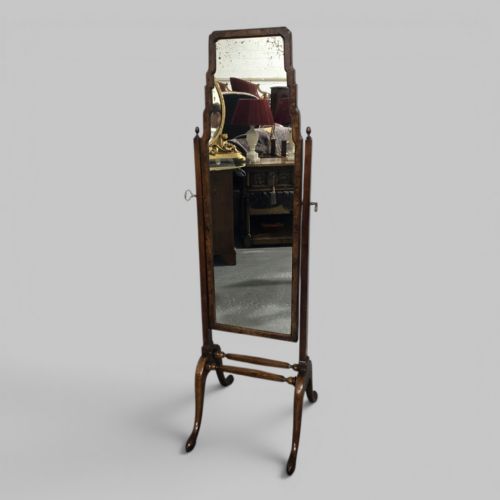
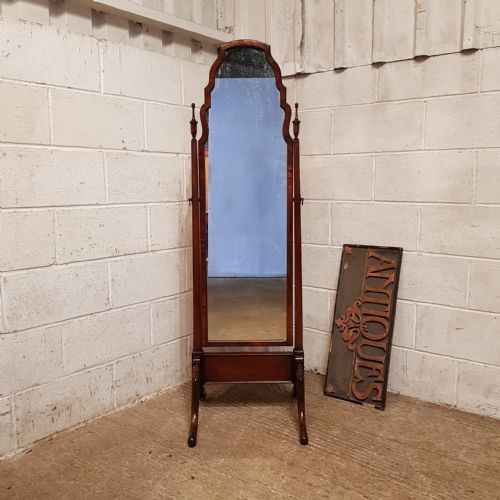
A bedroom floor mirror is typically encountered as a cheval mirror designed for dressing and full-length reflection in domestic spaces. These freestanding pieces allow the glass to tilt within a solid frame supported by stable feet or a floor-standing chassis.
The versions met on this page span the Victorian and Edwardian eras through to nineteen twenty, featuring mahogany, satinwood, and brass construction. They appear in styles ranging from classic English country house designs to French Empire influences and marquetry inlay.
Each object functions as both a practical dressing accessory and a substantial architectural feature within a bedroom. Their forms rely on pivoting side pins that hold the mirror plate securely at various angles.
How they were made
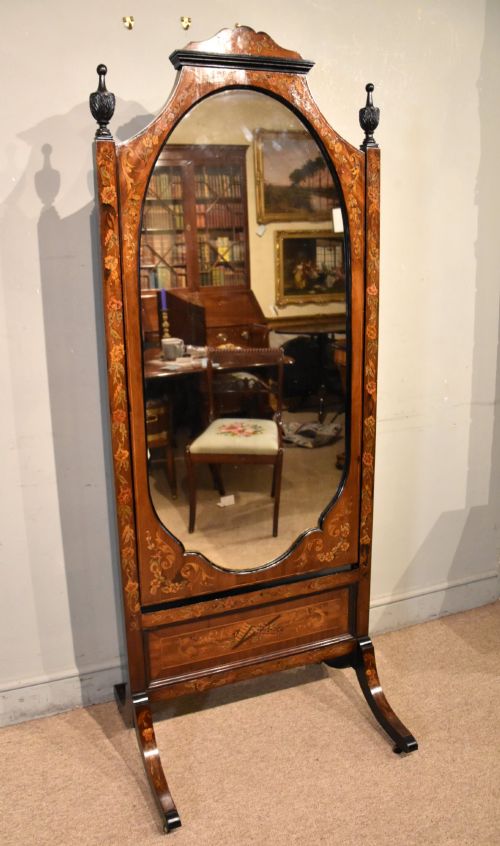
Construction relies on timber frames built from mahogany and satinwood, often enhanced with marquetry inlay to articulate the surface decoration. Structural stability is provided by robust uprights connected to floor feet or scrolling trestle bases.
Mirror glass is held securely within adjustable wooden frames using brass pivoting hardware that allows the plate to tilt. The hardware includes threaded screw caps and side arms designed to maintain tension on the pivoting axis.
Retail Price Guide 2026
Typical UK retail prices for bedroom floor mirror, calculated from the Sellingantiques database of over a million retail prices indexed since 2003. This retail price guide relies exclusively on Sellingantiques data; no external sources or auction records are used, so the figures do not describe the wider market.
Current listings span the nineteenth century, Victorian, Edwardian, and nineteen twenty periods, utilising mahogany, satinwood, and brass.
What varies in quality
Quality reveals itself in the choice of timber and the precision of the marquetry inlay rather than mere ornamentation. Superior examples employ finely figured mahogany and satinwood matched symmetrically across the frame and uprights.
The engineering of the pivoting mechanism dictates the longevity of the piece, with solid brass fittings outperforming lighter plated alternatives. A well-balanced frame stays fixed at the chosen angle without slipping or placing undue strain on the side pins.
The Bedroom Floor Mirror Glossary
- Cheval mirror
- A freestanding full-length mirror mounted on a pivoting frame. The term derives from the French word for horse, referencing the four-legged supporting trestle base.
- Marquetry
- Decorative inlay work using various woods to create pictorial or geometric patterns on a surface. Craftsmen veneer thin slices of timber onto a primary carcase.
- Victorian
- The period of Queen Victoria's reign from eighteen thirty-seven to nineteen oh one. Furniture from this era often displays robust proportions and deep timber tones.
- Edwardian
- The period spanning the reign of King Edward the Seventh from nineteen oh one to nineteen ten. Pieces from this time frequently favour lighter satinwood and refined inlay.
- French Empire
- A neoclassical design style characterised by classical symmetry and restrained ornamentation. It draws inspiration from ancient Roman and Greek decorative motifs.
Frequently Asked Questions
What is a cheval mirror?
A cheval mirror is a freestanding full-length looking glass suspended on pivots within a wooden frame. This design allows the user to tilt the glass to various angles for dressing.
Such mirrors stood traditionally in bedrooms and dressing rooms to provide a complete view of attire. They require no wall mounting and can be repositioned easily across the floor.
How do you adjust the tilt?
The mirror plate hangs between two upright posts supported by threaded brass screw pins on each side. Turning these pins loosens or tightens the grip on the frame to hold the glass steady.
Users simply tilt the glass gently to the preferred angle and secure the side screws if the mechanism includes them. Proper balance prevents the mirror from swinging too freely.
Where should I place it?
A bedroom floor mirror needs adequate floor space to stand securely without obstructing walkways or doors. Placing it near a window or light source enhances its primary function for dressing.
The substantial footprint of the supporting feet requires a level surface to prevent the frame from twisting or placing uneven strain on the pivots.
How do I identify Edwardian pieces?
Edwardian mirrors date from the early twentieth century and frequently incorporate satinwood with delicate marquetry inlay. Their frames tend to look lighter and more refined than earlier Victorian equivalents.
Detailing on these pieces reflects a shift towards brighter, less heavy domestic interiors. The craftsmanship often highlights contrasting wood veneers and subtle stringing lines.