
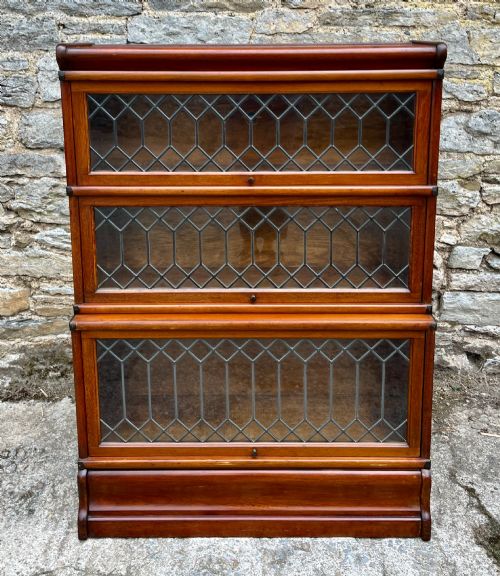
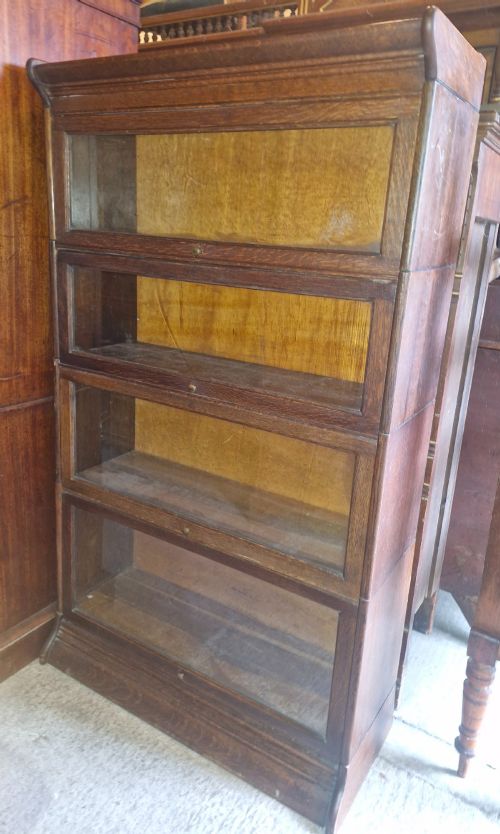
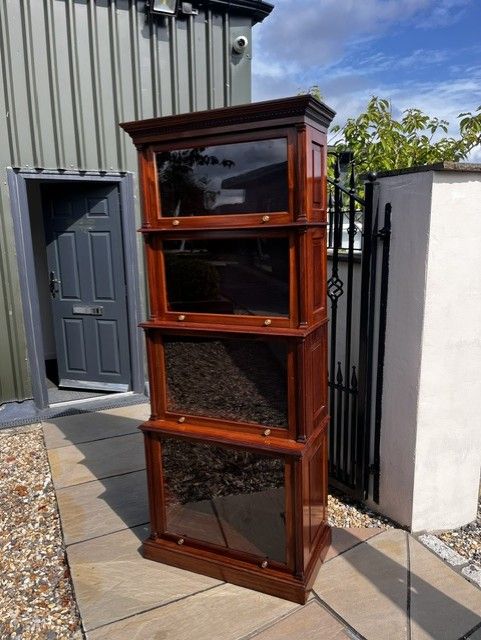
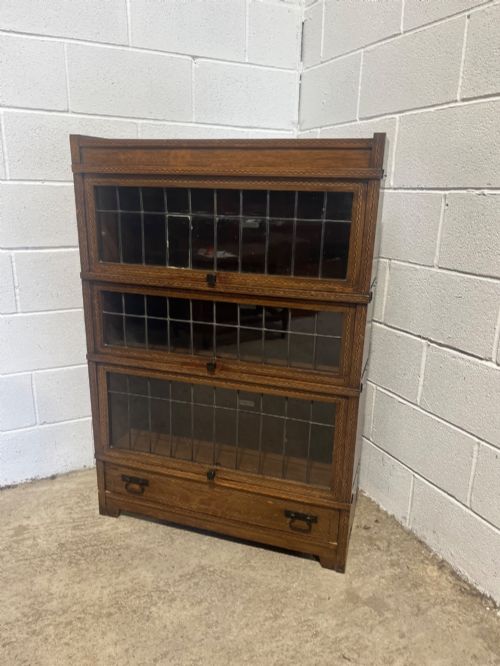
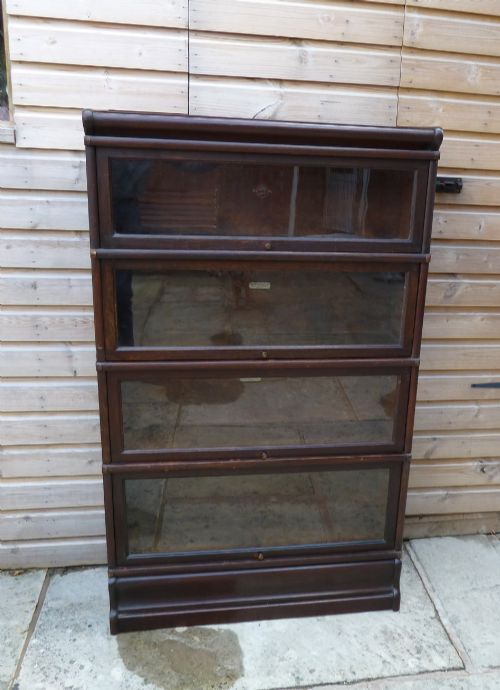

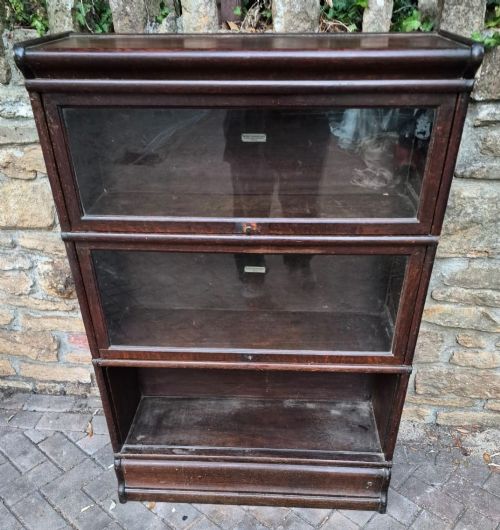
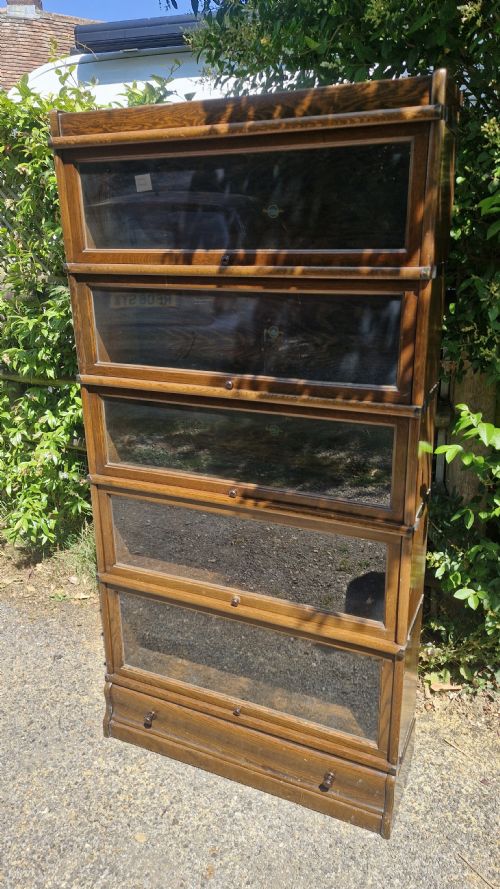
Barrister Glazed Bookcase
A barrister glazed bookcase offers modular stacking tiers and clear glass protection for professional libraries and home studies alike.
Barrister Glazed Bookcase
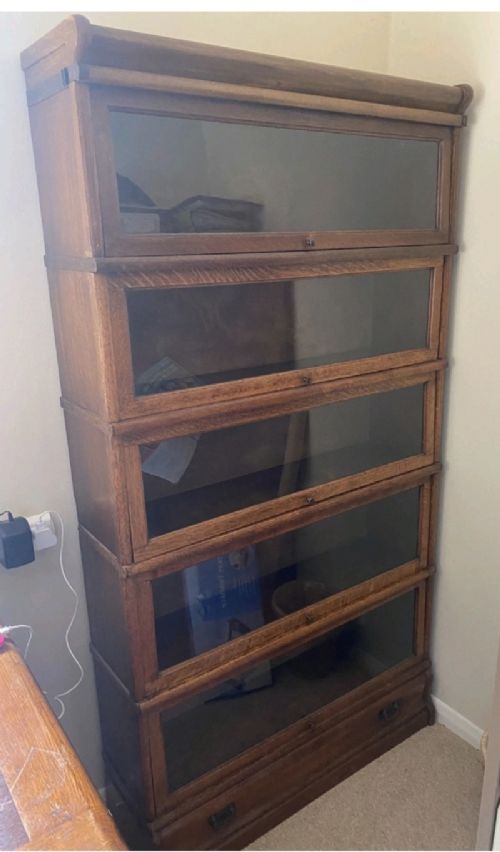
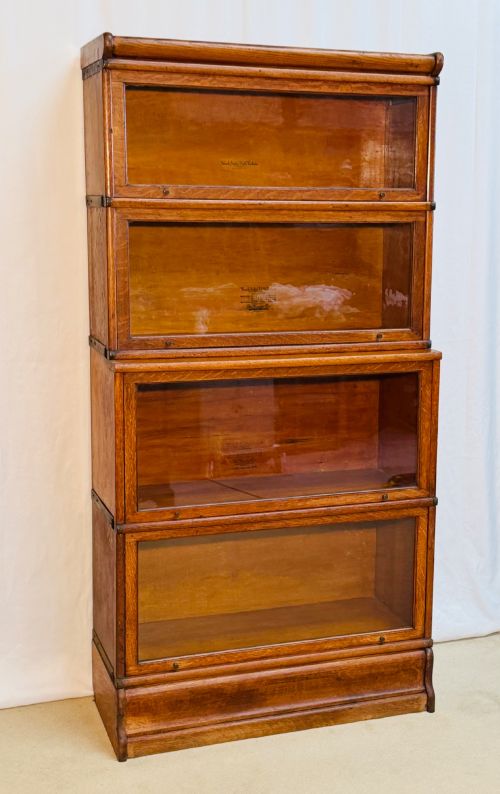
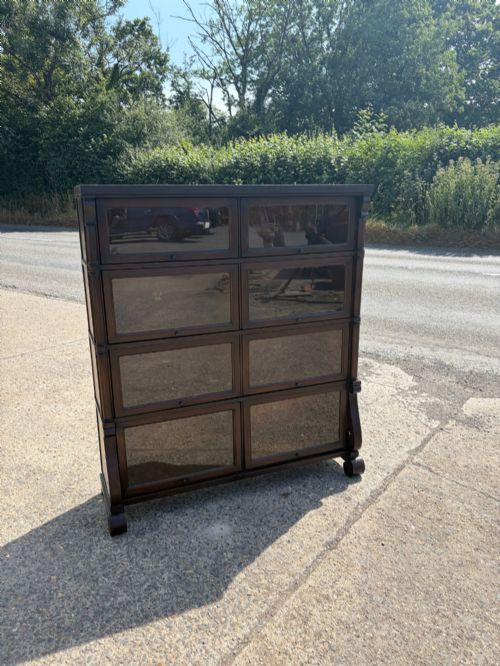
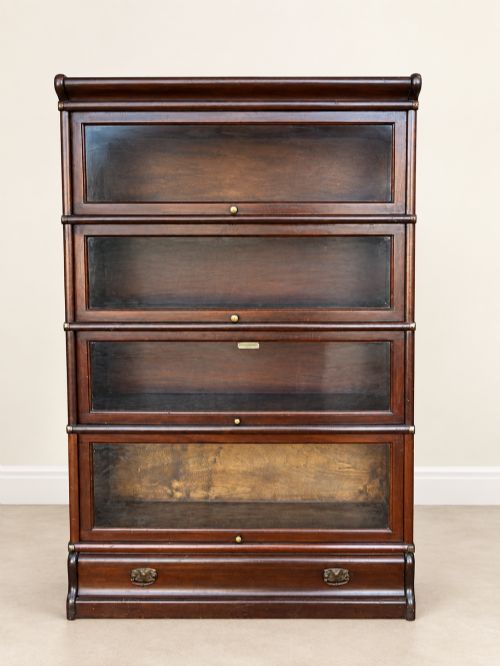
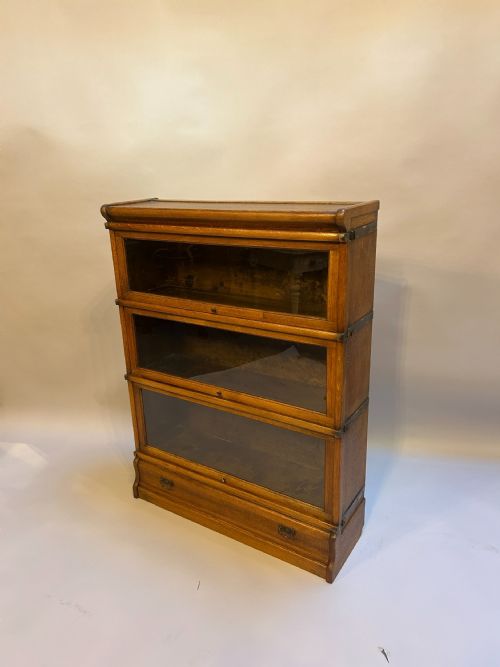
When you search for barrister glazed bookcase, you encounter sectional furniture designed with independent stacking tiers and lifting glass doors. These modular cabinets originate primarily from the Edwardian period through the nineteen-thirties, spanning decades such as nineteen hundred, nineteen-ten, nineteen-twenty, and nineteen-thirty. Oak and mahogany dominate the offerings, appearing alongside walnut and golden oak timber.
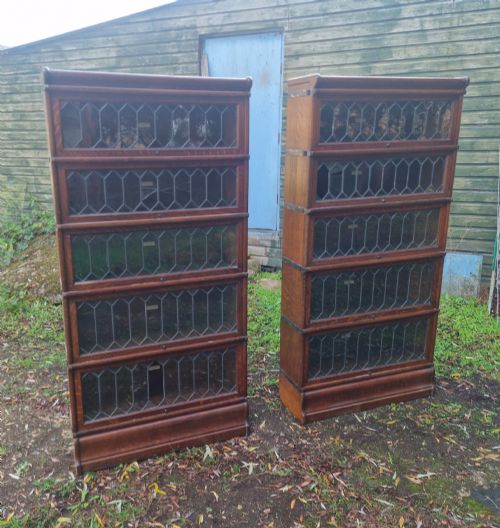
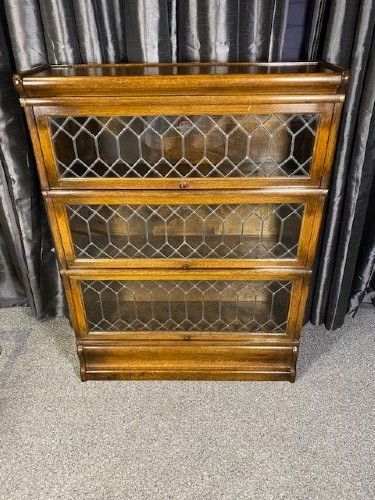
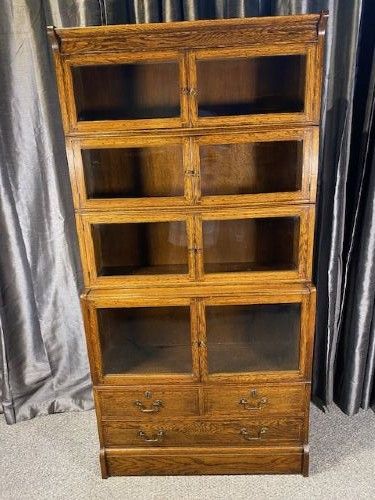
The most common form on this page is the stacking or sectional office bookcase, often structured in three, four, or five tiers. Pieces emerge from specific cabinet-making traditions, including Edwardian Arts and Crafts, Art Deco, and nineteen-thirties French aesthetics. Cabinets range from single modular units to tall pairs equipped with leaded glass windows and brass hardware.
How they were made
Cabinet makers utilised solid timbers like oak and mahogany, occasionally incorporating walnut and inlay details to construct the modular tiers. Each section relied on precision joinery to allow separate units to stack securely while maintaining structural integrity.
Doors combined wood frames with glass or leaded glass panes, fitted with specialised metal mechanisms that enabled the sash to lift and slide inward above the books.
Lawyers needed stacking cases so they could literally pack their entire argument and library into a horse-drawn carriage.
What varies in quality
The distinction between standard office utility models and superior examples lies in the selection of timber figure, such as richly grained mahogany or quarter-sawn golden oak. Finer pieces demonstrate meticulous craftsmanship in their brass fittings, original hardware, and subtle decorative inlays.
Maker attribution further differentiates the range, with established workshops implementing robust stacking mechanics and refined proportions that elevate simple sectional storage into exceptional cabinet work.
Globe Wernicke·Lebus·Minty·Gunn·AMYL
The Barrister Glazed Bookcase Glossary
- Sectional bookcase
- A modular cabinet built from individual stacking tiers that rest one upon another. This design allows the furniture to be easily disassembled and reconfigured.
- Leaded glass
- Glass panes joined together by narrow strips of lead came to form geometric or decorative patterns. This technique appears frequently on Edwardian cabinet doors.
- Quarter-sawn oak
- Timber cut radially from the log to produce characteristic growth rings and distinct figuring. Cabinet makers favoured this cut for its stability and appearance.
Barrister Glazed Bookcase: Frequently Asked Questions
What is a barrister glazed bookcase?
A barrister glazed bookcase is a modular piece of furniture composed of stacked, individual sections with glass-fronted lifting doors. The design allowed legal professionals to transport and protect their library volumes easily.
Today, these cabinets serve in homes as versatile storage for books and display items while retaining their historical mechanical function.
How do the stacking sections work?
Each tier operates as a standalone box with a glass door that lifts upward and slides into the cabinet above the shelf. The sections simply rest on top of one another without permanent fixings.
This modular construction enables owners to add, remove, or rearrange tiers to suit their collection size.
How do I date a sectional bookcase?
Dating relies on timber choices, hardware styles, and maker marks stamped on the interior or back panels. Edwardian pieces often feature golden oak or inlaid details, while later examples reflect Art Deco or nineteen-thirties influences.
Examining the construction methods of the joints and the composition of the glass also helps determine the era of manufacture.
Are these bookcases suitable for modern homes?
These cabinets adapt readily to contemporary living spaces due to their compact footprint and modular flexibility. The glass doors protect book collections from dust while maintaining clear visibility of the spines.
Different configurations, from low three-tier units to tall compositions, fit various room dimensions and ceiling heights.