




Baroque Relief Panel
A baroque relief panel brings sculptural depth and theatrical presence to a room, offering carved timber figures and scrolling ornamentation straight from historic interiors.
Baroque Relief Panel
When you search for a baroque relief panel, you are looking at carved wooden plaques, architectural fragments, and wall sculptures that date principally from the seventeenth and eighteenth centuries, alongside later nineteenth-century revivals. These objects originate from across Europe, encompassing English, Italian, Flemish, German, and French workshops.
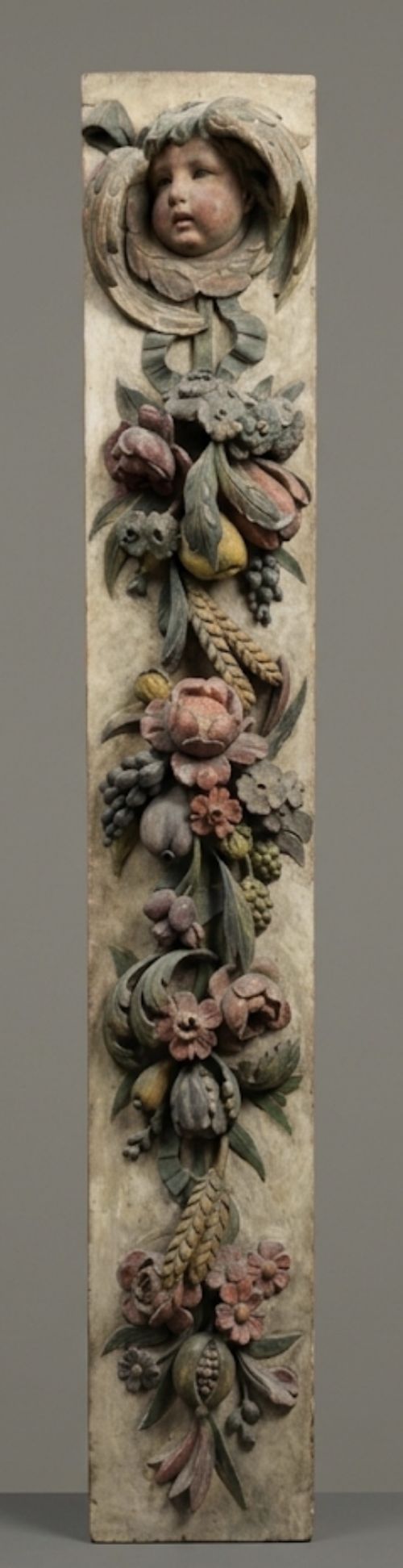
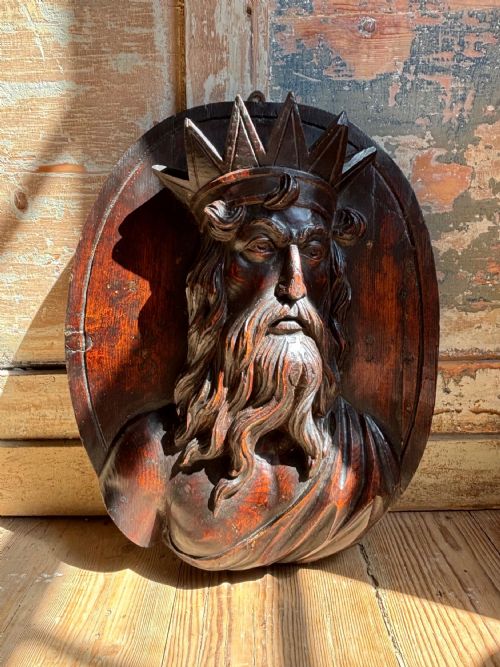
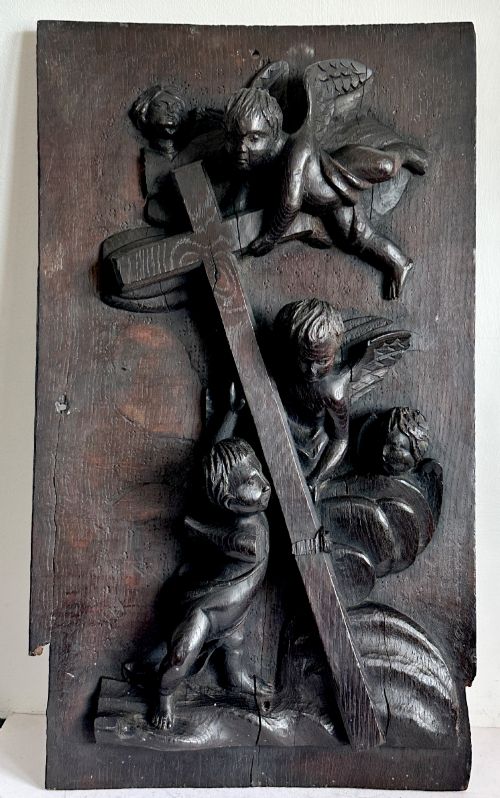
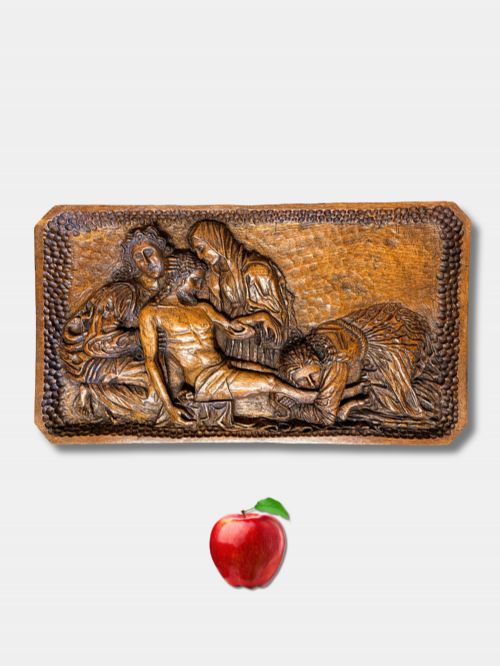
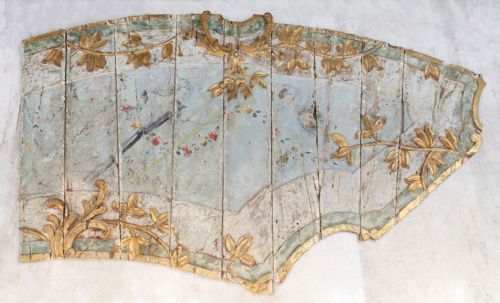
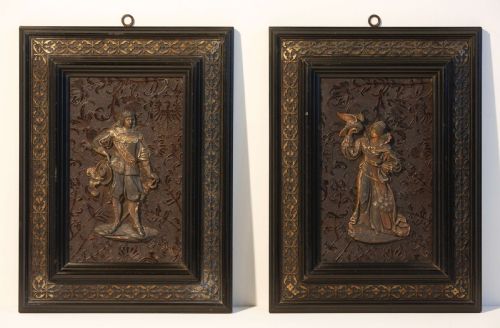
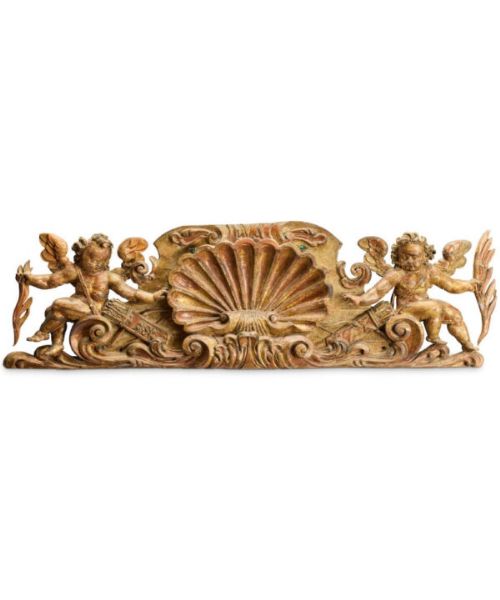
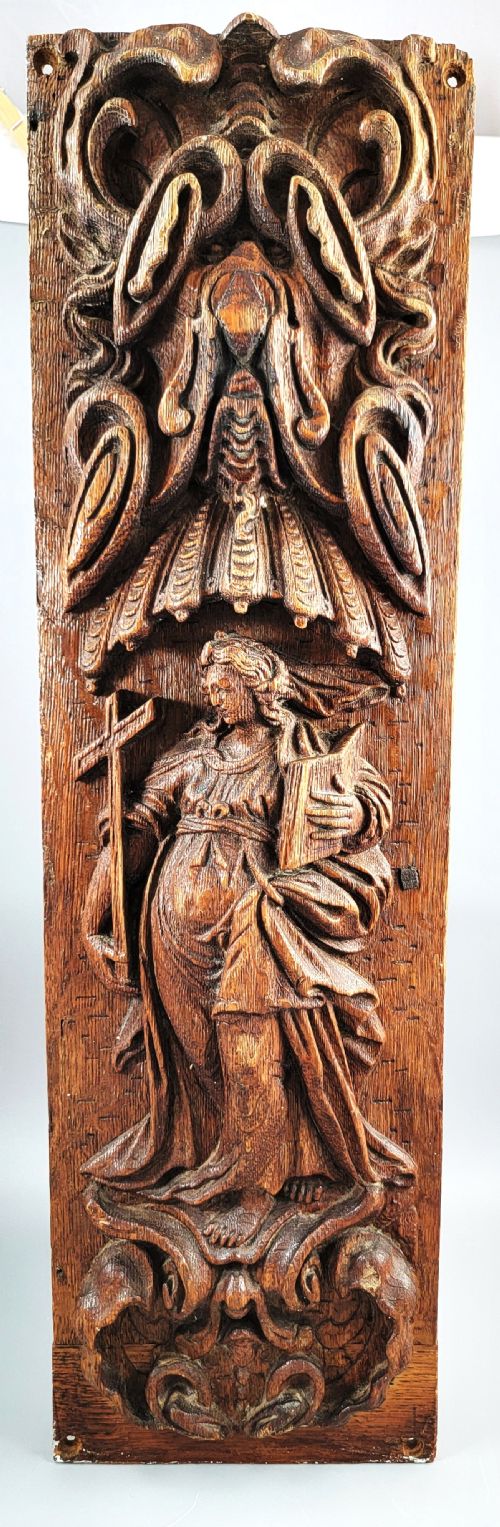
The pieces on this page take several distinct forms, from large overdoor carvings and staircase panels to framed wall plaques and architectural pediments. Many depict religious or mythological subjects, including depictions of Neptune, Christ's lamentation, allegories of faith, and putti cherubs.
You will most frequently encounter dark oak and walnut panels featuring deep undercutting, pierced acanthus leaves, and figural carving. These elements reflect the theatricality and movement characteristic of the period style, whether executed during the original era or in subsequent revival periods.
How they were made
Carvers worked primarily in solid timber, selecting oak, walnut, chestnut, and timber substrates that allowed for deep, robust relief work. The wood was seasoned and heavily worked with chisels and gouges to achieve high relief, often featuring pierced openwork where the background was cut completely away.
Surface treatments varied according to regional taste and the original architectural context, incorporating polychrome paint, gesso preparation, and parcel gilding with gold leaf. White metal and gilded bronze elements also appear in composite plaques from later nineteenth-century production.
What varies in quality
The distinction between ordinary woodwork and exceptional carving lies in the confidence of the hand and the depth of the undercutting. Superior panels exhibit anatomical precision in human figures, crisp edges on acanthus leaves, and a sense of three-dimensional movement rather than flat surface decoration.
The integrity of the timber and the retention of original surface finishes, such as early polychrome paint or parcel gilt, elevate a piece. Master carvers achieved remarkable dynamism in facial expressions and drapery, setting monumental architectural panels apart from simpler decorative fragments.
Grinling Gibbons·Edward Pearce
The Baroque Relief Panel Glossary
- Baroque
- A style of European architecture, music, and art of the seventeenth and eighteenth centuries that followed Mannerism and is characterised by ornate detail, drama, and exuberant movement. This aesthetic defines the dynamic figures and heavy scrollwork found on these panels.
- Relief
- A sculptural technique where the sculpted elements remain attached to a solid background of the same material. High relief pieces project significantly from the board, creating strong shadows and a sense of volume.
- Gesso
- A plaster mixture used as a smooth base for paint or gold leaf application on wood surfaces. It provides the chalky foundation necessary for parcel gilt highlights.
- Acanthus
- A Mediterranean plant whose serrated leaves inspired classical architectural ornamentation. It appears frequently as a carved motif scrolling across seventeenth-century panels.
- Pediment
- An upper structural element of a classical facade, often triangular or segmental, placed above doors or windows. Surviving carved wooden examples function as decorative wall sculpture.
Baroque Relief Panel: Frequently Asked Questions
Where were these panels originally placed?
These carvings formed integral parts of historic interiors, functioning as overdoors, staircase panels, architectural pediments, and wall decorations within churches and grand houses.
Over time, many of these architectural elements were salvaged from buildings, turning structural woodwork into independent wall art and sculptures.
How do I hang a heavy wooden panel?
Because these panels are carved from dense hardwoods like oak and walnut, they require robust wall fixings anchored directly into studs or masonry.
Professional framing or custom metal brackets that support the weight from beneath are recommended to protect the antique wood from stress.
How do I tell seventeenth-century work from nineteenth-century revivals?
Seventeenth-century carving displays tool marks, timber shrinkage, and wear consistent with age, alongside the vigorous undercutting typical of the period. Nineteenth-century baroque revival pieces often show cleaner mechanical execution and different patination on the timber.
Examining the back of the panel reveals construction methods and wood ageing that help establish the true period of manufacture.
How should I care for antique wood panels?
Keep carved panels away from direct sunlight and away from heat sources like radiators to prevent the timber from drying out and splitting. Maintain a stable indoor humidity and dust gently with a dry, soft brush without applying modern polishes or oils.