

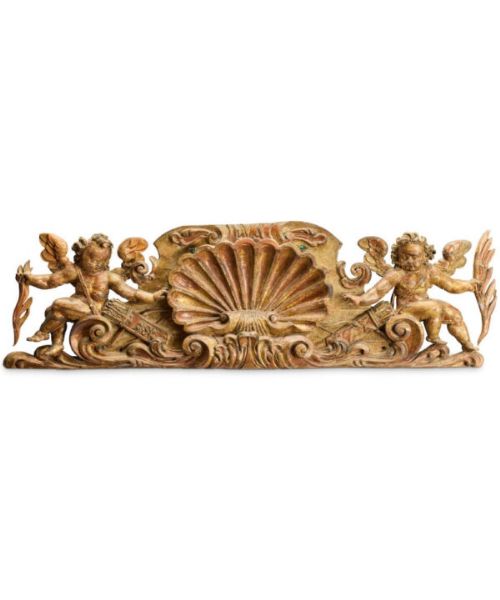


Antique Timber Pediment
An antique timber pediment brings classical architectural presence and rich architectural salvage character into a modern interior.
Antique Timber Pediment
An antique timber pediment is a decorative architectural framing element designed to sit above doors, windows, or furniture pieces like corner cabinets. The examples found here span from the seventeenth century through to the nineteenth century, encompassing Georgian, Victorian, and Baroque expressions.
The buyer meets several distinct forms on this page, ranging from parcel gilt carvings and overdoor panels to mahogany architectural fragments. These pieces originate from diverse European traditions, including English, Black Forest, Spanish, and Italian workshops.
Makers and carvers utilised various woods including oak, walnut, mahogany, and pine to shape these architectural fragments. They serve today primarily as wall hangings or statement overdoor decorations that establish historical depth in a room.
How they were made
Carvers shaped these pediments using dense hardwoods such as oak, walnut, and mahogany, applying deep relief carving techniques. Many 18th-century and 17th-century pieces display intricate hand-carved foliage, figures, and architectural tracery.
Surface treatments included parcel gilding, hand painting, and natural polishing over pine and carved wood. Master carvers constructed these elements as structural fragments or overdoor panels using traditional joinery and hand tools.
Architectural forms on this page include overdoor panels, hanging corner cupboards, Gothic tracery, and wall mirrors.
What varies in quality
The depth and crispness of the hand carving separate masterwork architectural panels from simpler decorative elements. Pieces attributed to specific historical hands or major design periods exhibit superior anatomical and botanical proportion.
The choice of primary timber, such as figured walnut or dense old-growth oak, dictates the structural integrity and visual weight of the pediment. Original surface finishes, whether parcel gilt or aged patina, strongly influence the overall integrity of the piece.
Grinling Gibbons·Edward Pearce
The Antique Timber Pediment Glossary
- Pediment
- A triangular or segmental architectural crowning feature placed above doors, windows, or porticoes. In interior settings, they were adapted for overdoors and large furniture pieces.
- Parcel Gilt
- A decorative technique where specific raised portions of a carved wooden surface are highlighted with thin gold leaf. This method accentuates the depth of the carving.
- Architectural Salvage
- Building elements and decorative fragments rescued from older structures for reuse in interior design. These pieces preserve historical craftsmanship.
- Overdoor
- A decorative panel, painting, or pediment fitted directly above a doorway. They were designed to grandly frame primary reception rooms in classical architecture.
- Tracery
- Ornamental openwork pattern resembling branching lines, commonly seen in Gothic architecture and applied to wooden panels. It requires precise chisel work to execute.
Antique Timber Pediment: Frequently Asked Questions
How do I hang a timber pediment?
Heavy architectural fragments require secure fixing directly into wall studs using appropriate metal brackets screwed into reinforced timber points on the back.
Lighter panels can sometimes utilise heavy-duty picture hanging wire attached securely to the primary wooden frame.
Where should I place an overdoor pediment?
These pieces traditionally sit directly above internal doorways to create a sense of height and classical proportion in a room.
They also function effectively mounted directly on plain walls as sculptural wooden artworks.
How do I date an antique wooden pediment?
Dating relies on identifying the primary timber species, tool marks left by the carver, and stylistic traits associated with periods like the Georgian era or 17th-century Baroque.
Comparing the construction methods and joinery to dated examples helps confirm the century of origin.
What is the difference between an architectural fragment and a pediment?
An architectural fragment is any detached piece salvaged from a building, which may include finials, tracery panels, or mouldings.
A pediment is a specific triangular or curved crowning form designed explicitly to top a structural opening or piece of furniture.