


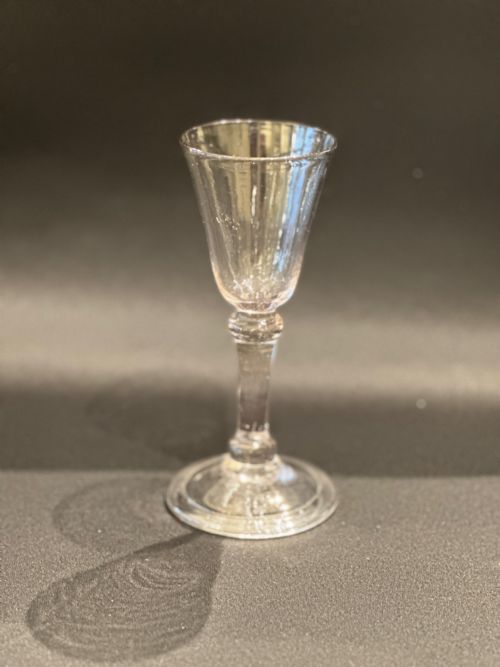

Baluster Stem Wine Glasses
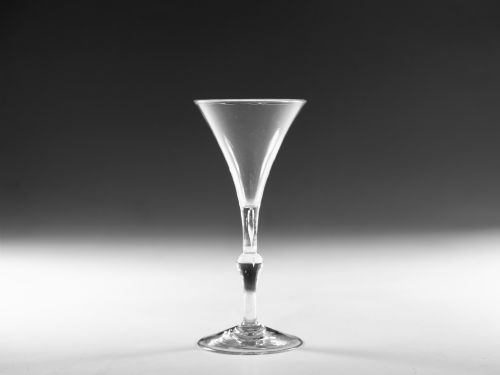
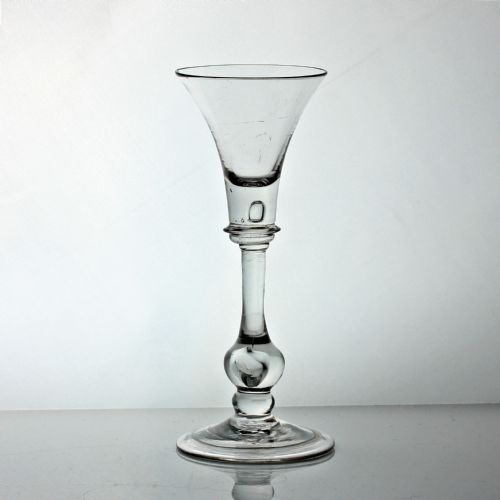
Baluster stem wine glasses are substantial drinking vessels defined by their characteristic swollen stems, prized for their weight and historic presence.
Baluster Stem Wine Glasses
Baluster stem wine glasses are drinking vessels that anchor a collection in the seventeenth and eighteenth centuries, carrying distinct architectural stems derived from heavier seventeenth-century forms. When searching for baluster stem wine glasses, a buyer meets mostly English examples spanning the Georgian era, alongside occasional Victorian revivals and Continental pieces.
The selections range from early heavy balusters and lighter transitional balustroids to taller goblets and specialised drinking vessels like ratafia glasses. Most specimens date from the eighteenth century, particularly around the seventeen-forties and fifties, featuring the characteristic knops and swelling profiles that define the form.
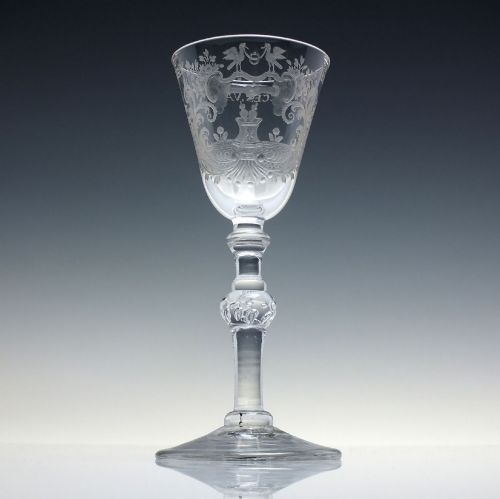
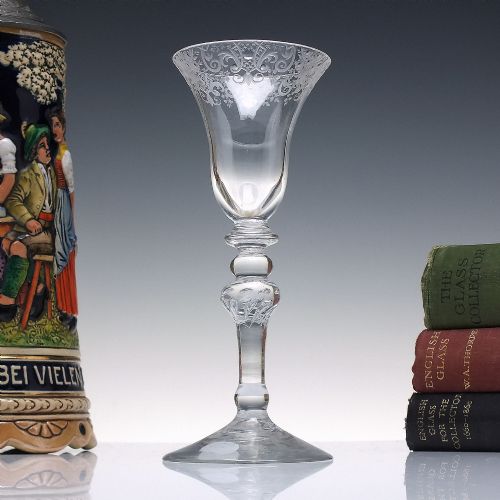
While clear lead glass dominates the field, variations include green Victorian glasses and engraved decoration depicting commemorative, marriage, or friendship themes. The overarching form remains consistent in its display of heavy metal and optical clarity, whether encountered as single specimens or matched sets.
Materials and manufacture
Makers produced baluster stem wine glasses using lead glass, flint glass, and clear lead glass, which provided the heavy weight and refractive brilliance characteristic of the period. This dense metal allowed glassmakers to pull and form complex stem structures while maintaining structural integrity.
Listings span seventeenth-century Bohemian items to Victorian green glassware, with eighteenth-century lead glass forms dominating the selection.
Assessing quality and character
Quality in baluster stem wine glasses rests upon the crispness of the stem formation, the balance between the bowl and the heavy foot, and the purity of the metal. Superior examples exhibit well-proportioned knops and smooth, tactile surfaces without excessive clouding or heavy inclusions.
Engraved decoration introduces another tier of distinction, where skilled wheel-engraving depicting floral motifs, coats of arms, or inscriptions elevates a standard vessel into a commemorative piece. The stability of the foot, often domed or folded in earlier examples, completes the architectural harmony of the piece.
The Baluster Stem Wine Glasses Glossary
- Baluster
- A swelling, architectural stem form derived from staircase balusters. It provides substantial weight and a secure grip in the hand.
- Balustroid
- A lighter, more slender variation of the traditional baluster stem. These stems often feature reduced knops and a more delicate taper.
- Teardrop
- An elongated air bubble intentionally trapped within the stem of a glass. This decorative feature reflects light within the dense metal.
- Ratafia glass
- A tall, narrow drinking vessel designed for sweet liqueurs. They often feature fluted or balustroid stems.
- Knop
- A knob or swelling on the stem of a glass. They act as decorative and structural nodes along the baluster profile.
Baluster Stem Wine Glasses: Frequently Asked Questions
What is a baluster stem wine glass?
A baluster stem wine glass is an antique drinking vessel characterised by a heavy, knopped stem inspired by seventeenth-century architecture. These glasses are collected for their substantial weight, optical clarity, and historic association with the Georgian period.
Most examples seen today date from the eighteenth century, showcasing various stem configurations ranging from heavy lead glass to slender balustroid forms.
How do I date an 18th-century wine glass?
Dating involves examining the metal composition, stem morphology, foot construction, and bowl shape. Earlier glasses tend to feature heavier lead metal and folded feet, while mid-century examples often incorporate balustroid stems and air twists or teardrops.
Engraving styles and pontil marks on the underside further assist in placing a piece within the seventeenth or eighteenth centuries.
Were these glasses used for drinking?
Yes, these vessels served as functional drinking glasses for wine, beer, and cordials during the Georgian and Victorian eras. Their generous weight and thick walls were designed for daily use at the dining table rather than mere display.
Specialised forms like ratafia glasses and rummers accommodated different beverages, from potent liqueurs to ales.
How should I care for antique glass?
Antique glass requires gentle handling and should be washed by hand in warm water using mild soap. Avoid sudden temperature changes to protect the historic metal from thermal shock and cracking.
Store the pieces securely on stable surfaces away from direct sunlight and vibrations to preserve their condition.