
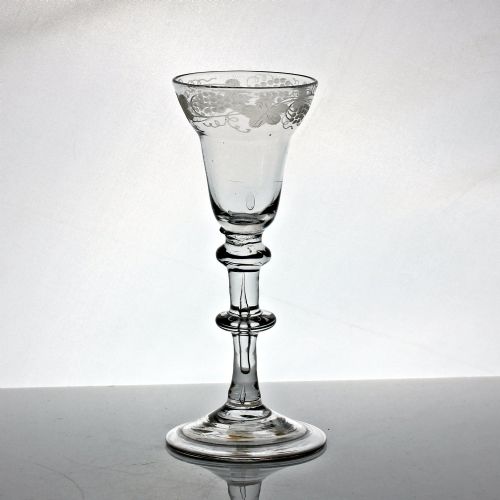
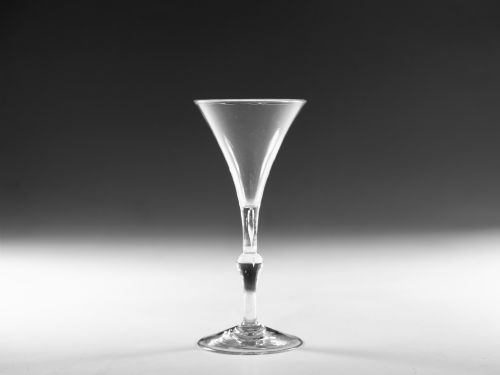
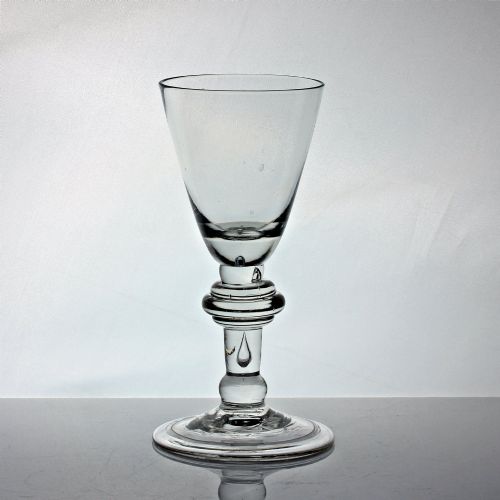
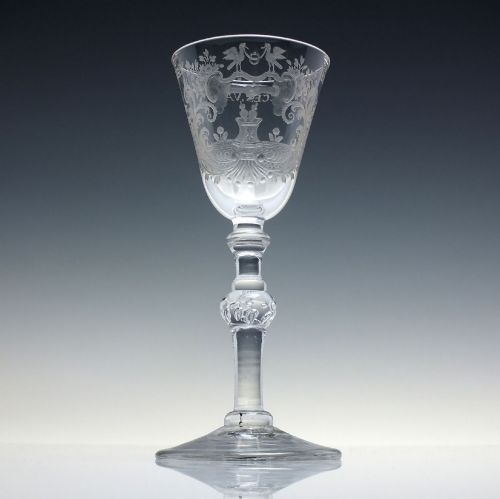
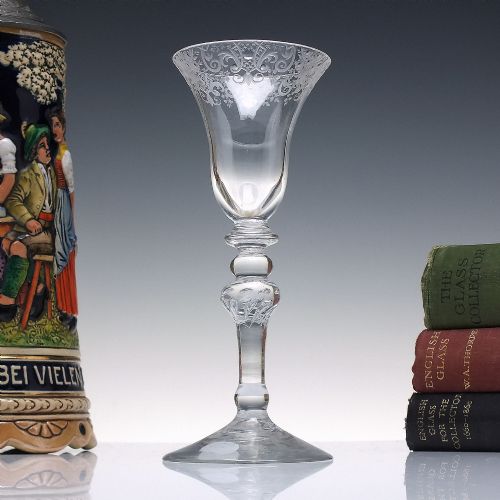
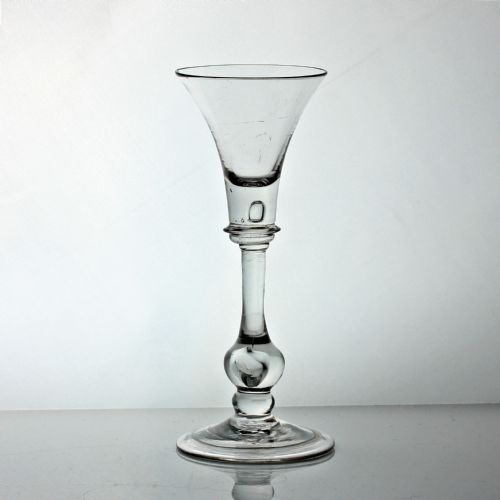


Baluster Stem Wine Glass
These baluster stem wine glass pieces are heavy Georgian drinking vessels with thick, knopped stems that collectors prize for their tactile weight and deep metal.
Baluster Stem Wine Glass
When you search for baluster stem wine glass examples, you find drinking vessels spanning the Georgian period and the eighteenth century. Most pieces trace their origins to around 1730 through to 1760.
The dominant forms on this page include balustroid variants, light baluster types, and engraved pan top bowls. These glasses sit solidly in the hand and reflect the distinct manufacturing trends of early British glassware.
How they were made
These items are shaped from lead glass, clear glass, and lead crystal. The heavy material content gives each piece a distinctive ring when struck and a deep lustre under the light.
Makers formed the characteristic stems by drawing and joining distinct glass components, often incorporating knops, tears, and domed feet during the hot-working process.
Baluster Stem Wine Glass Retail Price Guide 2026
Typical asking prices for baluster stem wine glass among the pieces listed under this phrase on Sellingantiques today, from the lower quarter to the upper quarter. They describe what is for sale here now, not the wider market.
Materials recorded across the current selection include lead glass, clear glass, and lead crystal.
What varies in quality
Quality rests in the crispness of the stem manipulation and the purity of the metal. Better examples display balanced proportions between the heavy foot, the complex knopping of the stem, and the bowl above.
Decoration also dictates standing, with fine wheel engraving on the bowl elevating a standard form into a more sophisticated collector piece. Minor manufacturing quirks in the metal distinguish hand-blown glass from later mechanical work.
The Baluster Stem Wine Glass Glossary
- Baluster
- A swelling, architectural stem shape derived from furniture and stone balustrades, adapted here for drinking vessels.
- Balustroid
- A lighter or simplified version of the full baluster stem, often possessing a slimmer profile and more delicate proportions.
- Domed foot
- A foot raised in the centre towards the stem, providing greater stability and a more sculptural silhouette to the glass.
- Pan top bowl
- A straight-sided bowl shape with a slight flare at the rim, characteristic of certain Georgian drinking glasses.
- Lead crystal
- A high-clarity glass containing lead oxide that increases weight, brilliance, and the ease of decorative cutting or engraving.
Baluster Stem Wine Glass: Frequently Asked Questions
What is a baluster stem wine glass?
It is a heavy drinking vessel from the eighteenth century featuring a thick, knopped stem that provides substantial weight in the hand.
These pieces represent a distinct era of British glassmaking defined by high lead content and robust forms.
How do I date an 18th century glass?
Dating relies on observing the form of the bowl, the construction of the stem, and the profile of the foot.
Earlier pieces often feature heavier metal and complex baluster knops, while later examples transition towards lighter balustroid and faceted designs.
Were these glasses used for wine?
Georgian drinkers utilised these vessels for serving wines and strong liquors during formal dining and social gatherings.
Their smaller bowl capacities reflect the potency of the beverages consumed during the period.
Why is the glass so heavy?
The presence of lead oxide in the metal composition adds significant weight and creates a brilliant, clear appearance.
This heavier formula allowed makers to shape elaborate stems and domed feet that survived daily use.