



Ball Moulding Gilt Mirror
A ball moulding gilt mirror brings brilliant light and classical proportion into a room, framed by distinctive spheres that catch the eye.
Ball Moulding Gilt Mirror
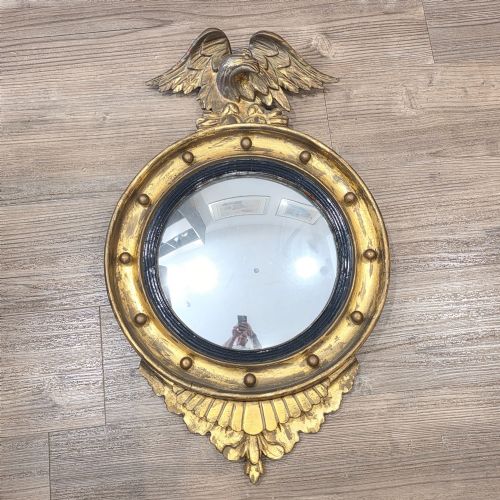
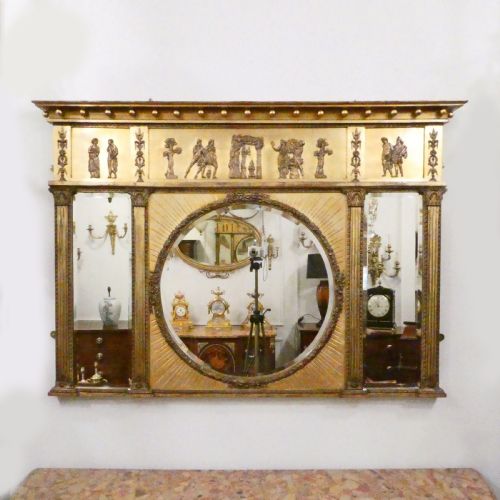
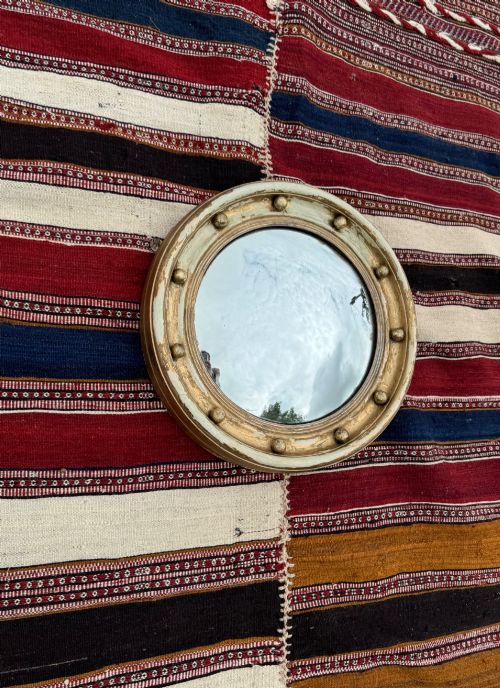
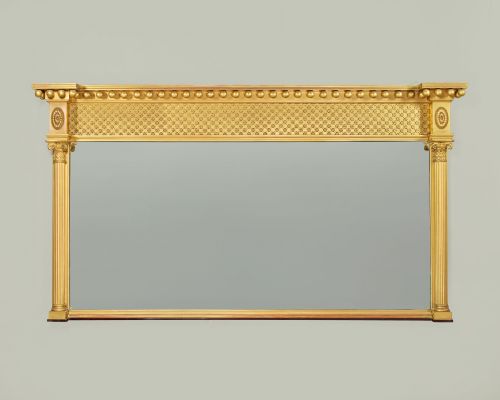
A ball moulding gilt mirror is a statement wall piece defined by decorative spherical ornamentation along the frame. These mirrors appear predominantly as round convex glasses or large rectangular overmantels designed to anchor a room.
The selections available here span the Regency period through to Edwardian revivals. Buyers encounter classical convex glasses alongside landscape and overmantel formats shaped by Regency and Grand Regency aesthetics.
Origins stretch across the nineteenth century, including specific dates around eighteen-hundred and eighteen-eighty. Surviving examples demonstrate how makers reinterpreted classical design vocabulary across successive decades.
How they were made
Frames rely on carved giltwood and moulded gesso built over a timber base. Artisans applied gold leaf and composition ornament to achieve the bright metallic finish characteristic of the period.
Specialist glass forms include mirror glass, mirrored glass, and verre eglomise panels. Convex plates required blown glass techniques to create the curved surface that distorts and reflects the interior in miniature.
The selection combines nineteenth-century originals with Edwardian revivals, utilising giltwood, gesso, and verre eglomise.
What varies in quality
The refinement of the carved details dictates the standing of a ball moulding gilt mirror. Crisp execution in the gesso and precise turning of the spheres separate ambitious workshop output from standard production.
Surface treatment reveals much about original craftsmanship. The depth and warmth of the gold leaf application, alongside the preservation of the underlying gesso layers, define the visual authority of the piece.
The Ball Moulding Gilt Mirror Glossary
- Convex mirror
- A round glass curved outward that provides a wide panoramic reflection of the interior. This form was especially popular during the Regency period.
- Overmantel mirror
- A wide horizontal mirror designed to hang specifically above a fireplace mantelpiece. These pieces often feature classical architectural framing.
- Verre eglomise
- A cold decoration technique where design is applied to the reverse of glass using gold or silver leaf. It appears in borders to frame the central reflection.
- Gesso
- A plaster mixture applied to wood frames to create a smooth surface for gilding. It allows for crisp moulding of decorative details.
Ball Moulding Gilt Mirror: Frequently Asked Questions
Where should I hang a convex mirror?
Convex mirrors project a wide-angle reflection that brings light deep into a space. They perform best opposite a window or in hallways where they capture movement from multiple angles.
Because of their optical depth, these mirrors suit placement at eye level on a principal wall rather than crowded among smaller artworks.
How do I date a Regency mirror?
Regency pieces often display classical motifs such as reeded columns, ball-accented cornices, and spread eagles. Examining the construction of the backboards and the composition of the gesso helps confirm the era.
Original mirror glass frequently shows subtle foxing and irregularities that distinguish nineteenth-century work from later revivals.
What is an overmantel mirror used for?
Overmantel mirrors were originally scaled to sit directly above the fireplace hearth to multiply candlelight and daylight. They serve as the visual anchor for a principal reception room.
Their generous horizontal proportions help balance the weight of the fireplace surround below them.
How do I clean a giltwood frame?
Giltwood surfaces require dry dusting with a very soft brush to protect the delicate gold leaf layer. Moisture can damage both the gesso and the underlying wood.
Professional conservation is recommended if the gilding shows active flaking or loss.