



Regency Pilaster Mirror
A regency pilaster mirror brings classical architecture indoors, offering crisp vertical framing and luminous glass that instantly enlarges a room.
Regency Pilaster Mirror
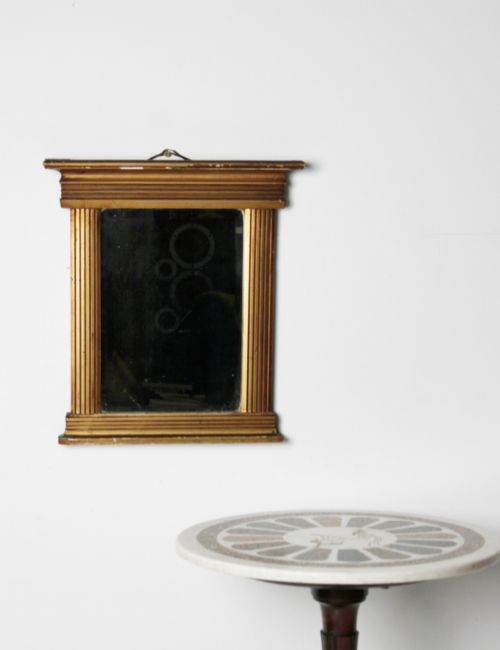
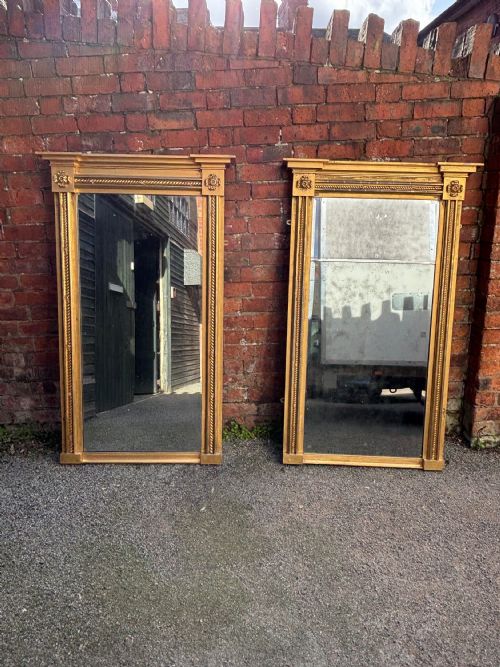
A regency pilaster mirror takes its name from the flat architectural columns flanking the glass, bringing architectural proportion into the interior. These wall-hanging and overmantel pieces originate from the early nineteenth century, capturing the restrained elegance of the Regency, George IV, and Neoclassical periods.
Buyers meet variations ranging from compact pier glasses designed for narrow wall spaces between windows to larger overmantel mirrors meant for the chimney breast. The typical format on this page combines rectangular glass plates with classical motifs such as reeding and applied ornament.
Makers of the period drew heavily on classical vocabularies, producing pieces described across styles from Empire to Grand Regency. Materials span traditional giltwood and gesso alongside mahogany, walnut, and painted wood finishes.
How they were made
Cabinetmakers and gilders constructed the carcases from softwood, mahogany, or walnut, applying carved wood or moulded composition ornaments to the timber structure. Giltwood surfaces received layers of gesso before gold leaf was laid down, while other examples utilised faux marble paint or plain polished wood.
The mirrored plates themselves, often featuring verre eglomise panels decorated with reverse painting or gilding in the upper sections, were glazed by hand into the rebate. Pier mirrors and overmantel forms relied on precise joinery to support the weight of heavy glass and decorative architectural pilasters.
Listings span the nineteenth century, uniting Regency, George IV, and Neoclassical design through giltwood, mahogany, walnut, and painted finishes.
What varies in quality
Quality rests in the crispness of the carved or moulded detail upon the pilasters and the depth of the original gilding against the prepared gesso base. Finer examples retain their original mercury silvered glass plates and intact verre_eglomise panels, showing harmonious proportions between the frame and the reflective surface.
Lesser execution appears in clumsy proportioning of the architectural elements and heavy-handed later repainting or regilding that obscures the original sharpness of the underlying composition ornament.
The Regency Pilaster Mirror Glossary
- Pilaster
- A flat architectural column projecting slightly from a wall, forming the vertical framing members of these mirrors. It provides the defining structural motif for the furniture type.
- Pier mirror
- A tall, narrow mirror designed specifically to hang on the wall space between windows. Such pieces often match the height of adjacent furniture or window frames.
- Verre eglomise
- A cold decoration technique where glass is gilded and painted on the reverse side. It frequently appears in the upper frieze panel of Regency mirrors.
- Gesso
- A plaster mixture applied to wood frames to create a smooth surface for subsequent gilding. Its build-up allows crisp relief ornamentation.
- Reeding
- Parallel convex moulding strips carved into wood, resembling bundled reeds. This decorative treatment is typical of classical pilaster framing.
Regency Pilaster Mirror: Frequently Asked Questions
Where should I hang a regency pilaster mirror?
These mirrors suit placement above a fireplace mantelpiece or on narrow wall sections between windows where vertical proportions balance the room.
Their architectural framing draws the eye upward, making them effective for increasing perceived ceiling height and light in reception rooms.
How do I distinguish a Regency mirror from later copies?
Examine the construction of the timber carcase behind the frame, looking for older secondary woods and hand-cut fixings consistent with early nineteenth century cabinetmaking.
Original glass plates often display subtle imperfections, slight distortion, and silvering wear distinct from modern float glass.
What is verre eglomise decoration?
Verre eglomise involves applying gold or silver leaf and pigment to the reverse side of glass panels, creating a deep reflective picture frame insert.
This technique adds rich textural contrast above the main mirror plate in formal classical wall pieces.
Are these mirrors heavy to hang?
Solid timber frames combined with glass and composition ornamentation create considerable weight that requires secure wall fixings into masonry or studs.
Professional hanging ensures the weight distributes safely without straining the antique wooden joints.