











Asian Hardwood Side Tables
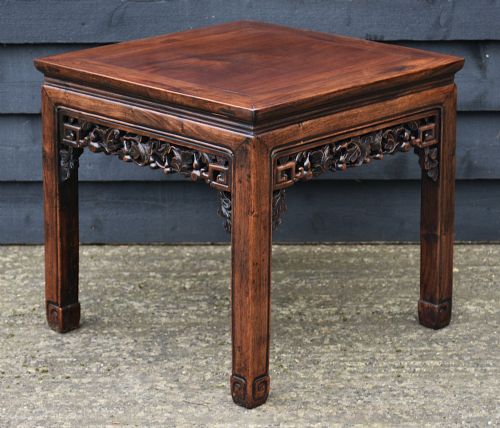
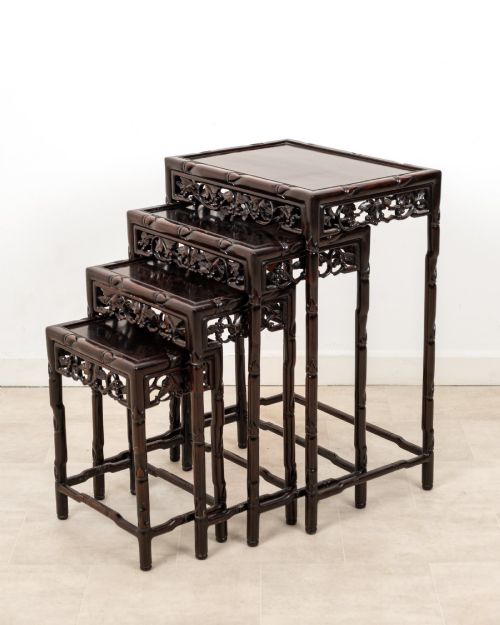
These asian hardwood side tables bring substance to a room, offering dense rosewood, elm and hongmu shaped into low tables, nests and stands.
Asian Hardwood Side Tables
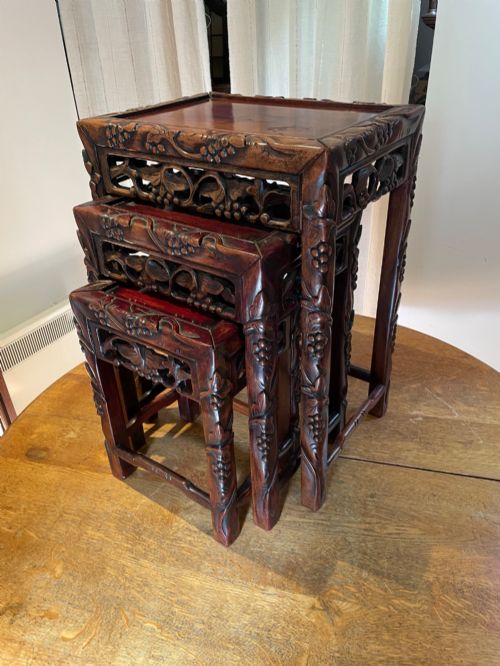
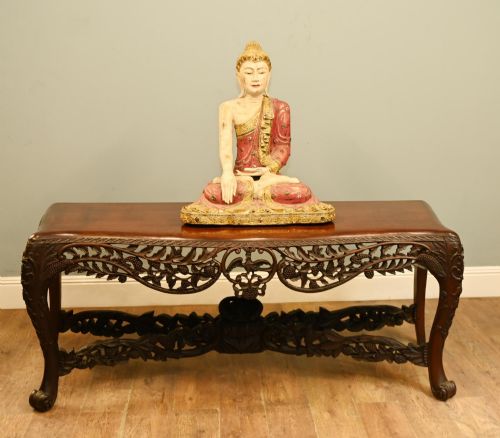
When you search for asian hardwood side tables, you encounter low tables, nests of tables, occasional tables, altar tables and plant stands spanning the eighteenth century through to the early twentieth century. The forms range from small corner-leg tables and stools to nested sets and marble-topped stands associated with the Qing dynasty and Chinese export traditions.
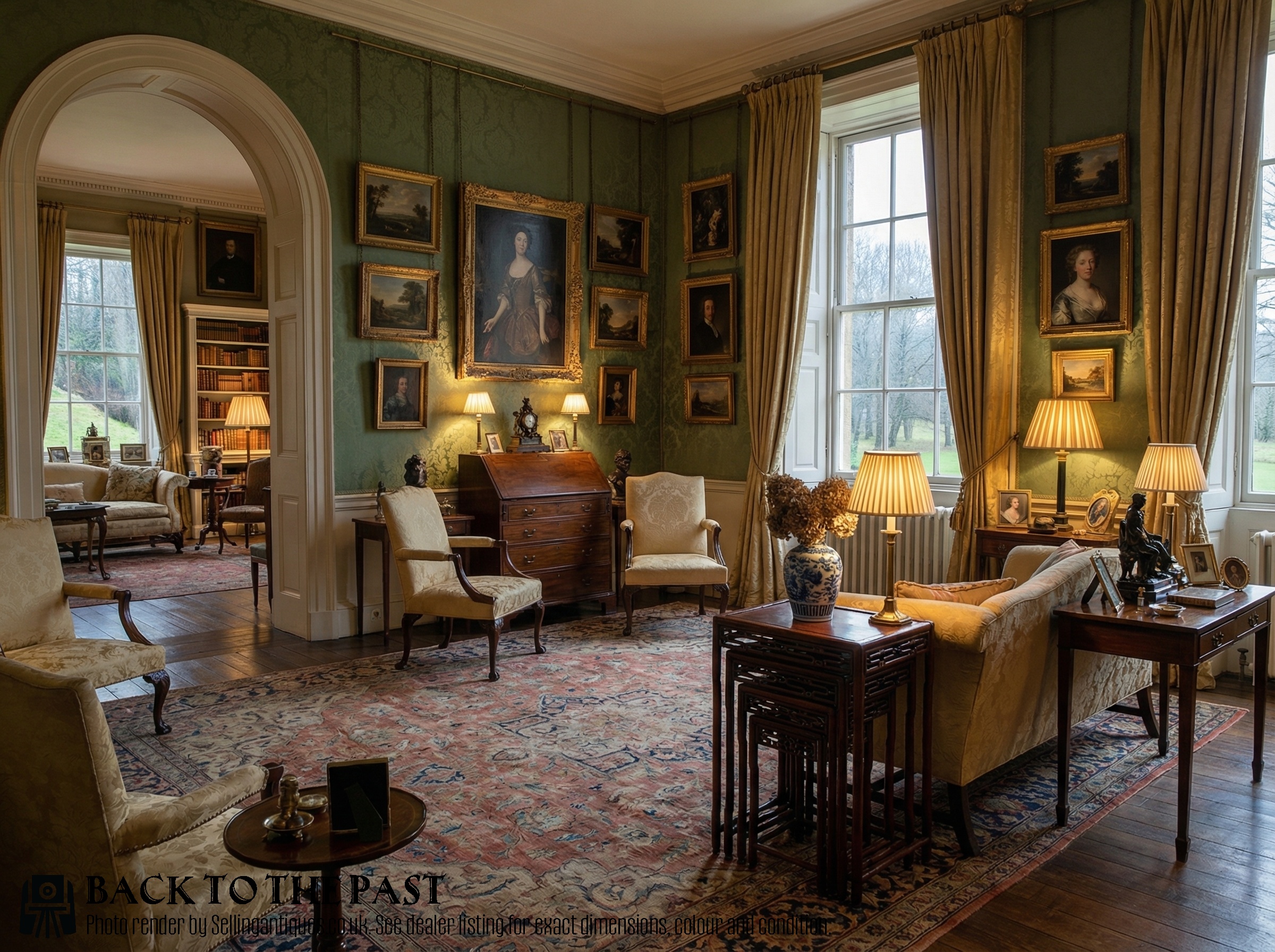
The version you are most likely to meet on this page is the nineteenth-century carved hardwood stand or nest, frequently finished with marble or mother of pearl inlay. These pieces serve practical functions as surfaces for lamps, vases and plants while carrying the heavy decorative carving typical of late Qing dynasty production.
Judging the work
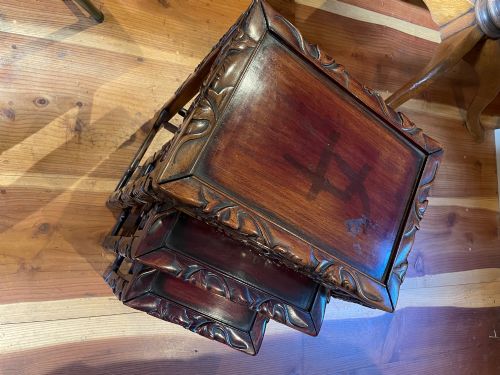
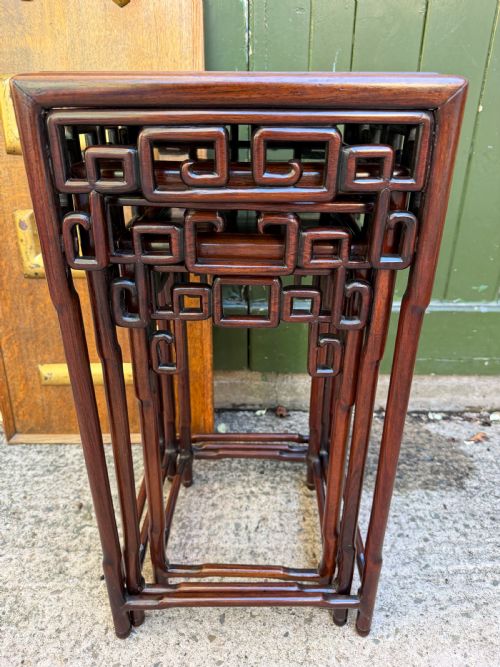
Quality rests in the crispness of the hand carving and the density of the chosen timber, with hongmu and huanghuali demonstrating superior weight and figure. The precision of the joinery in nests of tables and altar tables dictates how well the structure survives centuries of use.
The integration of inset materials like marble or porcelain panels separates standard utility pieces from more ambitious commissions. Clean grain matching and restrained proportions distinguish better examples from heavier, less resolved items.
Asian Hardwood Side Tables Retail Price Guide 2026
Typical asking prices for asian hardwood side tables among the pieces listed under this phrase on Sellingantiques today, from the lower quarter to the upper quarter. They describe what is for sale here now, not the wider market.
Listings feature periods from the eighteenth century to 1920, with the nineteenth century and the Qing dynasty appearing most frequently.
The Asian Hardwood Side Tables Glossary
- Hongmu
- A dense, heavy Asian hardwood prized for its deep red-brown colour and strength in furniture making.
- Nest of tables
- A set of graduated tables designed to slide neatly beneath one another when not in use.
- Altar table
- A traditional rectangular form with upturned flange ends, originally used for ceremonial purposes.
- Plant stand
- A tall, narrow pedestal table designed to display ceramic pots, jardinières and vases.
- Mother of pearl
- An iridescent inner shell layer used to create inlaid decorative motifs on wooden surfaces.
Asian Hardwood Side Tables: Frequently Asked Questions
What is an altar table used for?
These long rectangular tables originated as ceremonial furniture placed against walls to hold ancestral tablets or ritual objects. Today they function as console tables in hallways and living rooms.
Their narrow proportions make them practical for tight spaces where standard tables block walkways.
How do I identify a nest of tables?
A nest consists of four tables graded in size so the smaller ones slide completely under the largest one. This format became popular in late nineteenth-century workshops for saving floor space.
They pull out individually to provide multiple small surfaces when entertaining.
Why do some tables have marble tops?
Marble insets were fitted into table and stand tops to provide a cool, heat-resistant surface for hot teapots and damp plant pots. The stone also added significant weight and stability to taller stands.
Plain or veined marble slabs were dropped directly into rebated wooden frames.
How do I care for antique hardwood?
Maintain these surfaces by keeping them away from direct heat sources and sudden humidity changes that cause wood to shrink or crack. Dust regularly with a dry cloth and avoid silicone polishes.
Feeding the dry timber with appropriate wax preserves the natural sheen of the grain.