


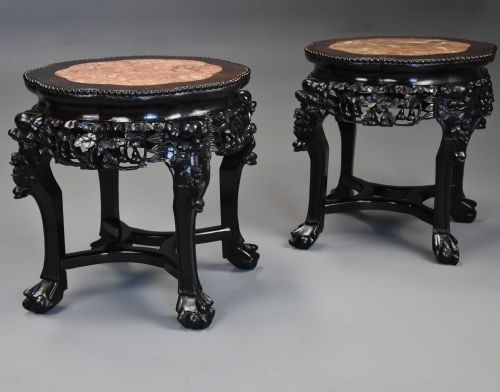


Asian Hardwood Bonsai Table
These asian hardwood bonsai table pieces elevate small trees and vases, combining dense tropical timbers with traditional carving.
Asian Hardwood Bonsai Table
An asian hardwood bonsai table serves as a low display platform for plants, urns, and scholar's objects. These stands originate primarily from the Qing Dynasty and the late nineteenth century, spanning periods up to the nineteen-twenties.
The selections here encompass plant stands, low tables, jardiniere stands, and occasional tables. Most examples appear as carved wood structures, often incorporating inset marble tops for a contrasting display surface.
Materials and construction
Cabinetmakers utilised dense timbers such as hongmu, huali wood, padouk, and rosewood to construct these stable platforms. These heavy tropical hardwoods provide the structural integrity needed for intricate openwork carving.
Many examples integrate marble panels fitted flush into the wooden frame to support moisture-heavy pots. Artisans applied traditional joinery techniques, shaping the wood into multi-tiered pedestals and low kang tables.
Asian Hardwood Bonsai Table Retail Price Guide 2026
Typical asking prices for asian hardwood bonsai table among the pieces listed under this phrase on Sellingantiques today, from the lower quarter to the upper quarter. They describe what is for sale here now, not the wider market.
Opium tables found a second life elevating potted ferns.
Judging quality and execution
The depth and sharpness of the hand-carving define the distinction between standard production and superior craftsmanship. Finer pieces display crisp botanical motifs and well-fitted joinery without visible gaps.
The selection of the timber grain and the figuring of the inset marble contribute significantly to the visual weight of the stand. Heavier, denser woods demonstrate a superior material grade compared to lighter secondary timbers.
The Asian Hardwood Bonsai Table Glossary
- Hongmu
- A traditional Chinese term denoting dense, dark hardwoods used in quality furniture production. These heavy timbers accommodate fine detail in carving.
- Huali wood
- A fragrant and highly figured rosewood variety prized by traditional cabinetmakers. It yields rich tones and smooth surfaces.
- Padouk
- A durable reddish-brown tropical hardwood valued for its strength and stability. It forms sturdy frames for plant stands.
- Kang table
- A low domestic table traditionally used on heated brick platforms in northern China. These scaled-down surfaces suit compact displays.
- Jardiniere stand
- A tall pedestal specifically designed to elevate large ceramic flower pots and planters. They highlight botanical arrangements.
Asian Hardwood Bonsai Table: Frequently Asked Questions
What is an asian hardwood bonsai table used for?
These tables provide an elevated display surface for miniature trees, heavy ceramic planters, and scholarly ornaments. They lift decorative objects off the floor or main furniture to highlight their form.
Historically, scholars and collectors used these platforms in studies and reception rooms to arrange prized natural specimens. Today, they serve a similar decorative function in domestic interiors.
How do I date an antique plant stand?
Dating relies on examining the timber species, joinery methods, and the style of the carving. Nineteenth-century examples often exhibit hand-cut joints and dense tropical hardwoods.
Comparing the decorative motifs against documented Qing Dynasty or Meiji period designs helps narrow the manufacturing era. Patina accumulated through age also indicates long-term handling.
Why do some tables have marble tops?
Marble insets provide a cool, water-resistant surface that protects the wooden frame from dampness draining through plant pots. This practical feature allowed owners to water bonsai trees directly on the stand.
The cool stone also offers a visual contrast to the dark, intricately carved tropical timber surrounding it.
How do I care for antique hardwood furniture?
Maintain stable indoor humidity levels to prevent the dense tropical hardwoods and inset marble panels from cracking due to sudden environmental shifts. Avoid placing these stands near direct heat sources.
Dust the intricate carvings regularly with a soft, dry cloth to prevent grime accumulation in the recesses. Refrain from using silicone-based polishes that can degrade the historic finish.