

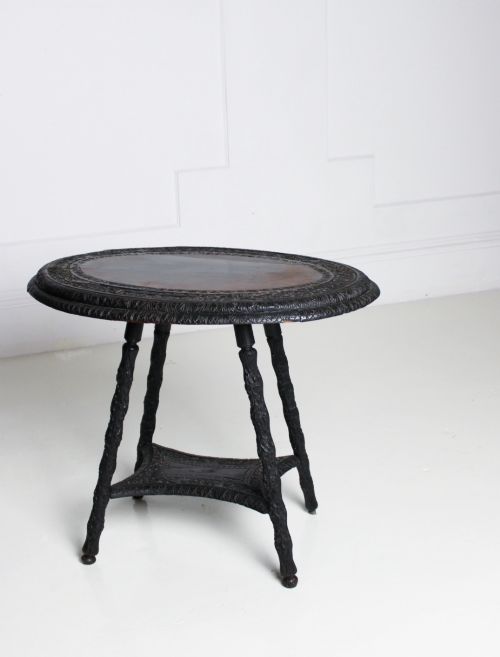
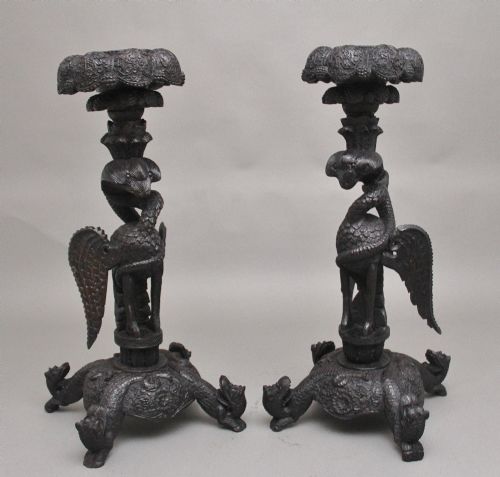


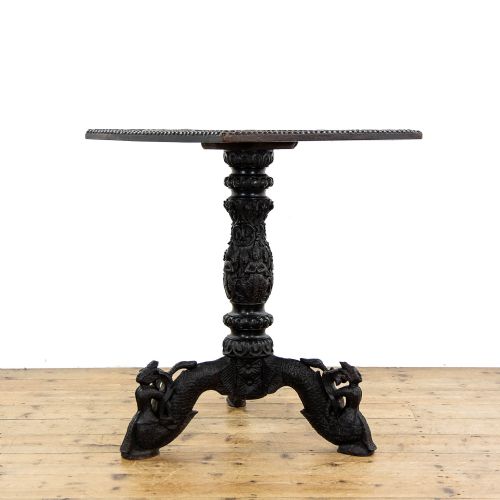


Black Hardwood Plant Stand
A black hardwood plant stand brings dark timber and carved detail to a corner, lifting a pot or jardiniere to catch the light.
Black Hardwood Plant Stand
A black hardwood plant stand serves as a sturdy platform for foliage and ceramic vessels, taking forms such as torcheres, side tables and display stands. These pieces span the nineteenth century, Victorian era and early decades of the twentieth century, reflecting varied global tastes from the period.
Makers and workshops across different regions produced these stands in styles ranging from Qing Dynasty and Chinese Export to Anglo-Indian Colonial, Arts and Crafts and Victorian Anglo-Japanese. You are most likely to meet heavily carved examples in ebonised wood, rosewood, teak and plain hardwood.
Design vocabulary embraces oriental motifs alongside elephant forms, portico planter tables and inset marble tops. Certain iterations incorporate delicate bone inlay, setting off the dark timber with contrasting white highlights.
Materials and construction
Carpenters utilised dense timbers such as rosewood and teak, alongside hardwoods given an ebonised finish to achieve a uniform dark surface. Hand carving defined the ornamentation, shaping intricate floral and zoomorphic details directly into the solid material.
Specialist elements include smooth rouge marble inserts fitted neatly into timber tops to support heavy planters, and precise bone inlay pinned into carved recesses. Joinery methods matched the weight of the dense woods, creating stable pedestals and tables.
Black Hardwood Plant Stand Retail Price Guide 2026
Typical asking prices for black hardwood plant stand among the pieces listed under this phrase on Sellingantiques today, from the lower quarter to the upper quarter. They describe what is for sale here now, not the wider market.
Several stands feature carved elephants serving as the structural base, occasionally accented with genuine bone inlay for their tusks.
Assessing craftsmanship and design
Quality rests upon the crispness of the hand carving and the selection of timber, where deep relief work displays sharper contours and greater depth than mechanical or shallow tooling. The integration of inset marble tops and fitted bone inlay reveals the precision of the cabinetmaker's hand.
Proportion and stability separate standard utility pieces from more ambitious commissions, particularly in complex forms like torcheres and elephant tables where balance is paramount. The richness of the ebonised finish or the natural grain of the underlying hardwood dictates the visual weight of the stand.
Liberty of London
The Black Hardwood Plant Stand Glossary
- Ebonised wood
- Timber treated with stain or pigment to imitate genuine ebony, creating a deep black finish popular in Victorian and oriental-inspired furniture. This technique allowed makers to achieve a uniform dark surface on more accessible hardwoods.
- Jardiniere stand
- A decorative low table or pedestal specifically designed to hold a plant pot or ceramic planter. These pieces often feature water-resistant tops such as inset marble.
- Torchere
- A tall, slender stand designed to support a lamp, vase or plant. The elevated platform draws the eye upward and showcases decorative carving from multiple angles.
- Bone inlay
- Small pieces of animal bone shaped and pressed into channels carved within the timber surface. This method creates geometric or figurative patterns in stark contrast to the dark hardwood.
- Anglo-Indian
- Furniture made in India by local craftsmen for British colonial patrons, combining traditional eastern carving techniques with western furniture forms. Pieces frequently exhibit dense floral motifs and exotic hardwoods.
Black Hardwood Plant Stand: Frequently Asked Questions
What is a black hardwood plant stand used for?
These pieces function primarily as elevated platforms for potted plants, ferns and ceramic jardinieres, keeping heavy containers off the floor and displaying foliage at eye level. They also serve as compact side tables for lamps and small decorative objects in tighter corners of a room.
The sturdy construction of dense timbers allows them to bear significant weight safely. Their varied heights and decorative silhouettes help break up vertical space within an interior scheme.
How do I tell Victorian pieces apart from later ones?
Victorian examples often display heavy ebonisation, dense oriental-influenced carving, or specific structural markers like inset rouge marble tops. Pieces from around nineteen-twenty can show lighter Arts and Crafts influences or different interpretations of traditional eastern motifs.
Examining the underside and joinery offers further clues regarding period techniques and tool marks. The specific combination of materials, such as bone inlay paired with carved elephant motifs, often points toward distinct regional workshops of the late nineteenth century.
Are these stands suitable for heavy planters?
Solid hardwood and marble-topped variants provide exceptional stability for substantial ceramic pots and damp soil. The heavy density of rosewood, teak and ebonised timber prevents wobbling under load.
Water-resistant surfaces like marble protect the underlying wood from moisture damage during watering. Plain timber tops benefit from protective saucers to preserve the finish over time.
Where should I place a torchere stand?
Torcheres suit empty corners, hallway landings or flanking larger pieces of furniture where their slender vertical profile can add height without crowding the floor plan. Placing them near light sources highlights the carved details of the timber.
Because their bases are relatively narrow compared to their height, positioning them away from heavy foot traffic prevents accidental tipping. They work effectively to frame doorways or windows with trailing foliage.