


Qing Dynasty Flower Stand
A qing dynasty flower stand brings structured height and carved timber grain to a corner, designed to elevate a heavy ceramic pot or bronze vase.
Qing Dynasty Flower Stand
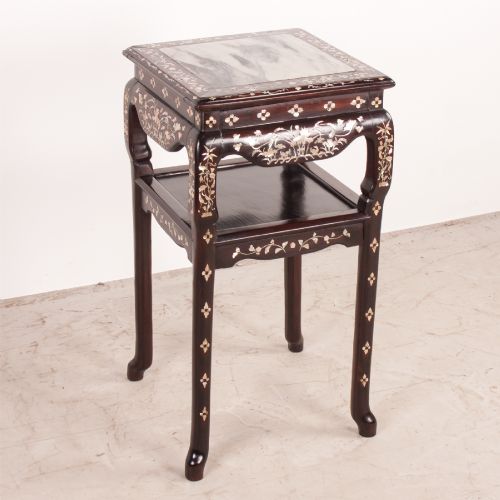
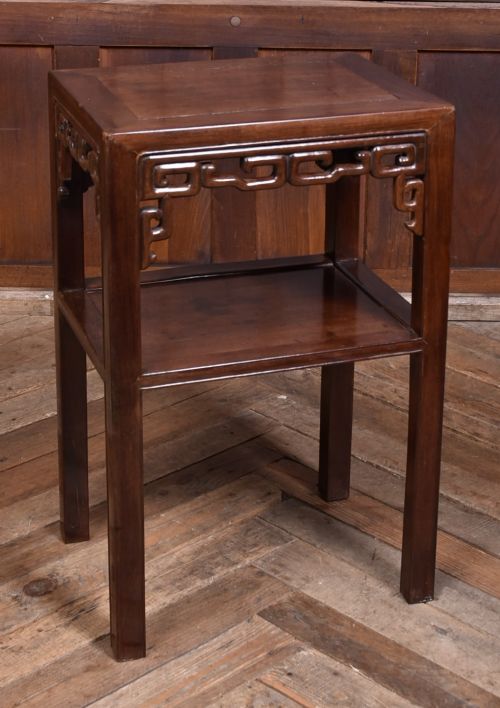
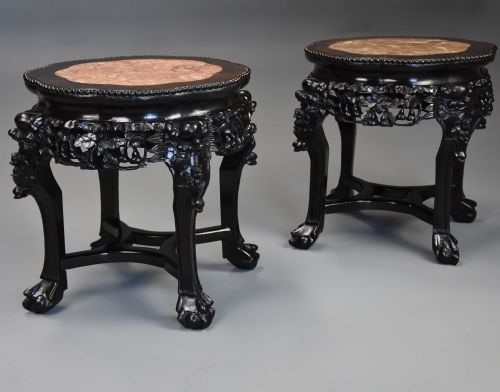
The versions most commonly met on this page take the form of round or rectangular pot stands, jardiniere stands, and two-tier occasional tables. These low and tall forms utilise dense Asian timbers and frequently incorporate inset stone panels to support heavy planters without warping.
Originating within traditional Chinese domestic interiors, these stands served both functional and decorative purposes by lifting water-filled planters off wooden floorboards. The surviving examples span several decades of late imperial production, maintaining a consistent focus on display and support.
How they were made
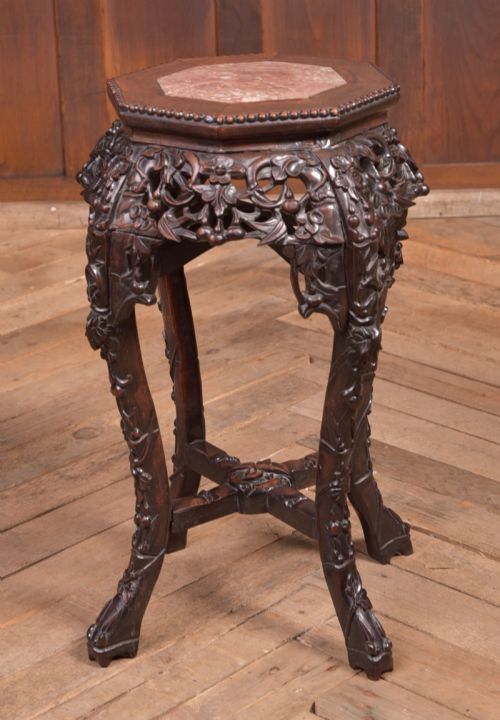
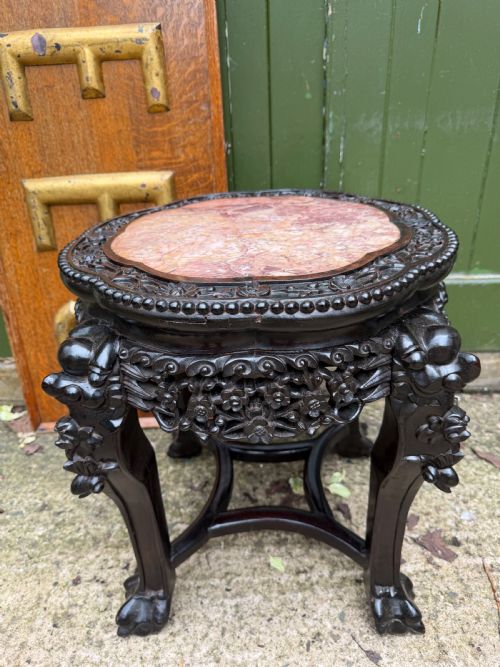
Craftsmen built these stands using dense, heavy timbers such as hongmu, padouk, rosewood, and general hardwood, selected for their structural strength and deep colour. These woods were carved with complex floral, scrolling, or geometric motifs that follow traditional Chinese woodworking joints without relying on metal fasteners.
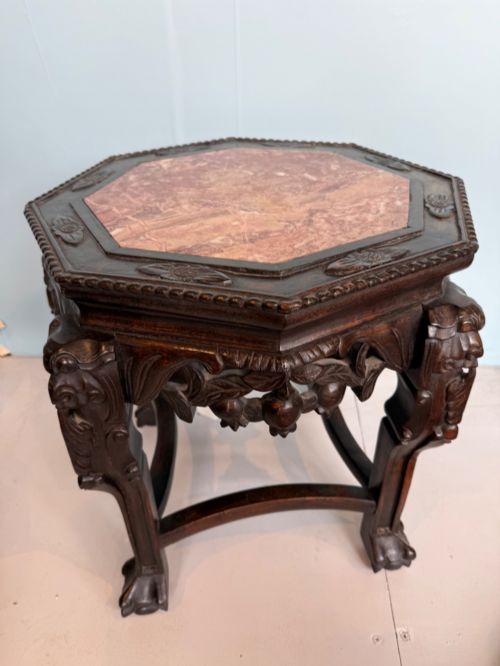
Many examples incorporate a contrasting inset panel of variegated rouge marble or other hard stone into the timber top, providing a cool, stable surface resistant to moisture from plant pots. Selected pieces add further detail through mother-of-pearl inlay or lacquer work embedded directly into the wooden frame.
Certain low stands served a double life, doubling as secure bases for wine jugs when the indoor flora needed a holiday.
What varies in quality
The standard of a piece depends heavily on the depth and crispness of the wood carving, where sharper undercutting and defined details distinguish superior examples from plain production. The choice of timber also dictates quality, with dense native rosewoods and heavily figured hongmu commanding greater appreciation than standard mixed hardwoods.
Construction rigidity and the precision of the joinery determine structural endurance, particularly in tall torchères and multi-tiered pedestals where stability is paramount. The quality of the inset marble top, specifically its grain, colour variation, and flush fit within the wooden frame, further separates standard stands from finer works.
The Qing Dynasty Flower Stand Glossary
- Hongmu
- A traditional Chinese term denoting dense, dark hardwoods used for fine furniture and display stands. It translates literally to red wood and incorporates several heavy species.
- Padouk
- A heavy, durable tropical timber with a distinct reddish hue used extensively in late nineteenth-century Chinese stands. It polishes to a smooth finish and resists environmental wear.
- Jardiniere
- A large ornamental pot or container for plants, which necessitated sturdy stands built to carry considerable weight. Stands designed for these vessels often feature inset marble tops.
- Torchere
- A tall stand or pedestal originally intended to hold a candle or lamp, later adapted for displaying vases and tall plants. These pieces emphasise vertical height and slender proportions.
- Inlay
- A decorative technique where contrasting materials such as mother-of-pearl are embedded into recesses within the wooden surface. This adds tonal contrast and catches the light against dark timber.
Qing Dynasty Flower Stand: Frequently Asked Questions
What is a qing dynasty flower stand used for?
These stands are primarily engineered to elevate large ceramic pots, bronze vessels, and decorative plants off the ground. By raising the planters, they protected delicate interior flooring from dampness while showcasing the displayed object at an ideal viewing height.
In modern interiors, buyers utilise them as side tables, lamp stands, or dedicated display pedestals for sculpture and ceramics. Their sturdy construction allows them to support significant weight despite their decorative carving.
How do I identify a qing dynasty flower stand?
Identification relies on examining the dense Asian hardwoods such as hongmu, padouk, or rosewood, combined with traditional mortise and tenon joinery. Many examples feature characteristic nineteenth-century carvings of floral motifs, curved aprons, and inset marble or stone tops.
Looking underneath the top reveals the frame construction and the natural ageing of the timber. The presence of period characteristics like hand-cut joinery and heavy, dark wood points directly to late imperial production.
Can these stands support heavy plant pots?
Solid hardwood construction and rigid joinery make these pieces exceptionally strong and capable of carrying heavy loads. The inclusion of a heavy marble or stone inset top further reinforces the centre against downward pressure and moisture.
When placing a heavy vessel, ensuring the stand sits level on the floor prevents uneven stress on the legs. The dense timbers utilised by makers were specifically chosen for their structural load-bearing capacity.
Where should I place a plant stand at home?
Placing a stand in a corner or beside seating allows the carved timber details and inset stone panels to be viewed clearly. Taller torchère and pedestal formats suit empty wall spaces, while lower pot stands fit well beside armchairs or low furniture.
Keeping the stand away from direct heat sources prevents the dense hardwood from drying out or splitting over time. Positioning them to catch natural light highlights the grain and depth of the carved motifs.