


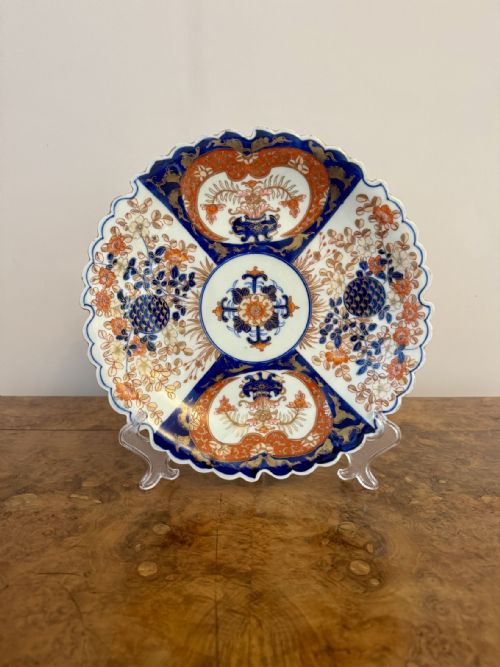
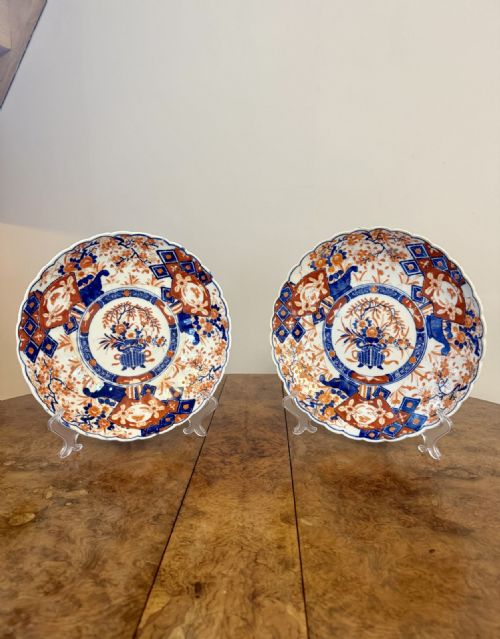


Asian Ceramic Display Plate
These pieces span centuries of porcelain and ceramic artistry, offering an asian ceramic display plate to anchor a room or collection.
Asian Ceramic Display Plate
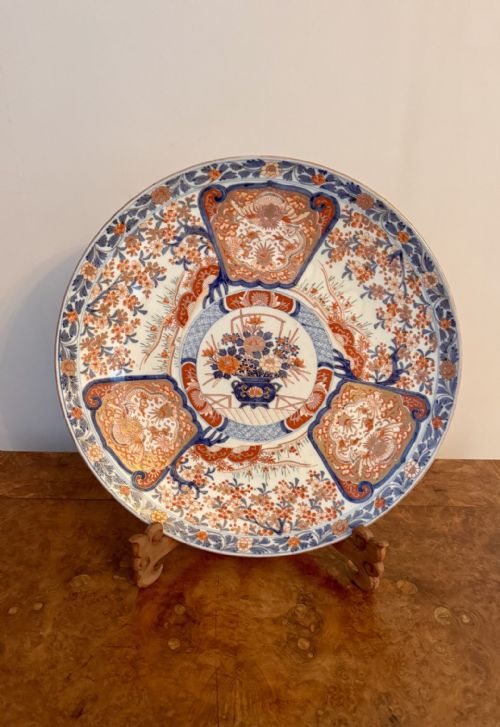
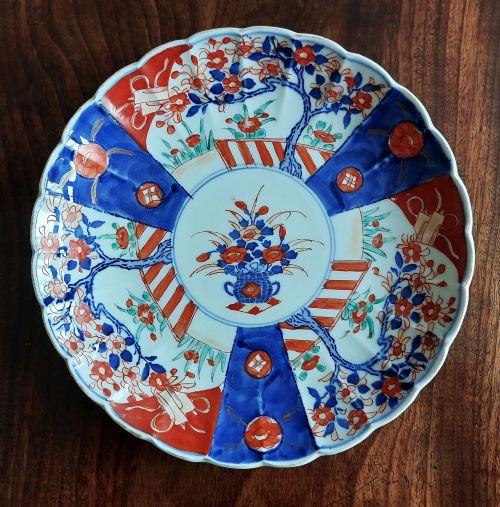
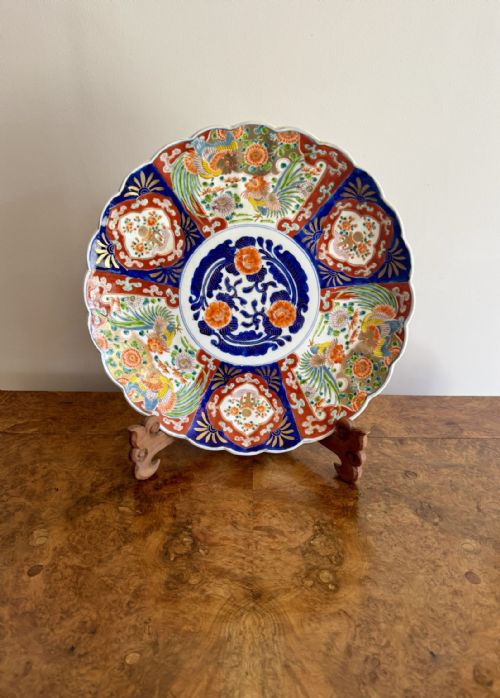
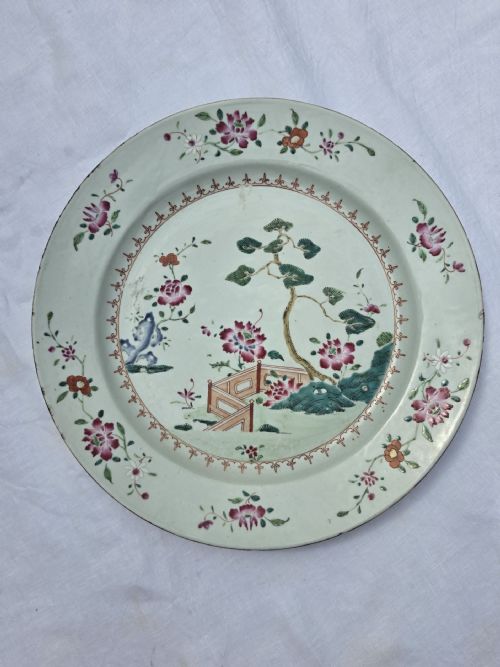
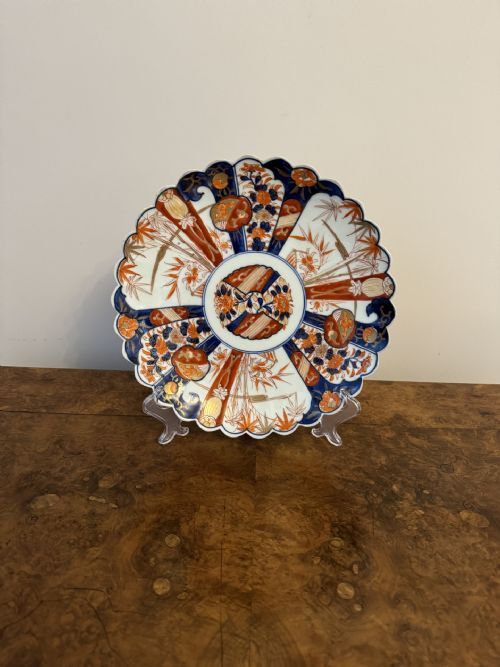
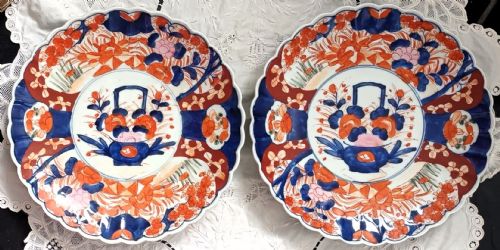
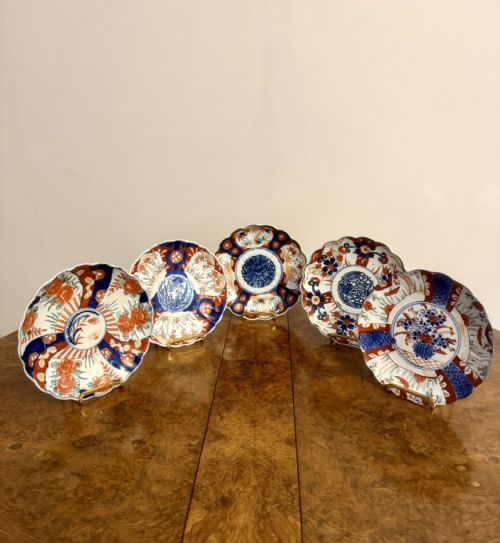
When searching for an asian ceramic display plate, collectors encounter a diverse range of forms spanning from the eighteenth century through the early twentieth century. The selection leans heavily towards Japanese Imari wares, alongside Chinese export porcelain and Satsuma pieces.
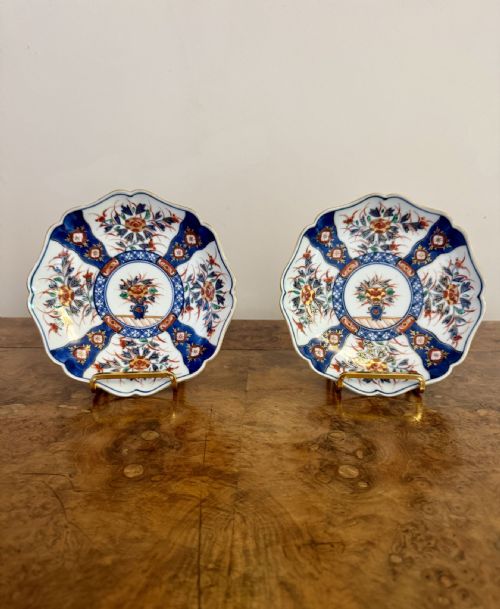
Most examples take the form of large chargers, round plates, and shaped dishes intended primarily for visual display rather than dining. Forms vary from traditional circular chargers to scalloped, square, fan-shaped, and shell-shaped silhouettes.
The periods represented stretch from the Edo and Meiji eras in Japan to the Qing Dynasty and eighteenth-century export periods in China. Buyers meet numerous examples originating from late nineteenth-century productions alongside older dynastic and period pieces.
Materials and Techniques
The foundational body consists of white ceramic or porcelain, fired at high temperatures to achieve a dense and durable structure. Artisans applied cobalt underglaze pigments before the final glaze firing to create deep blue motifs.
Many surfaces feature hand-painted overglaze enamels combined with gold leaf or gilt detailing to add rich colour and metallic highlights. Specialised techniques include moulded floral scrolls and intricate hand-painted figurative scenes executed by skilled ceramicists.
Listings feature porcelain, enamel, gold leaf, and cobalt glaze across the 18th century, 19th century, and early 20th century periods.
Assessing Quality
Quality rests in the precision and complexity of the hand-painted decoration, ranging from simple cobalt blue strokes to multi-figure compositions crowded with intricate detail. The crispness of the enamel application and the skillful integration of gold leaf distinguish finer examples.
The refinement of the ceramic body and the unusualness of the plate shape also dictate standing within the range. Pieces exhibiting distinctive silhouettes, such as fan or shell forms, demonstrate a higher degree of ceramic moulding skill.
Koshida·Meizan mark
The Asian Ceramic Display Plate Glossary
- Imari
- A style of Japanese porcelain featuring a distinctive palette of cobalt blue and iron red, frequently augmented with gold.
- Charger
- A large decorative plate utilised primarily for display on walls or buffets rather than for serving food at table.
- Famille Rose
- A Chinese porcelain palette characterised by opaque pink enamel introduced during the Qing Dynasty.
- Meiji
- A Japanese historical period spanning from 1868 to 1912, noted for prolific export ceramic production.
- Celadon
- A type of ceramic glaze originating in East Asia, known for its jade-green colour achieved through iron oxide in reduction firing.
Asian Ceramic Display Plate: Frequently Asked Questions
What is an Imari plate?
An Imari plate is a Japanese porcelain vessel decorated in underglaze blue and iron red, often highlighted with gold.
These pieces were produced extensively for export and domestic use, particularly during the Meiji period.
How were these plates used?
These ceramics served primarily as decorative chargers and display dishes rather than functional tableware.
Their substantial size and elaborate painted motifs made them suitable for presentation on tables and walls.
How do I date a Meiji piece?
Dating relies on stylistic markers, historical periods, and specific workshop signatures recorded on the base.
The Meiji period spans from 1868 to 1912, encompassing distinct shifts in Japanese ceramic export styles.
What is Chinese export porcelain?
Chinese export porcelain refers to ceramics manufactured in China specifically for overseas markets in Europe and the West.
These wares include Famille Rose palettes and other designs tailored to foreign aesthetic tastes.