




Meiji Blue White Platter
These meiji blue white platter selections are Japanese porcelain chargers and plates bringing cobalt glaze and Imari decoration to your table.
Meiji Blue White Platter
When you search for a meiji blue white platter, you are looking at decorative plates, chargers, and dishes originating from Japan during the nineteenth century and around nineteen hundred. These pieces encompass Japanese Imari, Arita ware, and broader Oriental ceramic traditions.
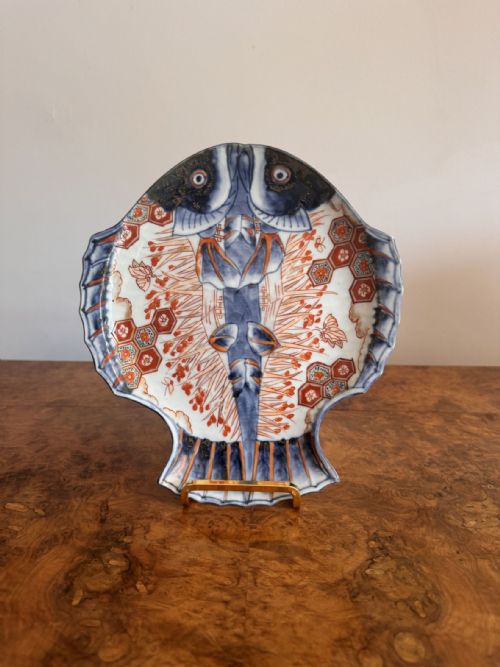
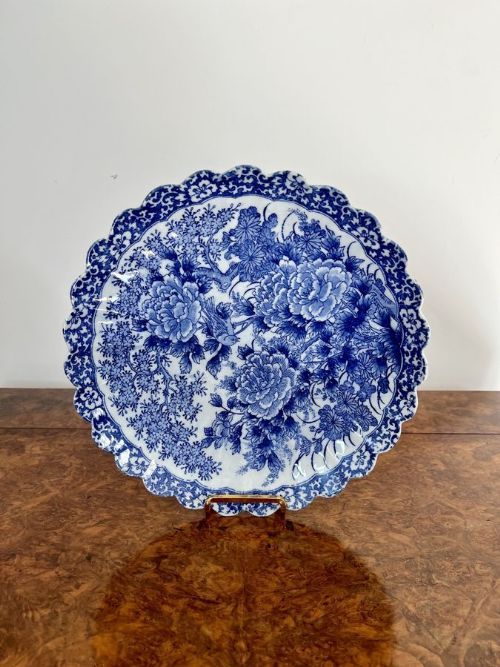
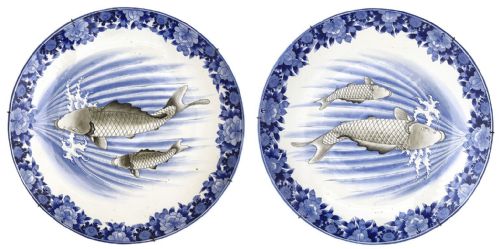
You are most likely to meet large chargers and scalloped edge plates finished in cobalt underglaze, alongside fish-shaped decorative plates and pairs of Imari chargers dating from the Meiji period.
The forms span simple blue and white plates as well as richly coloured Imari chargers, reflecting the varied output of Japanese kilns during the 1870 to 1900 eras.
How they were made
Potters shaped these chargers and plates from ceramic and porcelain, applying cobalt glaze and cobalt underglaze before firing the clay.
Many examples received hand painted decoration, sometimes accented with gold gilt and enamel details to enrich the surface.
Kilns in Arita and other production centres utilised traditional techniques to produce durable porcelain bodies capable of supporting complex blue and white designs.
Listings feature porcelain spanning the nineteenth century, including pieces dated to 1870, 1890, and 1900.
What varies in quality
The refinement of the hand painted brushwork sets the finer chargers apart from standard production wares, particularly in the precision of floral and animal motifs like koi carp.
Depth and vibrancy in the cobalt underglaze and cobalt glaze distinguish superior pieces, along with the crispness of moulded forms such as scalloped edges or fish shapes.
The weight, resonance, and integrity of the porcelain body also indicate the skill of the potter and the conditions of the kiln fire.
The Meiji Blue White Platter Glossary
- Imari
- A style of Japanese porcelain decorated in underglaze blue, iron red, and gold, originating from the port of Imari. It became immensely popular for export during the Meiji period.
- Charger
- A large decorative plate used historically for serving food or displayed upright on a sideboard. These substantial ceramic pieces measure considerably wider than standard dining plates.
- Arita
- A town in Japan famous for its porcelain production, known as the birthplace of Japanese porcelain. Kilns here produced much of the blue and white ware seen in the export market.
- Cobalt Underglaze
- A blue pigment applied to the raw ceramic body before glazing and firing at high temperatures. This technique ensures the colour remains permanent and protected beneath the glassy surface.
Meiji Blue White Platter: Frequently Asked Questions
How are meiji blue white platter pieces dated?
Dating relies on stylistic markers, kiln methods, and documented periods like the Meiji era between 1868 and 1912. Certain inscriptions, motifs, and material combinations help narrow the decade of manufacture.
Examinations of the glaze consistency and the cobalt shade also assist in separating nineteenth century pieces from later reproductions.
Can I use these platters for serving food?
While these antique porcelain chargers and plates were originally functional, most owners today choose to display them visually. Age and historic glazes mean careful handling is sensible.
Using them as decorative wall chargers or table centerpieces protects the hand painted surfaces from cutlery marks and wear.
What is the difference between Arita and Imari?
Arita refers to the production region and the ceramic body manufactured there, while Imari describes the specific decorative palette and style applied to the surface. Many Arita pieces carry Imari patterns.
Understanding this distinction helps identify pieces that combine Arita porcelain forming with classic Imari painting techniques.
How do I display a large charger safely?
Large chargers require sturdy plate stands designed for heavy porcelain, or professional wall mounting brackets that distribute the weight evenly. Placing them away from high traffic areas prevents accidental knocks.
Direct sunlight should also be avoided to protect any gold gilt and enamel highlights from fading over time.