




Asian Carved Wooden Stool
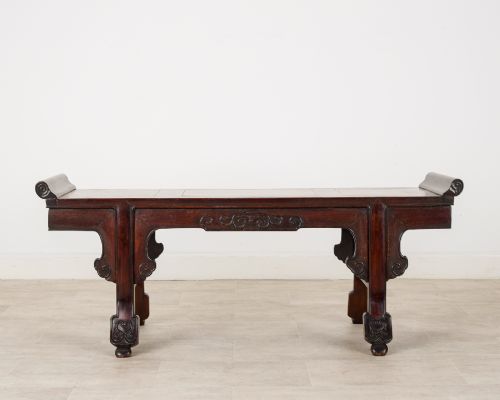
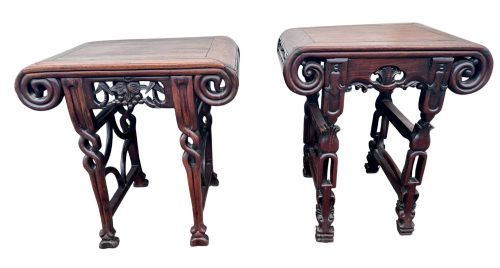
These asian carved wooden stool pieces are heavy hardwood furniture items built for display and seating, offering dense grain and deep carving.
Asian Carved Wooden Stool
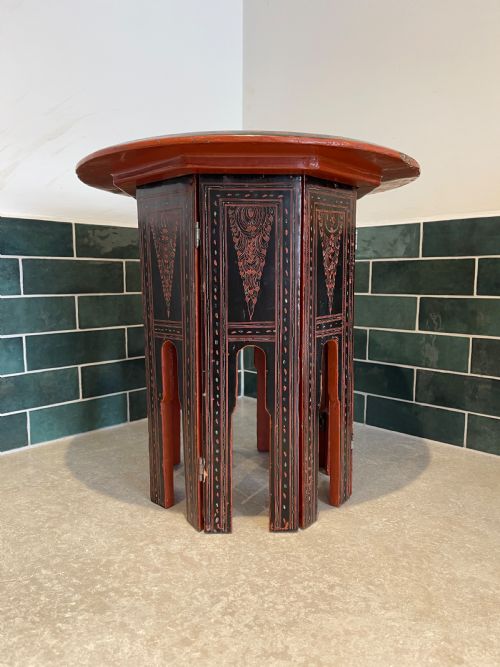
An asian carved wooden stool brings together low seating and display surfaces from various regional workshops across the nineteenth and early twentieth centuries. Buyers seeking an asian carved wooden stool will find forms ranging from round occasional tables and plant stands to low window seats and dressing benches.
The selection leans heavily towards nineteenth century pieces alongside items from around nineteen twenty, spanning Chinese Qing dynasty, Meiji period, and Burmese origins. Forms frequently double as side tables or accent stools, uniting utilitarian seating with ornamental carving.
Chinese vernacular and regional variants dominate the available pool, featuring drum shapes and pedestal formats. These versatile objects function equally well as plant stands or low occasional tables within traditional and modern interiors.
Materials and Construction
Makers utilised dense hardwoods such as hongmu, huali, teak, and rosewood, often selected for their deep colour and capacity for intricate relief carving. Elm and general hardwood also appear, providing robust foundations for heavier benches and seats.
Surface treatments include paint, lacquer, and gold leaf, occasionally combined with inset marble tops or mother-of-pearl inlay. These insertions create contrasting textures against the dark, carved wooden frames of stools and plant stands.
Listings feature nineteenth-century and early twentieth-century pieces, utilising materials such as hardwood, marble, gold leaf, and mother-of-pearl.
Quality and Craftsmanship
The distinction between standard examples and superior pieces rests upon the depth and crispness of the carved detail. Finer items exhibit sharply defined motifs and tightly joined timber frames that have remained stable over generations.
The choice of raw material significantly influences quality, with dense timbers like hongmu and huali commanding greater regard than softer regional woods. Additionally, the inclusion of intact marble inserts or delicate mother-of-pearl inlay elevates the standing of a piece.
The Asian Carved Wooden Stool Glossary
- Hongmu
- A dense, dark tropical hardwood traditionally favored for fine Chinese furniture. It translates literally to red wood.
- Huali
- A fragrant rosewood species utilised in high-status Qing dynasty seating and tables. It possesses a distinctive figured grain.
- Meiji Period
- The era in Japanese history spanning from eighteen sixty-eight to nineteen twelve, known for refined decorative arts. Items from this time often show exceptional carving precision.
- Qing Dynasty
- The final imperial dynasty of China, lasting from sixteen forty-four to nineteen twelve. Furniture from this period is characterised by ornate carving and traditional joinery.
- Mother-of-pearl
- The iridescent internal layer of mollusc shells used for inlay work in furniture panels. It creates bright contrast against dark hardwood surfaces.
Asian Carved Wooden Stool: Frequently Asked Questions
What is an asian carved wooden stool used for?
These items serve primarily as low seating, window seats, or dressing stools in domestic settings. Many examples also function effectively as plant stands or occasional side tables.
The sturdy construction of these hardwood pieces allows them to support decorative objects as well as people. Their compact size makes them adaptable for placement in various rooms.
How do I identify a Qing dynasty stool?
Identification relies on observing traditional construction methods, dense timbers like hongmu, and characteristic stylistic motifs. Pieces from this era often feature deep relief carving and regional Chinese vernacular designs.
Examining the finish and timber weight also helps distinguish nineteenth-century examples from later reproductions. The integration of marble tops or mother-of-pearl inlay is common in pieces from this period.
Are these stools comfortable for daily seating?
Most of these pieces were designed as low seats, window benches, or occasional perches rather than soft lounging furniture. Their firm wooden surfaces provide a solid resting place for short durations.
Placing a small cushion on top can improve comfort if utilised for extended periods. Their primary appeal remains visual and structural rather than ergonomic.
How should I care for antique hardwood furniture?
Maintenance involves keeping the timber away from direct heat sources and sudden humidity changes to prevent splitting. Regular dusting with a dry cloth preserves the polished surface of the wood.
Avoiding harsh chemical cleaners protects the original lacquer, paint, or wax finish. Occasional gentle waxing helps nourish dense hardwoods like rosewood and teak.