




Asian Carved Wood Art
Asian carved wood art brings together centuries of regional craftsmanship, presenting intricate sculptures, panels, and masks created from hardwood, root wood, and lacquer.
Asian Carved Wood Art
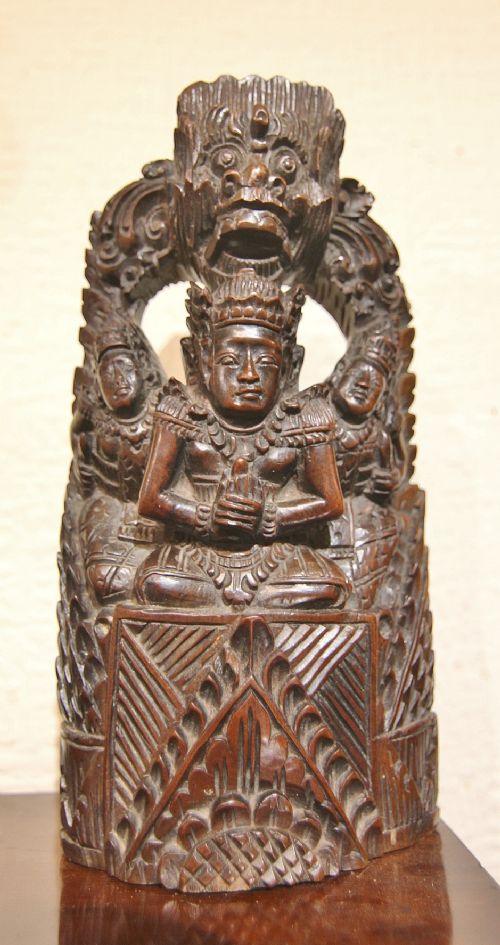
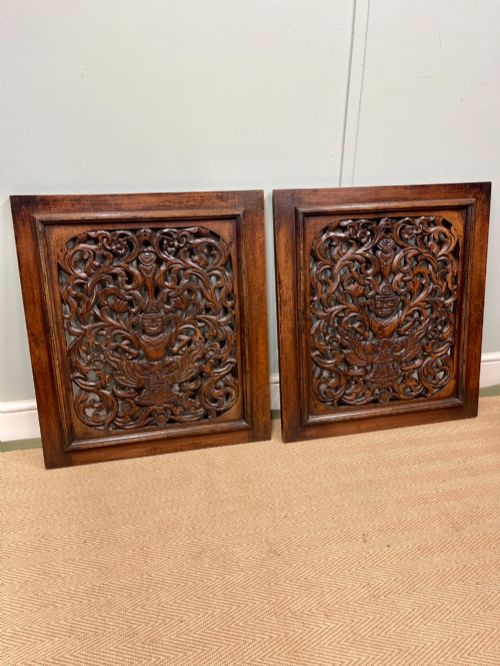
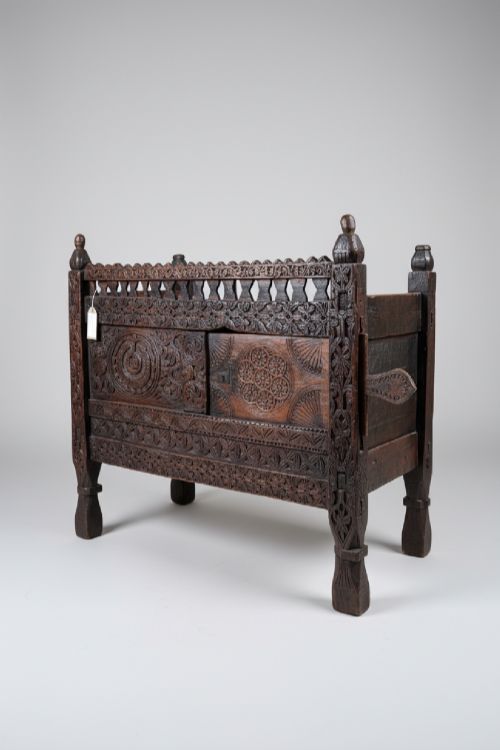
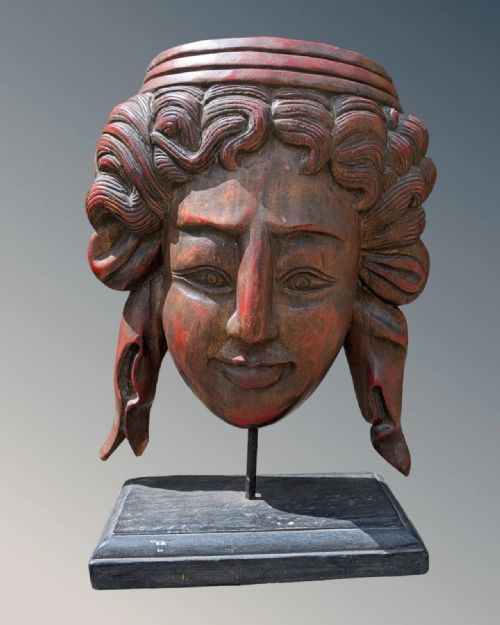
Asian carved wood art comprises a diverse range of sculptures, wall plaques, masks, and figures originating from China, Japan, Burma, India, Bali, and the Himalayas. These pieces emerge from traditions spanning the eighteenth, nineteenth, and early twentieth centuries, capturing subjects from religious figures to daily scenes.
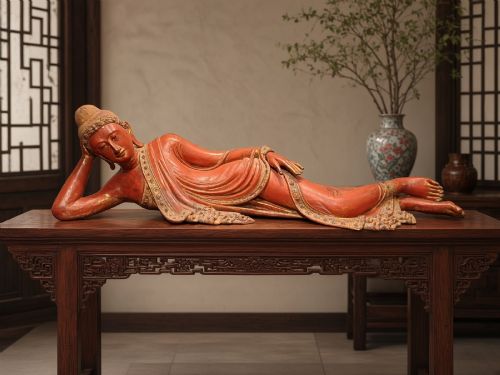
The most common forms encountered on this page include Chinese hardwood figures of immortals and scholars, Burmese and Thai gilt wood Buddha statues, and Japanese okimono and netsuke. Regional panels, temple carvings, and root wood sculptures also feature prominently among the available inventory.
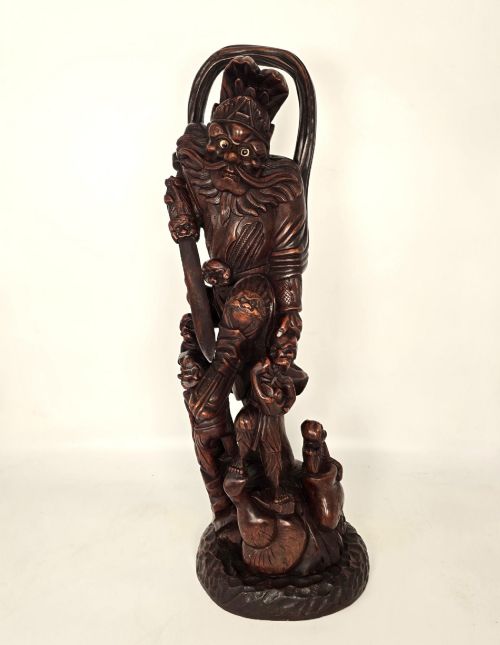
Makers utilised local timbers suited to detailed work, shaping deities, demons, animals, and human subjects with profound attention to expression and posture. Each object reflects the specific aesthetic conventions of its period, whether Qing Dynasty carving or Showa period craftsmanship.
Materials and Technique
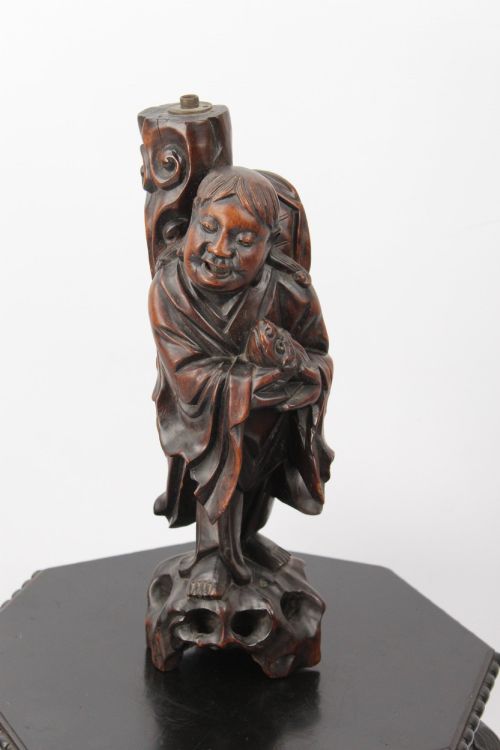
Carvers selected dense hardwoods, fragrant root woods, and teak, allowing them to execute deep relief and fine details without splintering the grain. Root wood pieces deliberately incorporated the natural gnarled contours of the timber into the final composition of figures and scholars.
Asian Carved Wood Art Retail Price Guide 2026
Typical asking prices for asian carved wood art among the pieces listed under this phrase on Sellingantiques today, from the lower quarter to the upper quarter. They describe what is for sale here now, not the wider market.
One nineteenth-century carver turned a gnarled piece of root wood into a man carrying a small boy on his shoulders.
Assessing Quality
Quality rests upon the precision of the carving and the depth of the relief, distinguishing master carvers from commercial workshops. Figures with expressive hands, well-defined drapery folds, and balanced proportions command greater attention.
The preservation of original surface treatments, such as polychrome paint, gold leaf, and lacquer, significantly influences the integrity of a piece. Wear that respects the age of the object differs fundamentally from later repainting or structural replacement.
Shuho Nakahara
The Asian Carved Wood Art Glossary
- Okimono
- A Japanese standalone decorative carving intended for display, often depicting animals, people, or legendary figures with high precision.
- Netsuke
- A small Japanese carved toggle fastened to the end of a cord attached to a small container, shaped into figures or animals.
- Gilt Wood
- Timber decorated with a thin layer of gold leaf applied over a prepared surface, commonly seen on temple panels and Buddha statues.
- Root Wood
- Timber formed from the gnarled underground parts of a tree, sculpted to resemble human figures, scholars, or abstract shapes while retaining the natural grain.
Asian Carved Wood Art: Frequently Asked Questions
What is root wood carving?
Root wood carving utilises the naturally twisted and gnarled subterranean growth of trees, shaping the inherent contours into figures, scholars, or animals. Artisans work with the organic shapes of the timber rather than forcing a standard geometric block.
This technique produces asymmetrical, one-of-a-kind sculptures where the grain and knots become part of the subject's robes or surroundings.
How do I care for gilt wood panels?
Gilt wood panels need gentle dusting with a soft, dry brush to prevent the accumulation of particles in recessed carved areas. Moisture and chemical cleaning agents must be avoided to protect the delicate gold leaf and underlying gesso.
Maintaining a stable indoor climate prevents the wood from expanding or contracting, which would otherwise cause the gilded surface to crack and flake away.
How do I distinguish Chinese hardwood from softer timbers?
Chinese hardwoods used for sculptures and scholar pieces are notably heavy, dense, and cool to the touch compared to European conifers or fruitwoods. The grain is tightly packed, allowing for microscopic detail in hair, beards, and brocade patterns.
Lighter woods were typically reserved for items receiving thick coats of polychrome paint or lacquer, where the underlying timber grain did not need to remain visible.