




Dark Wood Okimono
Dark wood okimono are miniature carved sculptures rooted in Japanese craftsmanship, offering collectors intricate figurative art from the nineteenth century.
Dark Wood Okimono
Dark wood okimono represent a distinct category of Japanese decorative sculpture, appearing primarily from the nineteenth century during the Edo and Meiji periods. These pieces take the form of small figures, animals, and natural objects designed for display rather than fastening garments.
The selections available here span various interpretations of the form, including miniature rodent studies, rabbits, and figures such as Ebisu with a Tai fish. Buyers will encounter both standalone carved wood okimono and related netsuke or wooden sculptures sharing the same material palette.
Originating largely from Japanese workshops of the nineteenth century, these sculptures embody traditional subject matter ranging from domestic animals to cultural figures. The forms vary from solitary creatures to clusters of nuts and figurative groups.
Materials and methods
Carvers shaped dark wood okimono using dense natural materials, notably hardwoods, boxwood, burr wood, and bamboo. These timbers provided the firm foundation necessary for executing precise miniature details.
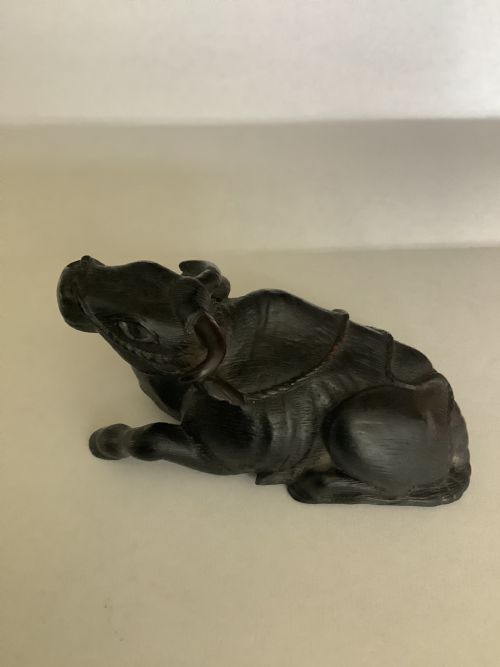
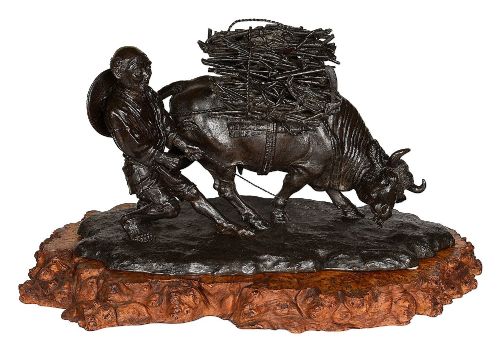
Rodents, rabbits, tigers, and a buffalo share the miniature wooden stage with a cluster of nuts.
Evaluating craftsmanship
The presence of an artist signature distinguishes higher-tier works, as seen on pieces attributed to makers like Tomochika or Gyoko. The choice of timber also influences the piece, with dense boxwood and figured burr wood offering superior contrast and durability compared to standard woods.
Tomochika·Gyoko
The Dark Wood Okimono Glossary
- Okimono
- A Japanese term for a decorative object or sculpture intended for display on a shelf or in a tokonoma alcove. These pieces emerged strongly during the nineteenth century.
- Netsuke
- A small carved toggle fastener used to secure a pouch or container to a kimono sash, often sharing identical carving styles with okimono.
- Meiji Period
- The era of Japanese history lasting from 1868 to 1912, characterised by a flourishing of decorative arts exported to Western markets.
- Boxwood
- A dense, pale-to-warm timber frequently utilised by carvers for miniature sculptures due to its fine grain and stability.
- Edo Period
- The period of Japanese history spanning from 1603 to 1867, preceding the Meiji era and establishing foundational artistic traditions.
Dark Wood Okimono: Frequently Asked Questions
What is a dark wood okimono?
A dark wood okimono is a traditional Japanese miniature sculpture carved from dense timber during the nineteenth century. These objects served as decorative display pieces rather than functional accessories.
Subjects range from animals like tigers and rabbits to figures and natural clusters. Their small scale allowed artisans to concentrate extraordinary detail into everyday materials.
How were okimono displayed?
Historically, okimono were placed within domestic Japanese interiors, specifically inside a tokonoma alcove, to be appreciated up close. They sat independently on tables or ledges without any mounting fixtures.
Today, collectors house them in cabinets or on dedicated display surfaces where the detailed carving of the hardwood can be viewed from multiple angles.
How do I spot a Meiji period piece?
Meiji period carvings often reflect the artistic openness of Japan between 1868 and 1912, when craftsmanship catered to both domestic and international appreciation. Look for naturalistic animal subjects and dynamic poses.
Signatures carved directly into the timber base or body frequently point to this era of established workshop production and named carvers.
Are okimono different from netsuke?
While both are small Japanese carvings in wood or ivory, netsuke feature functional cord holes designed to anchor small pouches to traditional clothing. Okimono are strictly decorative sculptures made solely for display.
Despite this difference in original purpose, the carving techniques, materials, and subject matter often overlap significantly between the two forms.