



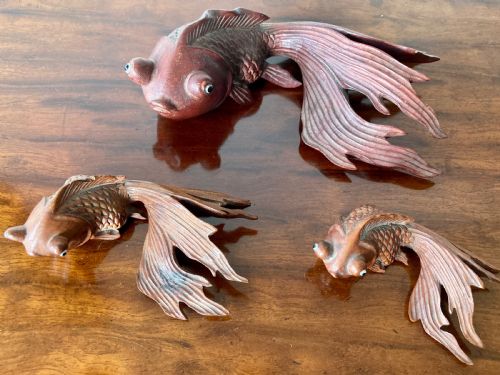


Japanese Wood Okimono
When you explore japanese wood okimono, you encounter carved display pieces from nineteenth-century workshops portraying animals, deities and figures.
Japanese Wood Okimono
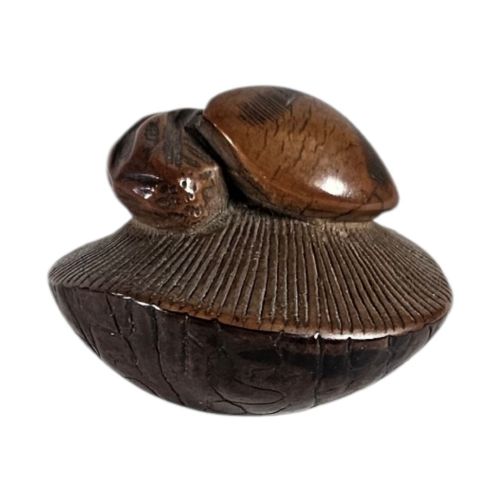
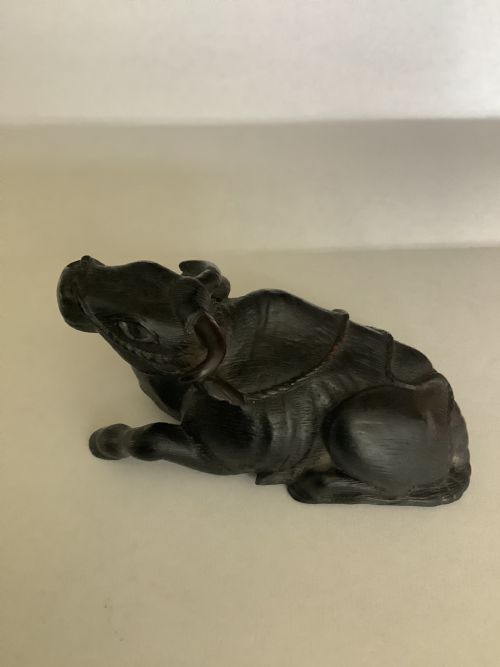
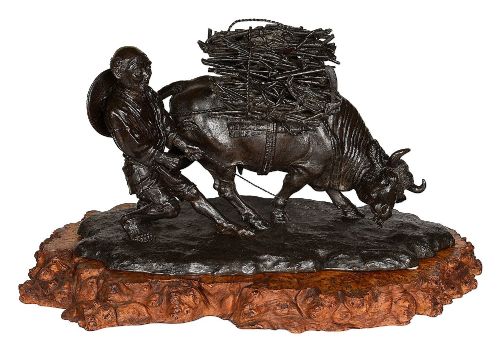
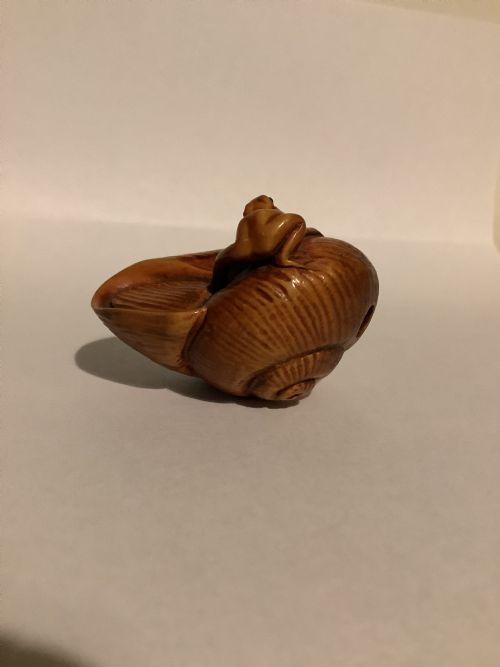
A Japanese wood okimono is a standalone decorative sculpture created for display rather than for practical utility. These carvings range from miniature boxwood animal groups to large hardwood figures of deities, hunters and priests.
The objects frequently appear in boxwood, bamboo and general hardwoods, spanning the Edo and Meiji periods alongside Edwardian examples. Figures of men, animals such as tigers and rats, and mythological characters dominate the recorded selection.
How they were made
Carvers utilised boxwood, hardwood, burr wood and bamboo as the primary materials, sometimes combining wood with bronze, horn or lacquer accents. The technique relies on intricate hand-carving to render minute details like fur, scales, facial expressions and clothing folds.
Many works incorporate natural elements such as rootwood bases, while signatures or inscribed marks are frequently integrated directly into the wooden surface by the artist.
Object types recorded across the archive include netsuke, paperweights, figurines and larger decorative sculptures.
What varies in quality
The level of sculptural depth and precision in the carving separates standard items from exceptional ones. Finer examples display meticulous attention to anatomical details, naturalistic textures and complex compositions involving multiple figures or animals.
The presence of a clear artist signature or seal often distinguishes higher-grade works, alongside the complexity of the subject matter and the clever use of the grain within the boxwood or hardwood.
Tomochika·Gyoko·Nishikawa Suketsugu·Tadakazu·Gyokumin·Koichi·Keimin
The Japanese Wood Okimono Glossary
- Boxwood
- A dense, pale wood prized by carvers for its fine, even grain which permits minute detail. It forms the material for many smaller sculptural works.
- Okimono
- A Japanese term for a decorative object or sculpture intended for display on a shelf or in a tokonoma alcove. These pieces stand independently without a utilitarian function.
- Meiji Period
- The era in Japanese history spanning from 1868 to 1912, characterised by a flourishing of decorative arts for export and domestic display. Numerous recorded carvings originate from this timeframe.
- Netsuke
- A small carved toggle with perforations used to secure a container to a kimono sash. While distinct from an okimono, the forms frequently overlap in collections.
- Edo Period
- The period of Japanese history lasting from 1603 to 1867, preceding the Meiji era. Earlier sculptural works trace their origins to this time.
Japanese Wood Okimono: Frequently Asked Questions
What is an okimono?
An okimono is a Japanese decorative sculpture designed specifically for display on a shelf or table. These carved figures range from compact animal groups to tall standing characters.
Unlike netsuke, which served a fastening purpose on traditional dress, okimono exist purely for aesthetic appreciation and storytelling.
How old are these wood carvings?
The recorded pieces span the nineteenth century, including the Edo and Meiji periods, as well as Edwardian examples. Most items date from the late nineteenth century when Japanese decorative arts reached international markets.
Stylistic elements and period markers help place specific carvings within this historical window.
Which woods were used?
Carvers relied primarily on boxwood and dense hardwoods for their ability to hold sharp, intricate details. Other materials included bamboo, burr wood and rootwood for natural bases.
Occasional pieces incorporate mixed media such as bronze, horn or lacquer to accent the wooden forms.
What subjects do they show?
The sculptures depict a wide variety of subjects drawn from folklore, daily life and the natural world. Common motifs include deities like Fukurokuju and Ebisu, mythological figures like oni, and animals such as tigers, rats and carp.
Human subjects often feature workers, musicians, fishermen and historical figures engaged in everyday activities.
Are they signed by artists?
Many recorded carvings feature artist signatures or seals inscribed directly into the wood. These signatures appear either on the base or discreetly integrated into the composition.
Unsigned pieces remain common, reflecting anonymous workshop production as well as attributed studio work.