


Asian Bird Motif Vase
These asian bird motif vase pieces bring intricate bronze and porcelain craftsmanship straight to your interior.
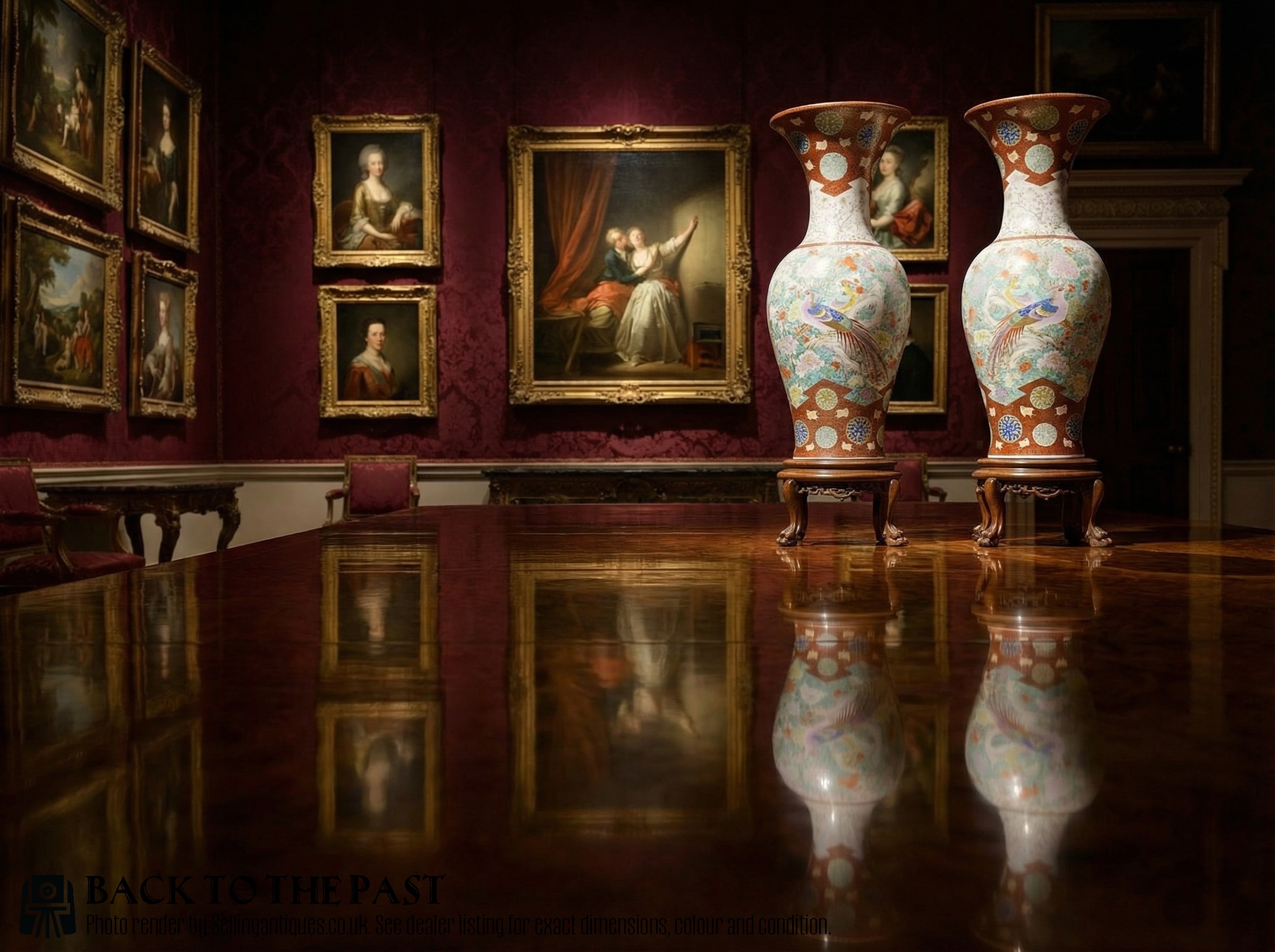
Asian Bird Motif Vase
An asian bird motif vase represents a distinct category of decorative vessel originating from Japanese Meiji period workshops and Qing Dynasty makers. Buyers searching this phrase encounter heavy bronze vessels alongside delicate earthenware and porcelain pieces adorned with avian and floral subjects.
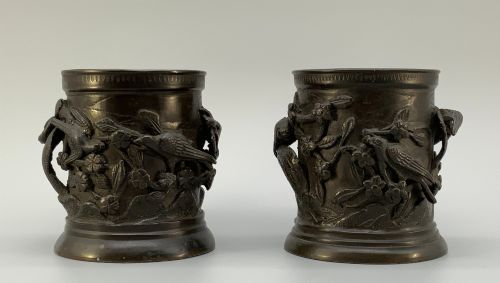
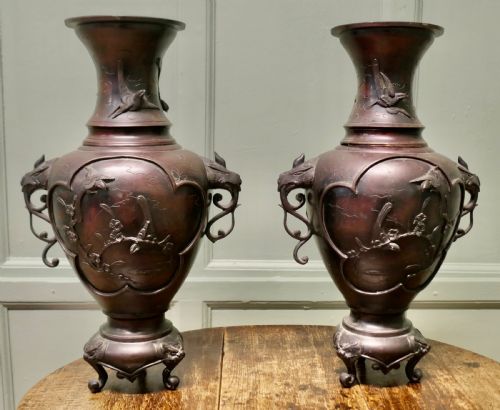
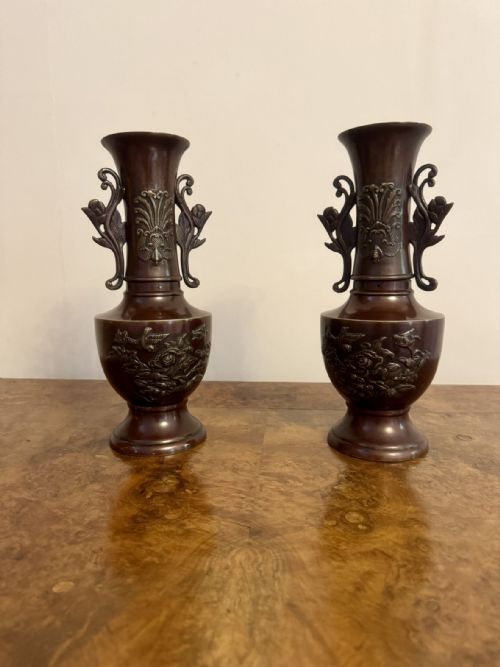
The dominant forms on this page are Japanese Meiji bronze vases, often found as matched pairs with twin handles or standing atop carved wooden supports. Chinese bronze altar vases also appear frequently, spanning the late nineteenth and early twentieth centuries.
How they were made
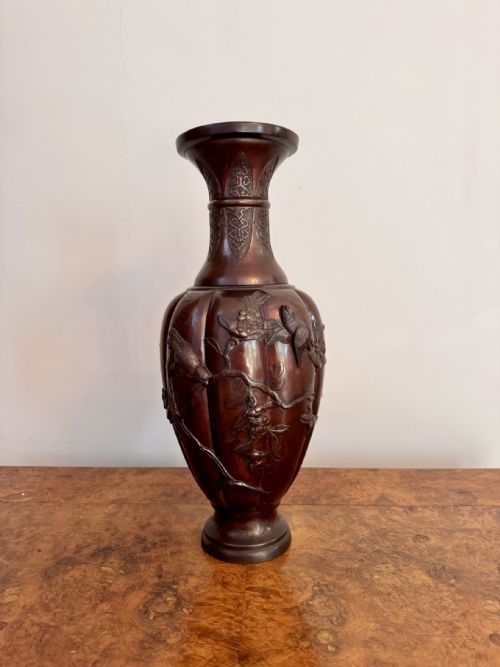
Many of these vessels utilise cast bronze, finished with patination, enamel highlights, or traces of gold leaf. Skilled artisans shaped the metal bodies before chiselling fine detail into the birds, blossoms, and surrounding foliage.
Ceramic pieces rely on earthenware or porcelain bodies finished with glaze and hand-painted pigments. Workshops such as Kutani and Fukagawa applied intricate surface decoration over a fired clay base.
Periods represented include Victorian, Qing Dynasty, and the Japanese Meiji period spanning 1880 to 1910.
What varies in quality
The standard of chasing and casting defines the upper tier of bronze vessels. Heavier metal gauge and deep, crisp relief work distinguish finer Meiji period pieces from simpler commercial output.
Porcelain and earthenware quality depends on the precision of the hand-painted enamel and the clarity of the glaze. Signed workshop pieces often display superior pigment control and finer detail across the bird motifs.
Kinrin Workshop·Fukagawa
The Asian Bird Motif Vase Glossary
- Meiji Period
- The era of Japanese history spanning from 1868 to 1912, known for exceptional metalwork and ceramics produced for export. Much of the bronzework found here originates from these decades.
- Qing Dynasty
- The final imperial dynasty of China, ruling from 1644 until 1912. Pieces from this period include cast bronze altar vessels.
- Patinated Bronze
- Metal treated with chemical solutions to produce a controlled surface colour and aged appearance. This finish highlights the chased details on bird and blossom designs.
- Satsuma
- A type of Japanese earthenware featuring a crackle-glaze finish and polychrome enamel decoration. These items are typically hand-painted with detailed scenes.
Asian Bird Motif Vase: Frequently Asked Questions
What is an asian bird motif vase?
These vessels are decorative urns and vases made in Japan and China during the late nineteenth and early twentieth centuries. They feature bird and floral imagery rendered in bronze, porcelain, or earthenware.
Most examples date from the Meiji period or the Qing Dynasty. They range from small decorative stem vases to large altar pieces.
How were bronze vases displayed originally?
Japanese bronze vessels were often placed in pairs on prominent interior surfaces or displayed alongside carved wooden stands. Larger altar vases served ceremonial purposes in Chinese settings before entering the collector market.
Today, buyers place these items on side tables or mantels as focal points. Their substantial weight makes them stable centrepieces.
How do I identify a Meiji period piece?
Meiji period bronze vases usually exhibit deep relief casting depicting birds, foliage, and natural scenes. The metal often has a dark patinated finish, sometimes with enamel or gold leaf accents.
These pieces typically date between 1868 and 1912. Stylistic elements align closely with Japanese export art of that era.
What materials are used in these vases?
The selection includes cast bronze, patinated bronze, porcelain, and earthenware. Some incorporate enamel work, gold leaf highlights, and carved wood stands.
Bronze items often feature heavy metal construction, while ceramic examples utilise traditional glazes and painted pigments.