

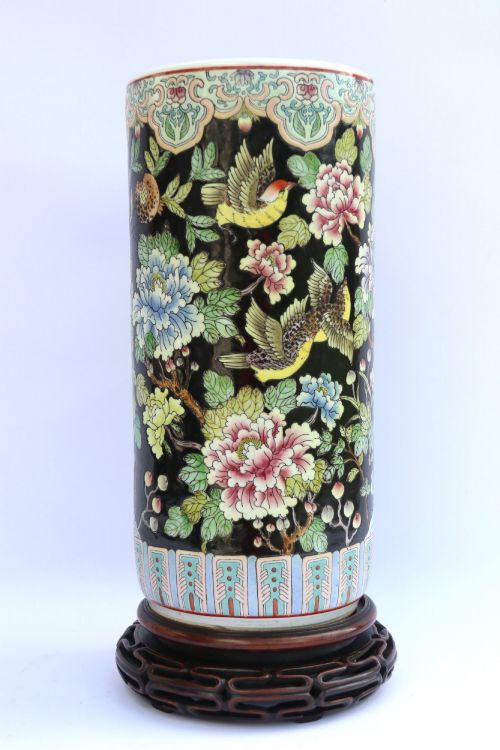

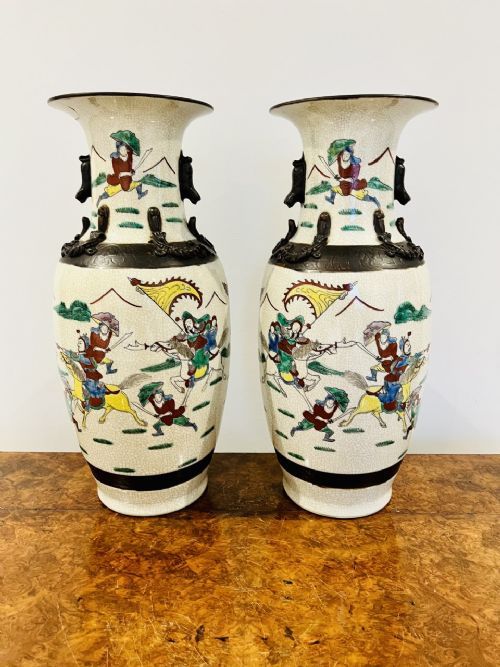
Large Oriental Porcelain Vase
A large oriental porcelain vase brings substantial decorative weight to a room, turning utilitarian pottery into a commanding architectural focal point.
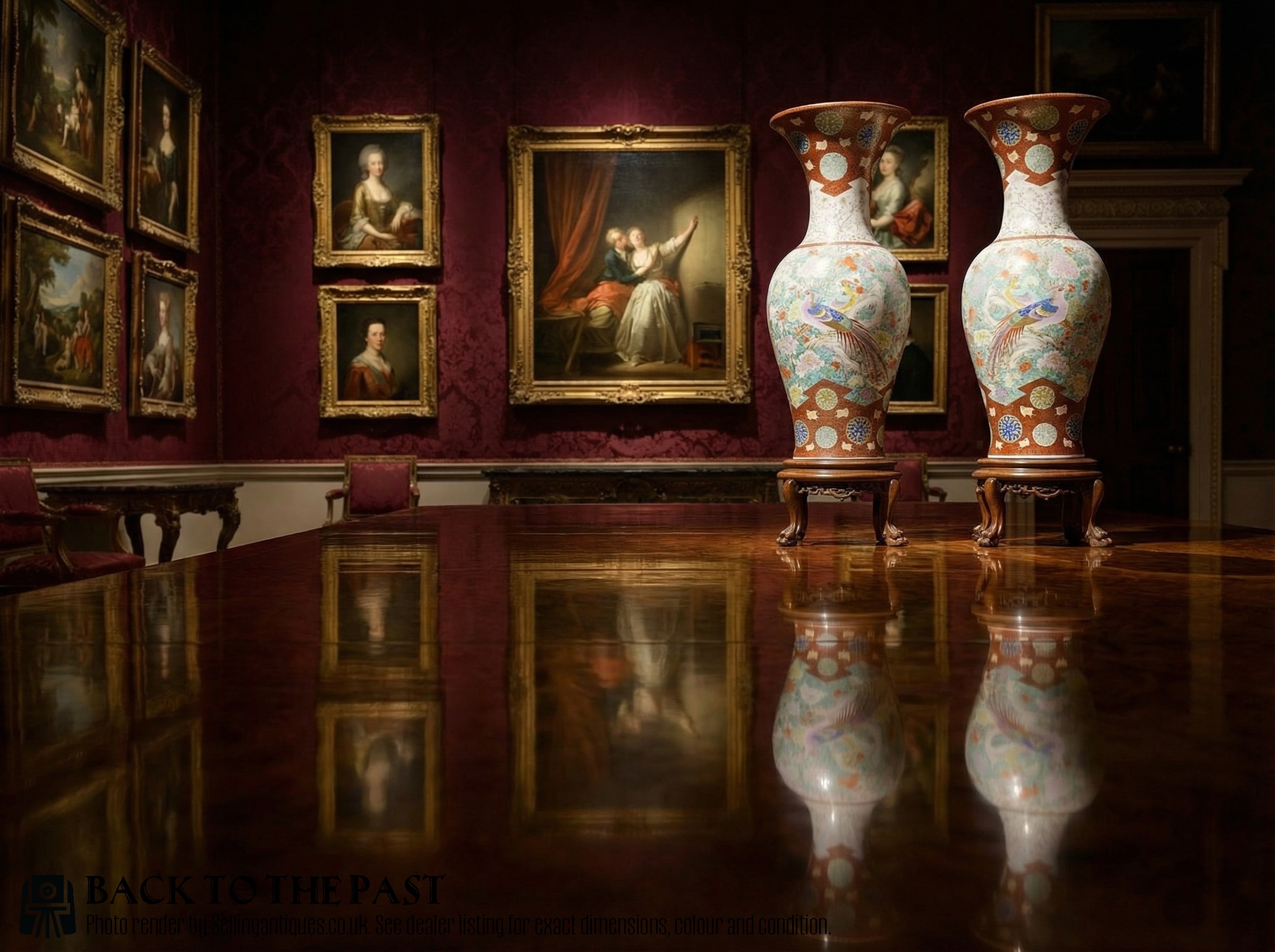
Large Oriental Porcelain Vase
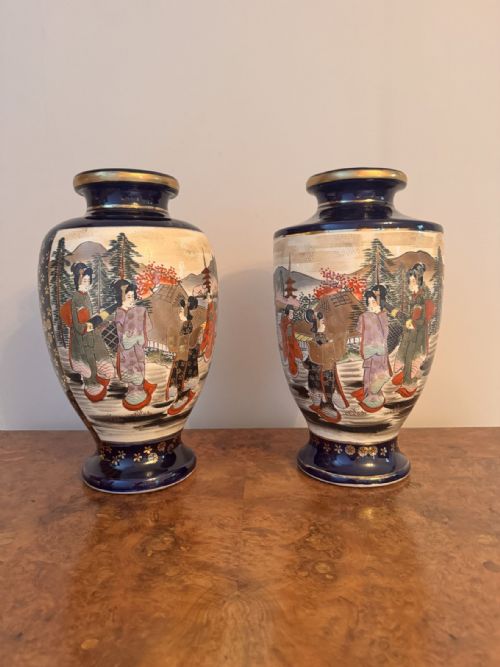
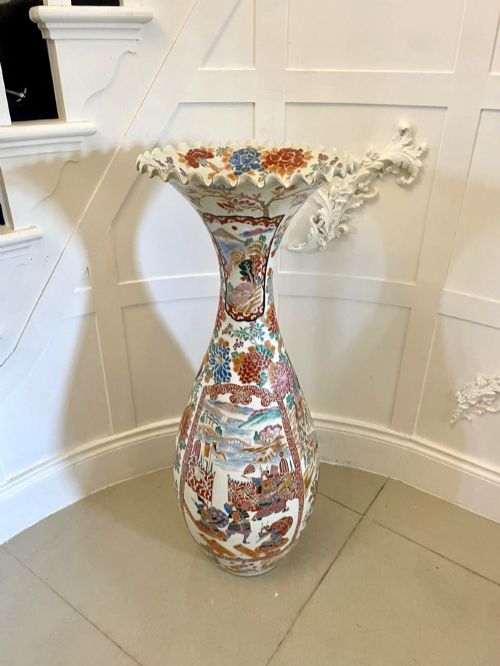
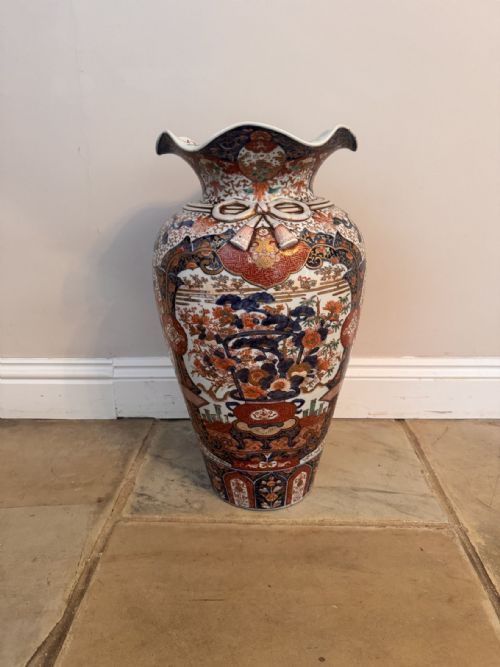
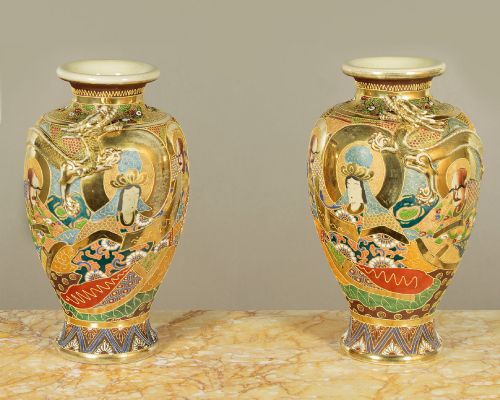
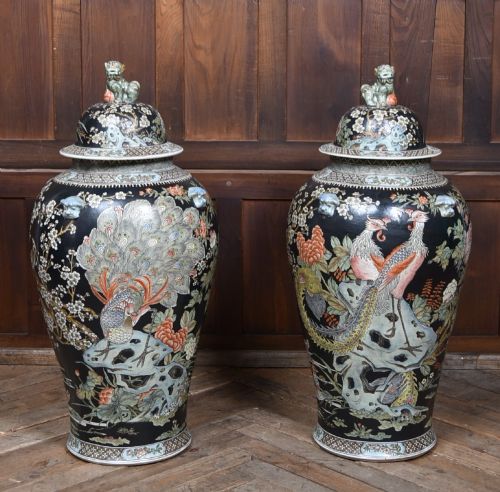
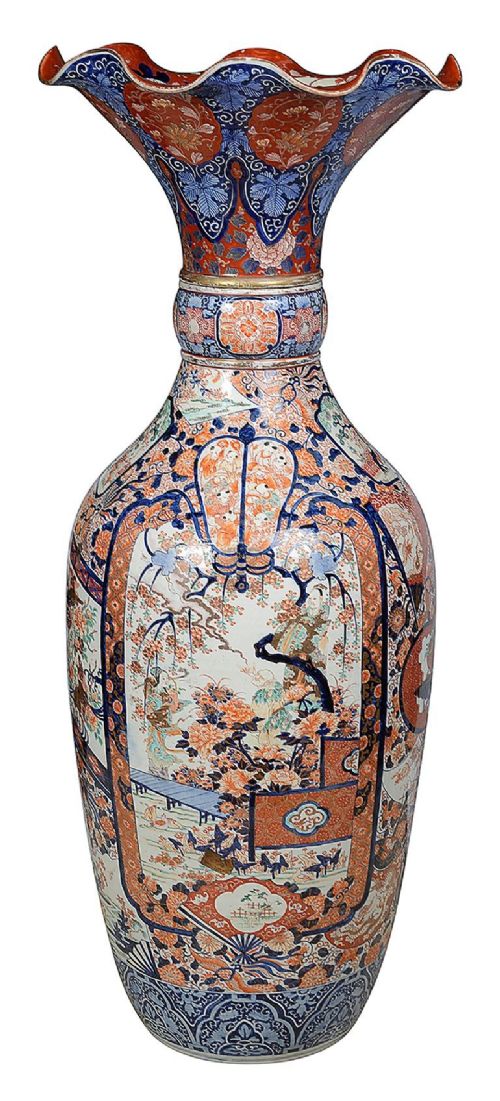
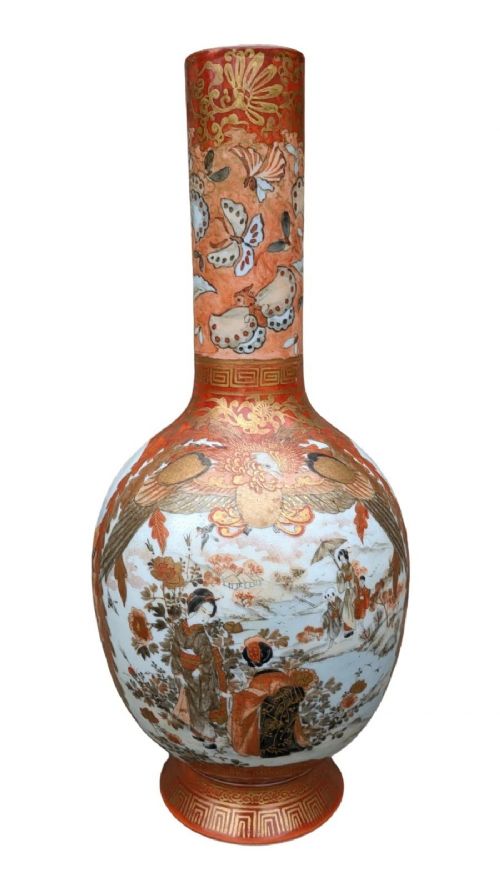
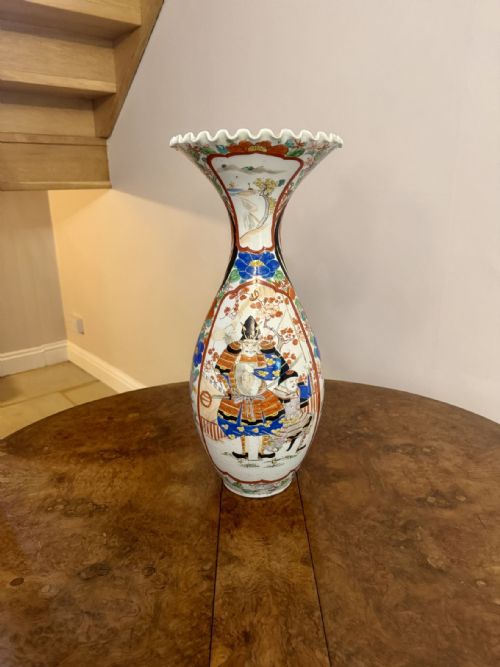
A large oriental porcelain vase encompasses substantial floor-standing jars, palatial baluster shapes, and monumental vessels originating from East Asian kilns. Buyers seeking a large oriental porcelain vase will frequently encounter Japanese Imari wares and Chinese Qing Dynasty pieces dating from the nineteenth century.
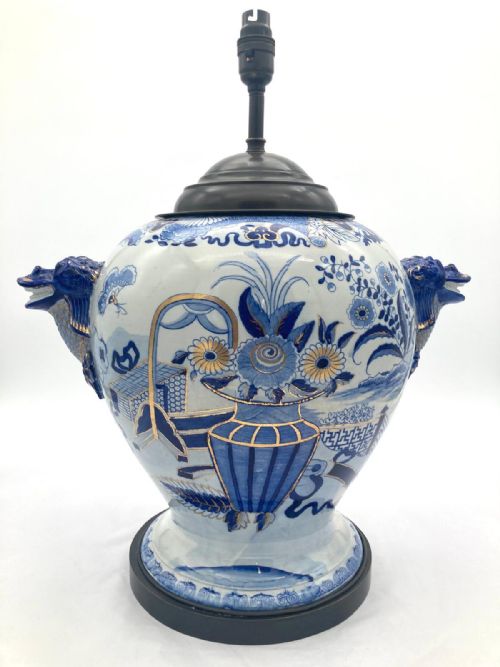
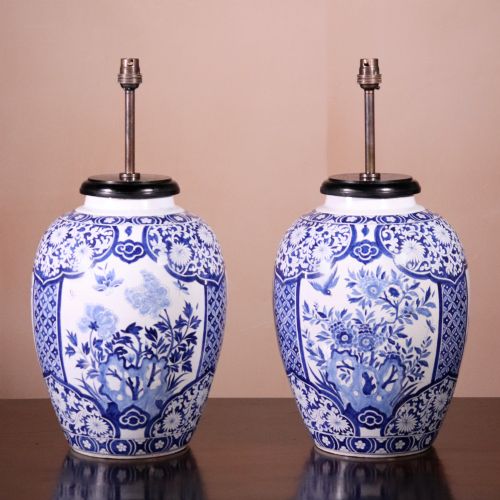
Forms on this page range from floor-standing specimens exceeding four feet in height to pairs of table lamps and double-gourd vessels. Many of these large objects retain original wooden stands or incorporate later brass and gilt bronze mounts fitted for lighting.
Materials and methods
Potters shaped these vessels from dense ceramic bodies glazed in blue and white, celadon, or crackled finishes, then layered enamels and gold leaf across the surface. Many examples combine the porcelain body with carved hardwood bases, lacquer panels, or metal mounts.
Kiln techniques allowed for the creation of monumental forms, sometimes fired in sections before assembly, and decorated with detailed hand-painted scenes using underglaze cobalt and overglaze enamel pigments.
Listings feature pieces spanning the nineteenth and twentieth centuries, utilising porcelain, earthenware, enamel, gold leaf, and wood.
Distinctions in craftsmanship
Quality separates standard production wares from pieces bearing named makers, intricate hand-painted detail, and precise firing control. Superior examples display crisp definition in the enamel work, careful gilding, and balanced proportions across monumental heights.
The presence of original fitted stands, lids, and documented studio signatures elevates the standing of a piece within the tradition.
Hotoda·Makuzu Kozan·Kato Sanhei
The Large Oriental Porcelain Vase Glossary
- Imari
- A style of Japanese porcelain featuring distinctive iron-red, cobalt blue, and gilt decoration. These pieces were produced for both domestic use and export to Western markets.
- Famille Rose
- A palette of opaque overglaze enamels dominated by pink or rose colours, introduced to Chinese porcelain during the Qing Dynasty. Artisans used these tones to render complex floral and figural compositions.
- Celadon
- A type of green glazed pottery that mimics the appearance of jade, produced through iron oxide fired in a reduction kiln. The subtle grey-green glaze pools naturally in carved recesses of the ceramic body.
- Double-Gourd
- A vessel shape formed by two bulbous sections stacked vertically, resembling traditional gourd containers. This auspicious form appears frequently in Chinese ceramics.
- Meiji Period
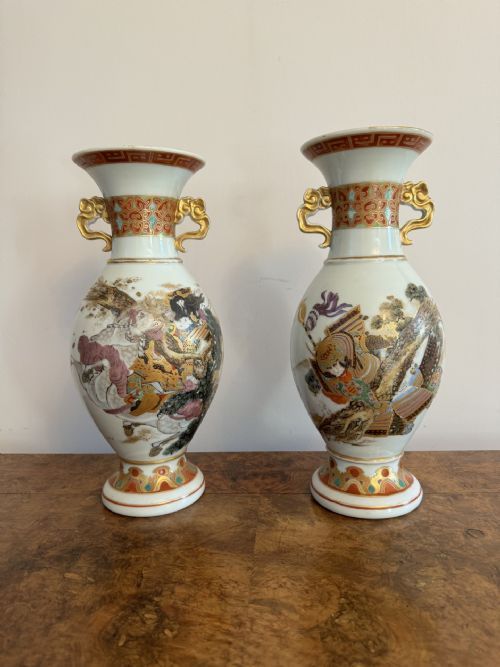
- The era of Japanese history lasting from 1868 to 1912, noted for ambitious artistic production aimed at international exhibition. Works from this time often display extraordinary scale and minute detail.
Large Oriental Porcelain Vase: Frequently Asked Questions
How were these large vessels used?
These imposing vessels served primarily as decorative centerpieces in grand reception rooms, halls, and oriental-themed interiors. Many of the largest examples functioned as floor jars or umbrella stands, while others were later adapted as table lamps.
Their substantial scale allowed them to anchor large architectural spaces, often displayed in matched pairs to create symmetry on either side of a fireplace or entryway.
How do I tell Japanese and Chinese pieces apart?
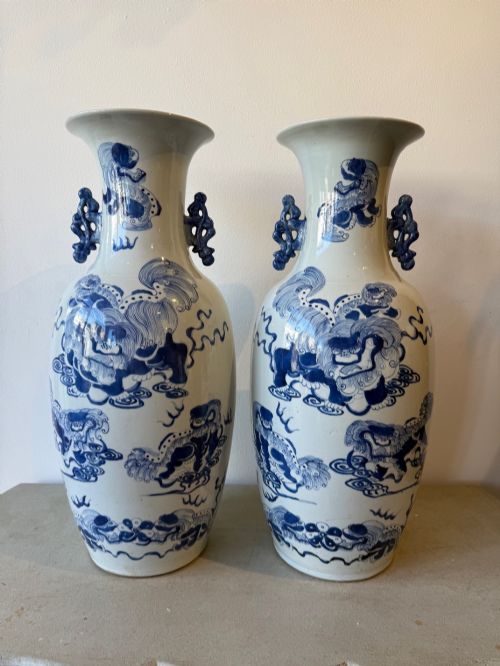
Chinese porcelain often relies on celadon glazes, blue and white underglaze painting, or the opaque enamel palettes of the Qing Dynasty, such as famille rose. Japanese pieces from the Meiji period frequently showcase denser, busier compositions of overlapping patterns, gold leaf, and distinctive Imari colourways.
Signatures and studio marks can also help clarify origin, with Japanese pieces frequently bearing artist or workshop names, while Chinese items often feature dynasty reign marks or auspicious symbols.
Can I safely live with and clean a large porcelain vase?
Living with these pieces involves placing them away from high-traffic zones where heavy items might accidentally strike the ceramic body. Because many stand at considerable heights, a secure, level surface or a dedicated floor position prevents tipping.
Dusting should be done gently with a dry, soft cloth, avoiding commercial chemical cleaners that might damage overglaze enamels or exposed gold leaf.
What does a converted lamp mean for the vase?
A converted lamp indicates that a historic vase has been fitted with electrical wiring and hardware, often through a drilled base or custom mounts. While purists prefer untouched ceramic vessels, conversion was a common nineteenth-century practice to repurpose ornamental jars for domestic lighting.
Buyers should examine whether the conversion preserves the original ceramic body or if permanent alterations were made during the fitting of the brass or gilt bronze mounts.