


Arts Crafts Fireside Store
These arts crafts fireside store pieces are metal and wood containers for fuel, combining utility with distinct period design.
Arts Crafts Fireside Store
When you search for arts crafts fireside store pieces, you encounter receptacles designed to hold coal and logs beside the hearth. The forms span buckets, scuttles, purdoniums, and log boxes intended for domestic fuel storage.
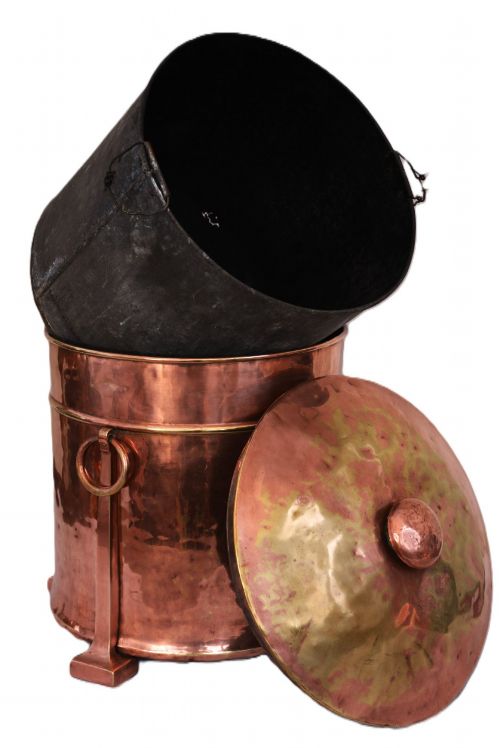
The version you meet most often on this page is the copper coal bucket or bin, frequently displaying the hammer marks and repoussé details characteristic of the movement. Examples integrate timber bodies or oak carriers alongside metal panels.
Origins stretch from the late Victorian era through the Edwardian period into the early twentieth century. Styles encompass Victorian utility, Art Nouveau curves, and Art Deco geometry alongside the defining Arts and Crafts aesthetic.
How they were made
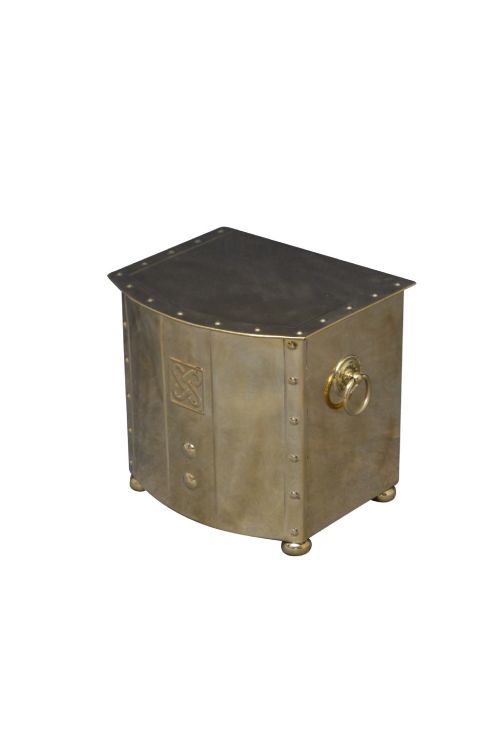
Maker construction relies heavily on sheet copper and wrought iron, beaten and shaped by hand or pressed with decorative motifs. Metal bodies attach to solid oak frameworks and wood bases using visible rivets and fixings.
Embossed designs, such as galleon motifs, demonstrate repoussé technique where artisans hammer patterns from the reverse side of the metal sheet. Copper plating and polished finishes provide the reflective surfaces seen across the selection.
What varies in quality
The distinction between standard containers and finer examples rests upon the depth and clarity of hand-worked detailing. Heavier gauge metal and substantial timber framing separate robust domestic items from lighter production pieces.
Design integration defines the upper range, where structural rivets, handles, and hinges form part of the aesthetic scheme. Maker attribution, such as retail provenance from Liberty London, elevates a piece beyond anonymous workshop output.
The Arts Crafts Fireside Store Glossary
- Purdonium
- A specialised coal box featuring an internal metal liner and a hinged front flap or shovel compartment. This form kept fuel contained while offering easier access at the hearth.
- Repoussé
- A metalworking technique where the artisan hammers a design from the reverse side to create a raised pattern on the front. This method produced the pictorial panels seen on many copper bins.
- Scuttle
- A deep open bucket with a pivoted handle and a skewed lip designed for pouring fuel cleanly. Versions often sit on small feet or a raised base.
- Log Box
- A rectangular container built to hold firewood rather than loose coal, often constructed from timber with metal reinforcement. These pieces accommodate larger logs for open fires.
Arts Crafts Fireside Store: Frequently Asked Questions
What is an arts crafts fireside store?
These items are functional containers designed to hold coal, peat, or logs near a fireplace. They kept fuel tidy and dry within the principal rooms of the house.
Craftsmen and manufacturers produced them in various forms, including lidded boxes, open buckets, and purdoniums, matching the interior style of the period.
How do I use a copper coal bin today?
Modern owners frequently repurpose these vessels as log holders beside wood burners or open hearths. They also serve as umbrella stands in hallways or plant cachepots in living spaces.
The metal liners inside many examples still contain dry materials effectively, though direct contact with damp fuel should be managed to protect the interior.
How do I tell an Edwardian piece from a Victorian one?
Dating relies on stylistic shifts and construction methods recorded in the physical evidence. Victorian examples often lean towards heavier, more ornate decoration, while Edwardian and nineteen-hundreds items embrace simpler structural lines.
Art Nouveau influence brings flowing plant motifs, whereas later pieces from nineteen-thirty introduce geometric Art Deco tendencies.
Are these items made entirely of solid copper?
Many pieces combine multiple materials rather than relying on solid metal throughout. Oak frames, wooden bases, and iron reinforcement frequently support the beaten copper outer panels.
Some listings note copper plating over base metals, reflecting the manufacturing methods available to workshops of the era.