


Hammered Coal Bin
A hammered coal bin brings functional hearth storage into a room with tactile metalwork from the Victorian, Edwardian and Arts and Crafts periods.
Hammered Coal Bin
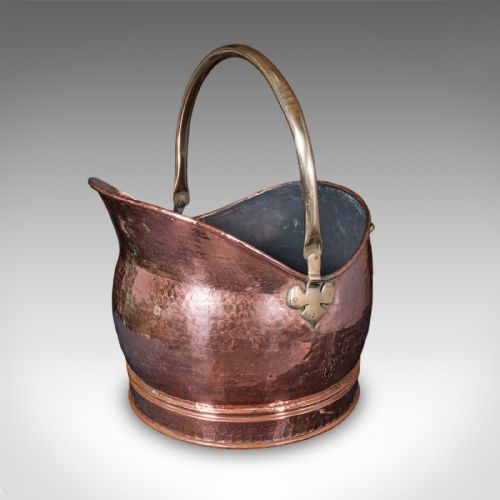
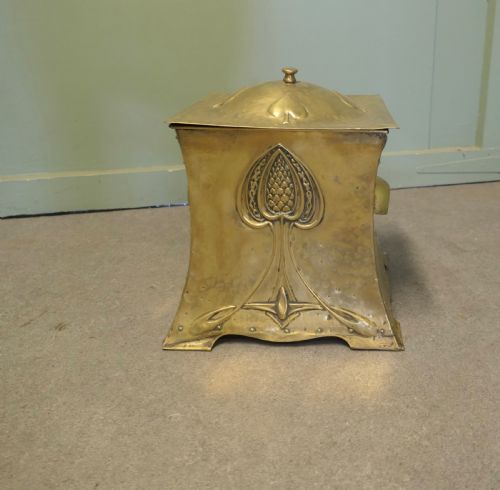
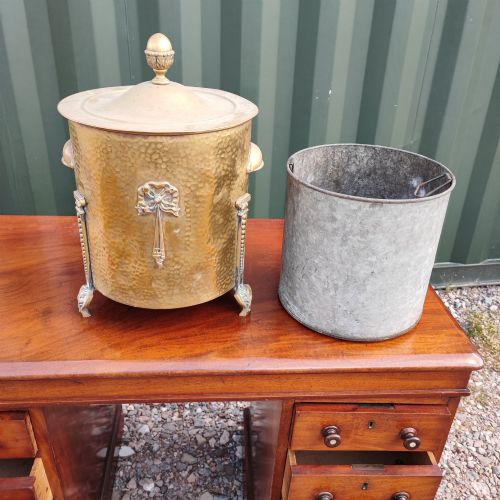
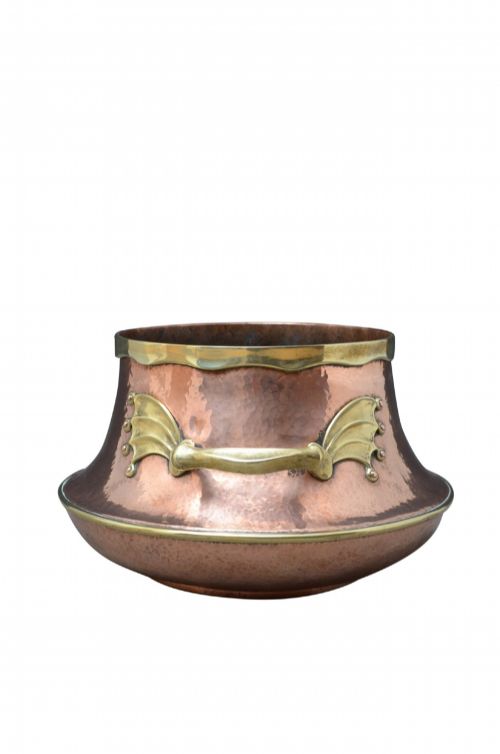
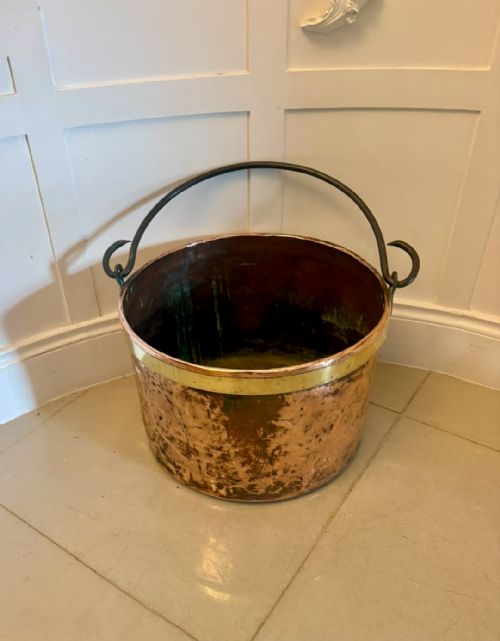
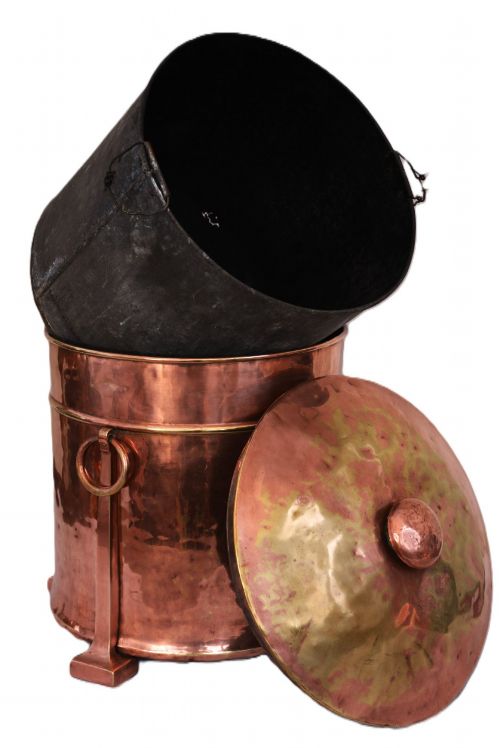
A hammered coal bin is a fireside accessory designed to hold solid fuel or logs beside an open fireplace. These vessels appear in forms ranging from traditional helmet scuttles and lidded boxes to cylindrical buckets, cauldrons and purdoniums.
The version most commonly encountered on this page is the copper or brass bin from the late nineteenth and early twentieth centuries. Many examples display the characteristic handbeaten or hammered surfaces of the Arts and Crafts and Art Nouveau movements.
Makers produced these functional containers primarily in copper, often complemented by brass handles, wrought iron mountings or oak framing. While some served purely for coal storage, others now double as planters or jardinieres.
How they were made
Artisans formed the bodies of these bins by handbeating sheets of copper or brass over anvils and stakes to create the textured hammered finish. This hammering hardened the metal while producing the characteristic light-reflecting facets seen on Arts and Crafts pieces.
Constructors joined seams using riveted plates or folded joints, attaching sturdy brass or iron swing handles, drop handles and feet. Some examples incorporate wooden elements like oak panels or lids to frame the beaten metal bodies.
A sturdy coal bucket once destined for smoky Victorian hearths now peacefully holds ferns.
What varies in quality
Quality in a hammered coal bin lies in the weight of the metal gauge and the deliberate regularity of the handbeaten surface marks. Heavier copper sheets resist denting and hold their structural integrity under the daily weight of coal or logs.
The artistry of the construction elevates certain pieces, seen in securely riveted joints, well-cast brass handles and thoughtful integration of secondary materials like wrought iron or oak. Pieces featuring distinct decorative motifs or named stylistic influences like Ruskin demonstrate greater design ambition.
The Hammered Coal Bin Glossary
- Coal scuttle
- A container specifically shaped for carrying and storing coal, often featuring a funnel mouth or helmet profile for pouring. These vessels typically include a rear handle and a swinging top handle.
- Purdonium
- A specialised type of coal box featuring a sloping drop-front door and an internal metal liner. This form kept coal neatly concealed beside the Victorian fireplace.
- Dinanderie
- An old term for objects made of beaten brass, copper or bronze, often associated with decorative vessels and cauldrons. The technique highlights the medieval revival interests of early twentieth-century makers.
- Jardiniere
- A large ornamental pot or vessel for holding plants or flowers. Many robust metal bins find a second life in this role.
- Helmet bucket
- A fireside container modeled after the traditional shape of a classical helmet, with a flared rim and an elevated back. This profile directed coal smoothly into the hearth.
Hammered Coal Bin: Frequently Asked Questions
What is a hammered coal bin used for?
These metal containers served primarily to store and transport coal or logs to the fireplace in British homes. Their robust construction handled the heavy weight of solid fuel while keeping hearth debris contained.
Today, many owners continue to use them for logs by the fireplace, while others repurpose them as large planters or decorative vessels in living spaces.
How do I date a copper coal bin?
Dating relies on stylistic clues, manufacturing techniques and period materials. Pieces featuring organic whiplash lines usually point to the Art Nouveau era around nineteen hundred, while structural hammered surfaces often reflect the Arts and Crafts movement.
Victorian examples frequently display classic helmet shapes or heavy brass mountings. Examining the rivets, handle attachments and interior liners provides further chronological context.
Are these bins made of solid copper?
Many examples are constructed from solid hammered copper sheets, often paired with brass handles, iron mounts or wooden accents. Some pieces from the late nineteenth century utilise copper plating over base metals.
Checking the interior and underside helps reveal the underlying construction materials and gauge thickness.
Can I use an antique coal bin as a planter?
Many sturdy metal bins function well as indoor planters or jardinieres for large houseplants. Their generous proportions and waterproof metal bodies accommodate soil and pots easily.
Adding a protective liner inside helps preserve the historical interior surface from moisture.