

Victorian Copper Bin
A victorian copper bin brings sturdy utility and rich metallic warmth to a fireside or room, functioning equally well as a log holder, coal bucket, or planter.
Victorian Copper Bin
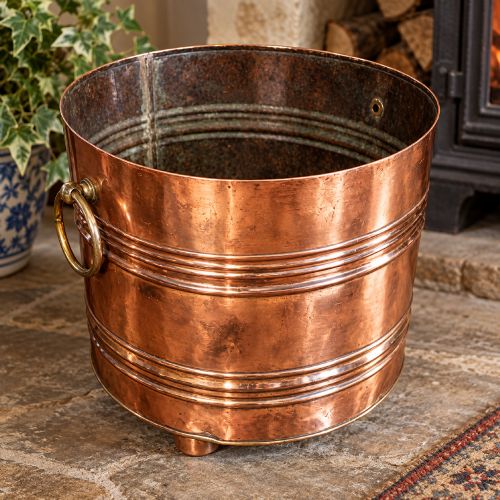
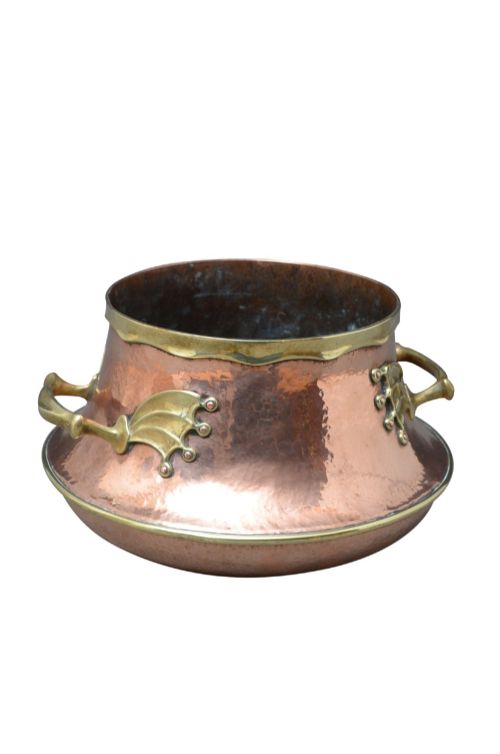
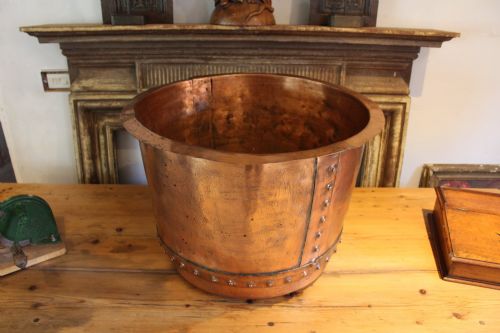
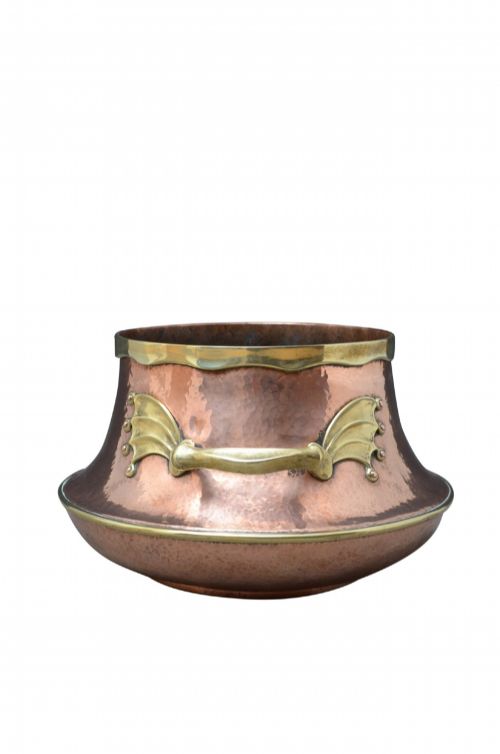
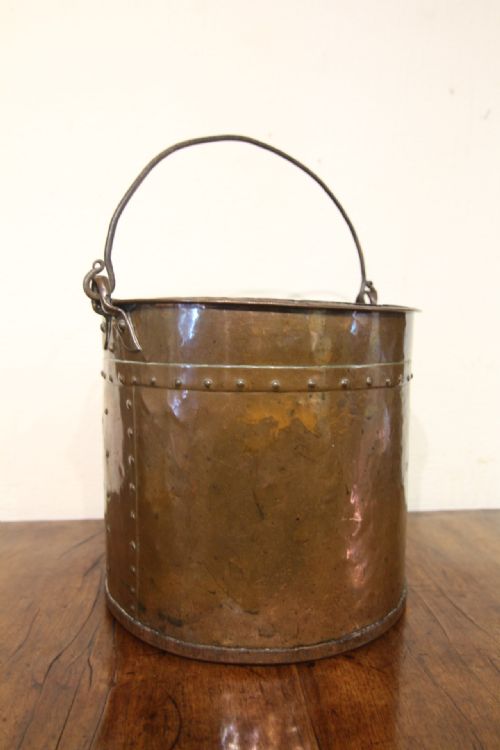
A victorian copper bin encompasses heavy utilitarian vessels initially designed for domestic hearth duties, such as storing coal or holding logs. These pieces emerge predominantly from the nineteenth century, spanning rustic farmhouse styles and more decorative Arts and Crafts iterations.
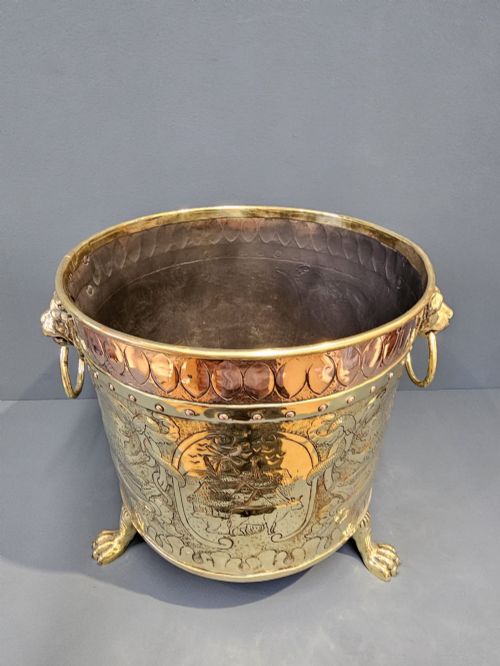
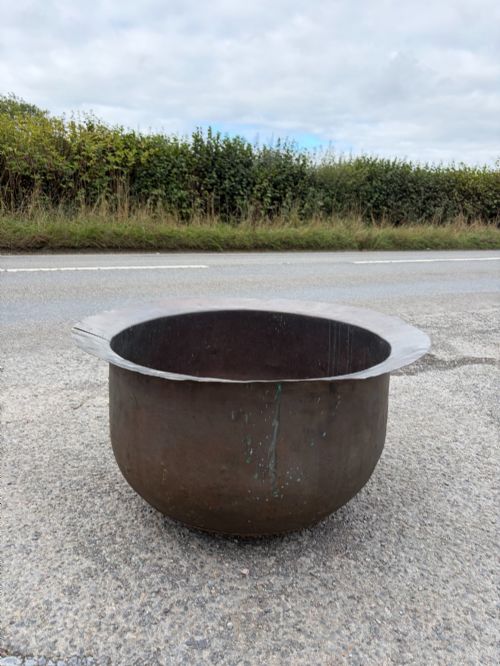
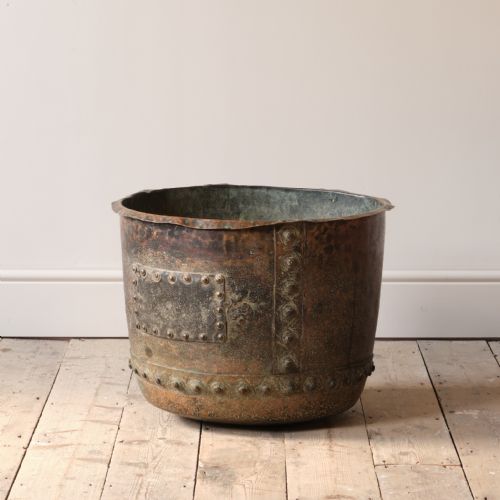
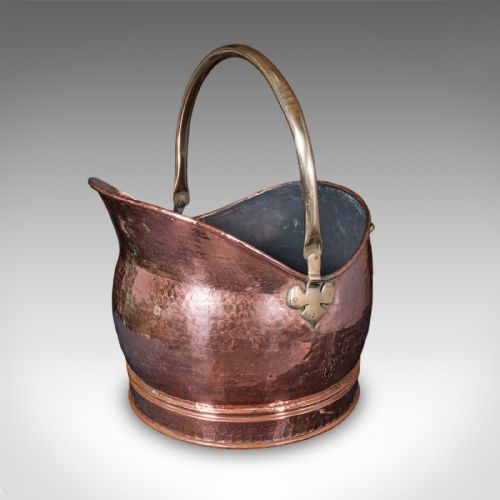
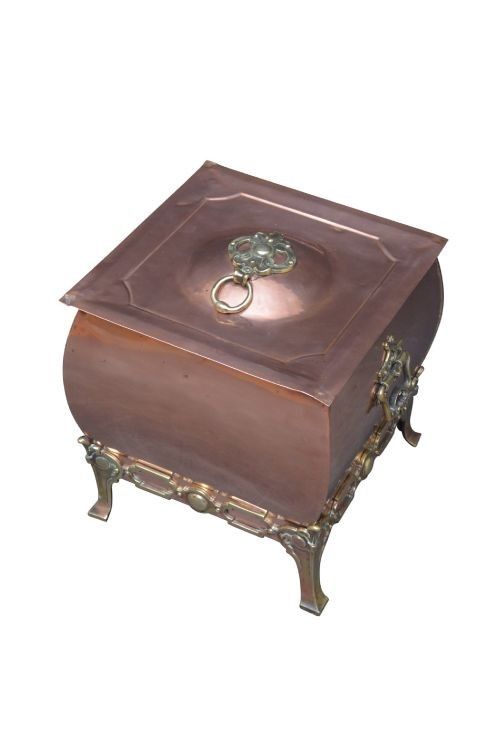
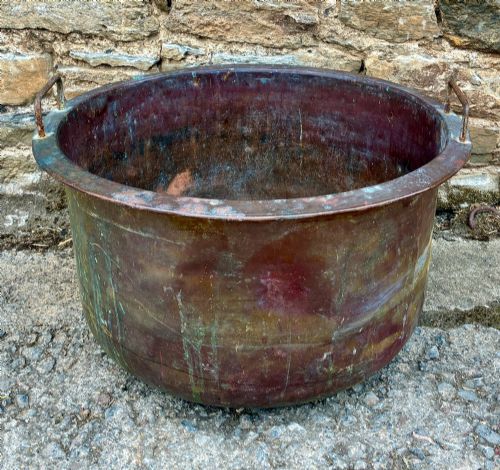
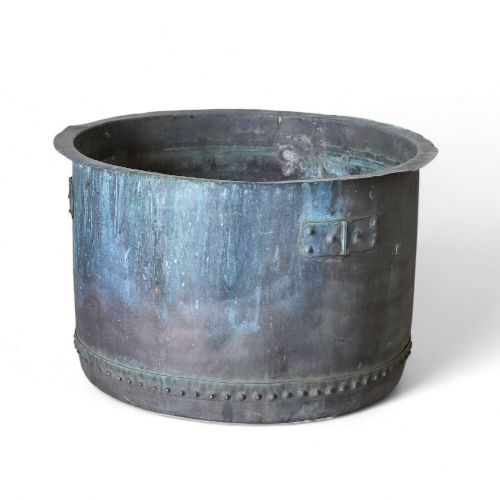
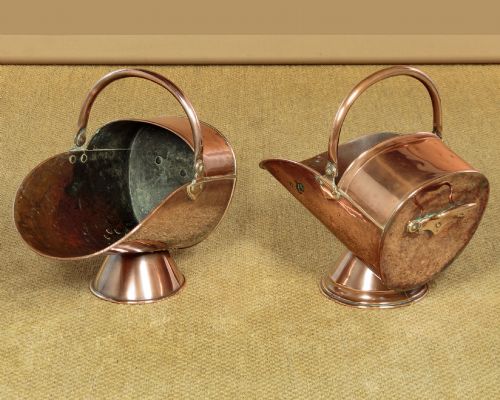
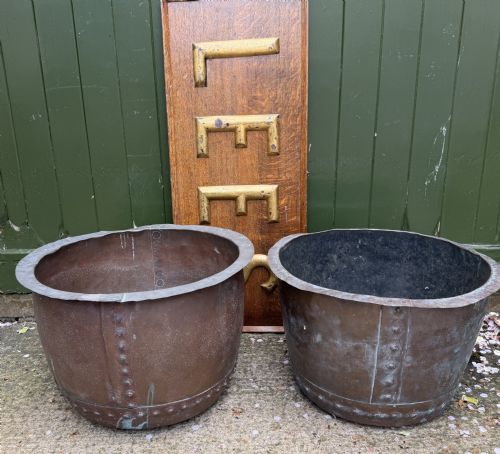
The most common formats found on this page include cylindrical log bins, helmet-shaped coal scuttles, and large riveted pots or cauldrons. Many examples integrate brass handles, bands, or feet, bridging practical fireside storage and decorative interior display.
Beyond the hearth, buyers frequently repurpose these robust metal vessels as garden planters, jardinières, or general storage bins. Their enduring appeal lies in the combination of honest utilitarian construction and deep patinated surfaces.
How they were made
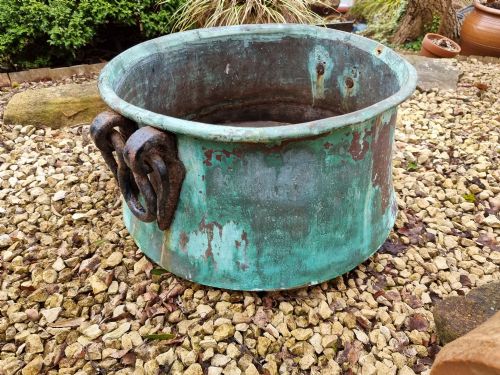
Construction relies heavily on sheet copper beaten or hammered into form, often joined with visible hand-riveting that provides structural strength and visual character. Makers frequently reinforced the rims and bases with brass bands, iron handles, or wrought iron swing bails.
Materials extend beyond pure copper to include brass accents, iron fixings, and occasional timber components like oak bands or lids. Surface finishes develop naturally over decades, though original hand-finished treatments, polished highlights, and verdigris patinas remain characteristic of surviving pieces.
Listings feature copper, brass, wrought iron, and oak materials spanning the mid nineteenth century to the early twentieth century.
What varies in quality
Quality rests significantly on the thickness of the metal gauge and the integrity of the original construction, distinguishing heavy utilitarian vessels from lighter decorative items. Substantial riveted seams, robust handles, and well-balanced proportions indicate superior craftsmanship intended for demanding daily use.
The visual appeal of the surface finish also defines the upper tier of pieces, where untouched natural patinas, rich warmth, and honest wear elevate the object. Integrity of form, minimal distortion to the body, and matching brass or iron furniture contribute further to a vessel's standing.
Henry Loveridge and Co
The Victorian Copper Bin Glossary
- Coal scuttle
- A bucket or box designed for holding coal near a fireplace, frequently featuring a sloping body or a hinged lid and a carrying handle.
- Patina
- The surface sheen and colour depth developed on metal through age, handling, and environmental exposure over many decades.
- Riveted
- Joined together using metal bolts or pins hammered flat at the ends, common in heavy-duty nineteenth-century metalwork for permanent strength.
Victorian Copper Bin: Frequently Asked Questions
What were victorian copper bins originally used for?
These vessels served primarily practical roles beside the domestic hearth, storing coal, kindling, or logs for open fires. Their robust waterproof construction also suited them for carrying water or general utility tasks around the Victorian household.
Over time, many of these utilitarian containers transitioned into decorative interior items as central heating reduced the need for fireside coal storage.
Can I use a victorian copper bin as a plant pot?
Many buyers repurpose these metal vessels as large indoor or outdoor planters, taking advantage of their natural resistance to moisture and their stable, heavy bases. Placing a protective liner inside helps preserve the historic interior surface from damp soil.
The deep proportions and wide openings accommodate sizeable houseplants or small trees quite comfortably.
How do I clean a victorian copper bin?
Maintenance depends entirely on whether you prefer a bright polished shine or the dark, mellow tones of an aged patina. Gentle dusting and occasional wiping with a soft cloth generally suffice to keep the surface stable without removing historic character.
Avoid harsh abrasive compounds that strip away the natural oxidation built up over more than a century.
How do I date a copper bin from the nineteenth century?
Dating relies on observing construction methods, such as hand-hammering marks, early riveting techniques, and the style of attached brass or iron handles. Plain utilitarian forms often point to mid-nineteenth-century domestic use, while decorative raised embossing frequently indicates later Arts and Crafts influence.
Comparing the specific weight, gauge of the metal, and associated hardware helps place a piece within the broader Victorian period.