
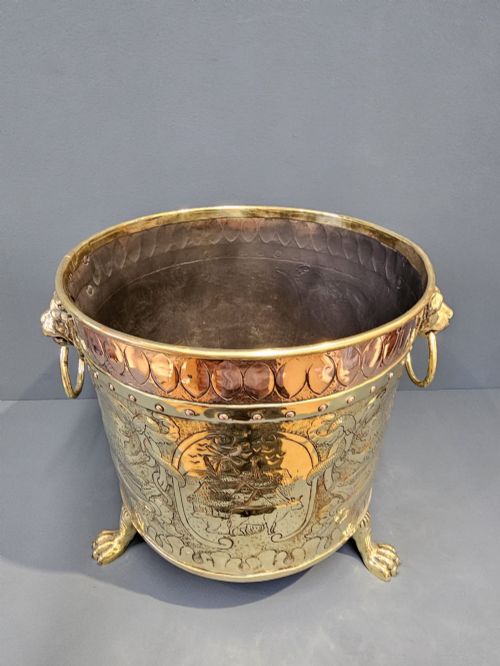


Repousse Copper Container
These repousse copper container pieces bring hand-worked metal into domestic rooms as log boxes, coal scuttles, and jardinieres.

Repousse Copper Container
A repousse copper container is a domestic vessel shaped by hammering the metal from the reverse to raise decorative relief designs on the surface. These items appear across Victorian, Edwardian, and nineteenth-century periods, spanning the Arts and Crafts and Art Nouveau styles.
The versions most commonly met on this page function as fireside accessories, holding coal, logs, or kindling near the hearth. Other frequent forms include jardinieres and planters designed to hold potted plants within the main living spaces.
Makers often combined copper bodies with brass bands, iron handles, or wooden accents to add structural rigidity to these containers. Pieces range from straightforward bucket forms to large rectangular log boxes and coal bins originating from English workshops.
How they were made
Sheet copper formed the primary body of each vessel, shaped by hand or machine before artisans applied surface ornamentation. The repousse technique involved hammering the reverse side of the metal sheet to push out motifs, which workers then refined from the front using punches and chisels.
Secondary materials such as brass, wrought iron, and wood provided structural support, handles, and trim. Brass bands and iron fittings secured the rims and bases, while wooden elements formed internal linings or sturdy handles for daily hearth use.
Many a coal box spent its working life quietly gathering soot before finding a second career holding ferns.
What varies in quality
Depth and crispness of the hand-hammered relief work separate standard utility items from finer examples of metalwork. Skilled artisans achieved precise definition in floral or abstract motifs, whereas lesser pieces display shallow and repetitive stamping.
The integration of secondary materials like wrought iron handles and brass bands dictates the structural integrity of the container. Robust construction and thoughtful proportions distinguish well-executed vessels from simpler utilitarian boxes.
The Repousse Copper Container Glossary
- Repousse
- A metalworking technique where the artisan hammers a design from the reverse side to create a raised relief on the front. This method allows for detailed pictorial and decorative surfaces on thin metal sheets.
- Jardiniere
- An ornamental pot or stand designed to hold flowers or plants indoors. These vessels often sit on low feet and feature decorative surface work to complement interior furnishings.
- Coal Scuttle
- A bucket or box specifically designed for holding and transporting coal to an open fire. They typically incorporate sturdy handles and sometimes hinged lids to contain dust.
- Arts and Crafts
- A design movement valuing handcraftsmanship, simple forms, and traditional materials over mass production. Pieces from this style often display honest construction and visible worker marks.
- Art Nouveau
- An international style characterised by organic, flowing lines and plant-inspired motifs. Metalwork in this manner frequently utilises asymmetrical curves and naturalistic ornamentation.
Repousse Copper Container: Frequently Asked Questions
What is a repousse copper container?
A repousse copper container is a vessel formed from sheet metal and decorated with raised designs hammered from the reverse side.
These pieces typically serve as fireside boxes for coal and logs or as decorative planters for the home.
How were these metal containers used originally?
Original uses centred around the hearth for holding fuel like coal or logs near the fireplace.
Others served as indoor planters, holding potted greenery to bring natural elements into nineteenth-century rooms.
How do I date a copper container?
Dating relies on stylistic clues such as the flowing organic lines of Art Nouveau or the honest construction of the Arts and Crafts movement.
Material combinations, including wrought iron and brass trim alongside nineteenth-century manufacturing traits, also help narrow the period.
How do I care for antique copper?
Care involves dusting gently with a soft dry cloth to preserve the natural patina accumulated over the decades.
Avoiding harsh chemical cleaners ensures the original surface character and hand-hammered details remain intact.