



Art Nouveau Scuttle
An art nouveau scuttle brings organic line and gleaming metal to the fireside, storing coal with decorative flair.

Art Nouveau Scuttle
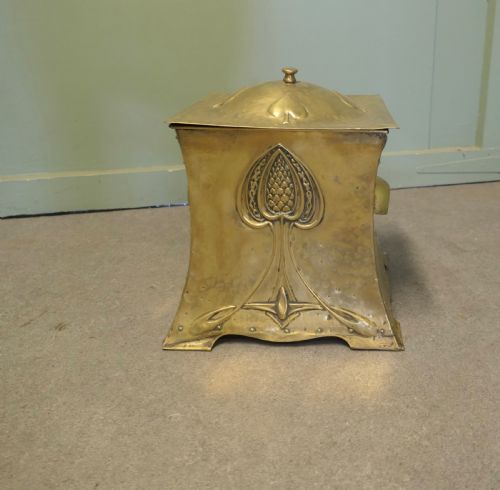
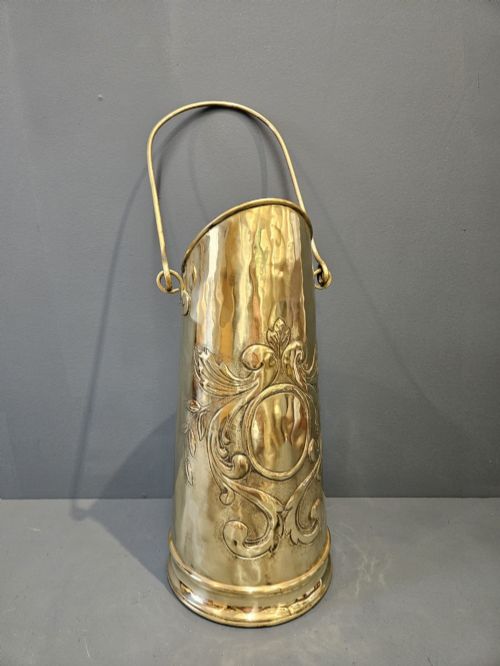
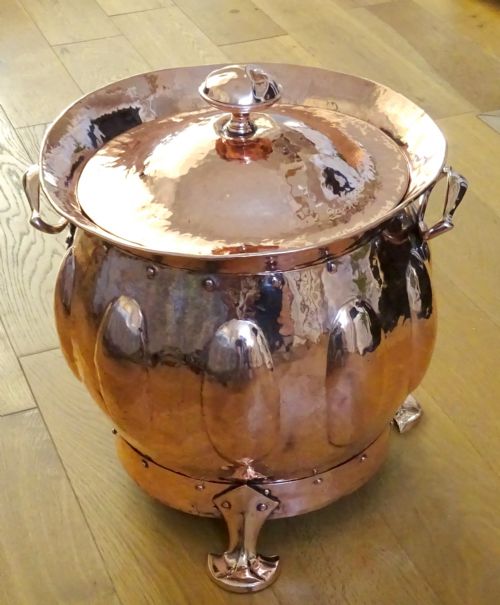
An art nouveau scuttle combines practical hearth storage with the flowing, organic ornamentation characteristic of the movement. These pieces serve as functional coal boxes, purdoniums, and fireside buckets designed to hold fuel near the hearth.
Buyers will encounter various forms across this selection, ranging from lidded brass bins and copper buckets to wooden purdonium cabinets fitted with metal liners and matching shovels. The majority date from the late nineteenth century through to the early decades of the twentieth century, aligning with Victorian and Edwardian periods.
Makers often drew inspiration from the Arts and Crafts philosophy, pairing utility with artistic metalwork or carved timber. Whether formed as a helmet-shaped bucket or a box with spade decoration, each piece reflects the domestic priorities of its era.
How they were made
Metalwork forms the core of these pieces, utilising sheet brass, cast brass, and copper shaped through hammering, embossing, and riveting. Artisans frequently applied raised floral motifs and sinuous tendrils characteristic of the style directly onto the metal surfaces.
Wooden examples rely on traditional cabinet-making techniques using timbers such as mahogany, oak, walnut, beech, and satinwood. These wooden purdoniums and boxes often incorporate brass handles, hinges, and internal metal liners to safely contain the coal.
Wrought iron and cast iron appear in structural elements and hardware, providing durability and weight to fireside accessories. The combination of timber bodies with beaten copper or brass panels demonstrates a deliberate mix of contrasting textures.
What varies in quality
The distinction between standard utility items and finer examples lies in the depth and hand-finishing of the metal embossing. Hand-beaten copper panels with crisp, detailed plant motifs display a higher level of craftsmanship than simple machine-pressed sheets.
Timber selection and joinery define the standard of wooden purdoniums and coal boxes. Solid oak, walnut, or mahogany cabinets featuring carved details and dovetail joints represent superior construction compared to simpler veneered carcases.
Completeness also influences the desirability of a piece, particularly the presence of original ceramic or metal liners and matching coal shovels. Well-preserved internal components indicate careful domestic use and retain the original functionality of the design.
The Art Nouveau Scuttle Glossary
- Purdonium
- A specialised coal cabinet featuring a sloping drop-front door designed to tip forward for easy access. These wooden boxes often include an internal metal liner and space for a shovel.
- Helmet scuttle
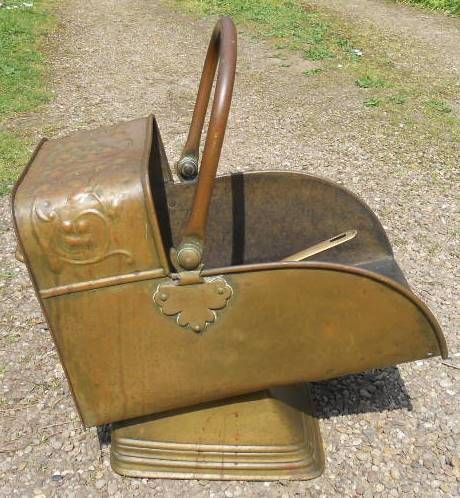
- A traditional coal container shaped like an upturned classical helmet with a high back, a hinged carrying handle, and a pointed spout for pouring. They are frequently made of polished copper or brass.
- Embossing
- The technique of hammering or pressing metal from the reverse side to create a raised decorative relief on the surface. Art nouveau examples typically feature stylized plant forms and whiplash curves.
- Liner
- The removable internal metal container inside a wooden coal box or purdonium. This insert protects the wood from moisture and coal dust.
- Arts and Crafts
- A design movement emphasising handcraftsmanship, natural materials, and traditional construction methods. It strongly influenced the aesthetic of domestic metalwork during this period.
Art Nouveau Scuttle: Frequently Asked Questions
How do I clean copper and brass?
Polished metal surfaces require gentle cleaning to preserve the original finish and any applied patination. Proprietary metal polishes work well on unlacquered brass and copper, though vigorous scrubbing can flatten hand-beaten details.
Many collectors prefer to maintain a soft, aged lustre rather than achieving a bright mirror shine. Regular dusting with a soft cloth prevents soot and ash buildup on the decorative panels.
Were these used for coal or logs?
Different vessels served specific types of fuel depending on their size and internal construction. Smaller bucket forms and helmet scuttles generally held coal for daily hearth maintenance, while larger bins accommodated logs and kindling.
Metal liners in wooden boxes protected the structure from the dampness of wood and the grime of coal. Many listings describe these items interchangeably as coal boxes, log bins, or fireside baskets.
How do I date an art nouveau scuttle?
Dating relies on examining the materials, construction methods, and stylistic markers present in the piece. Items from the late nineteenth century often reflect Victorian manufacturing alongside emerging art nouveau motifs, while pieces from around nineteen hundred show fully developed stylistic curves.
Edwardian wooden purdoniums frequently utilise oak or walnut with machine-dovetailed joints and cast brass fittings. Comparing the handle design and locking mechanisms helps narrow the production era.