

Arts and Crafts Pedestal
These arts and crafts pedestal pieces bring honest joinery and characterful materials straight into your interior.
Arts and Crafts Pedestal
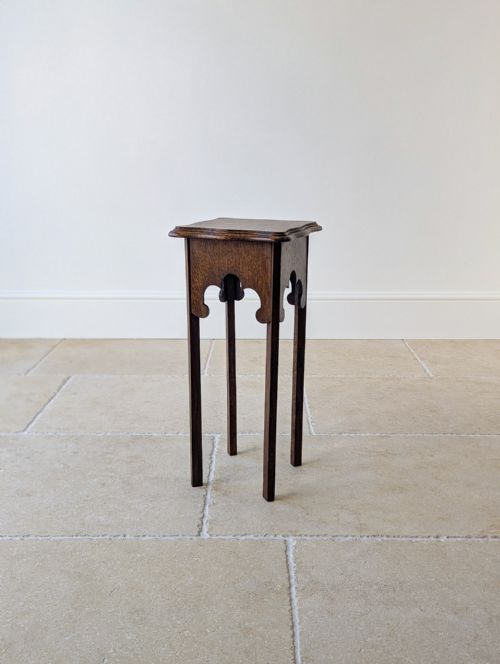
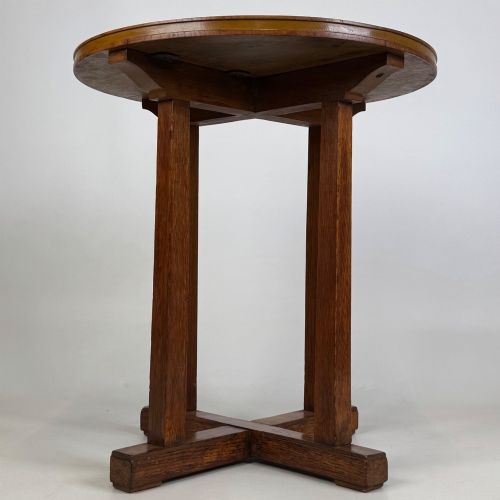
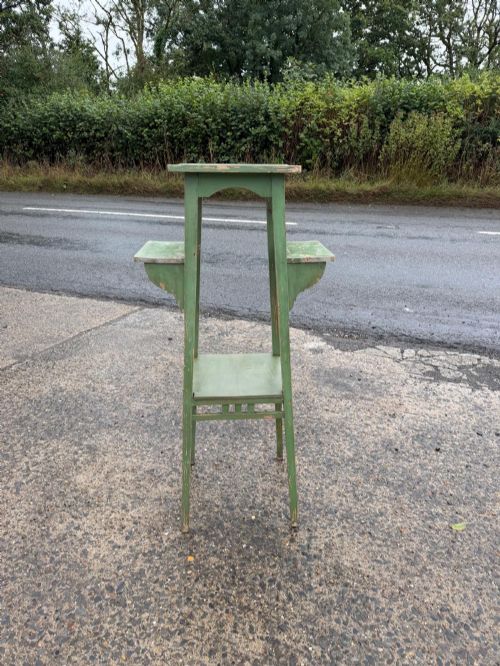
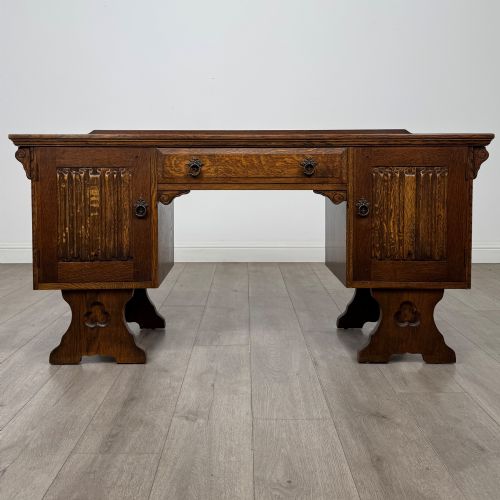
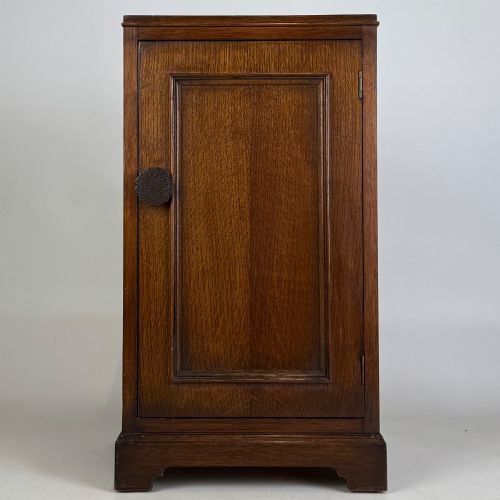
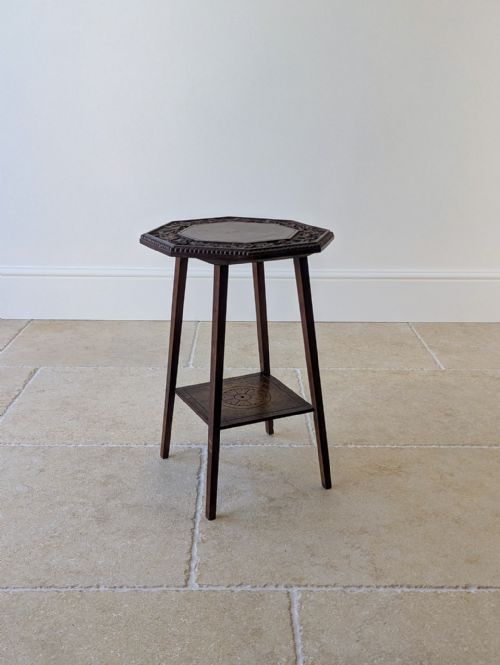
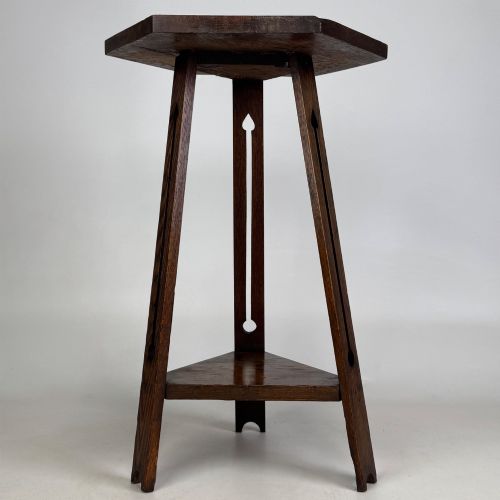
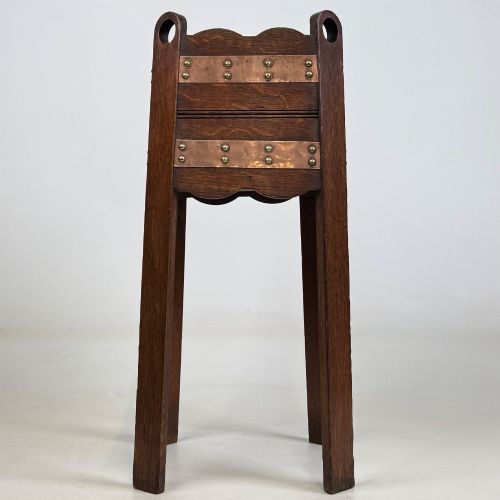
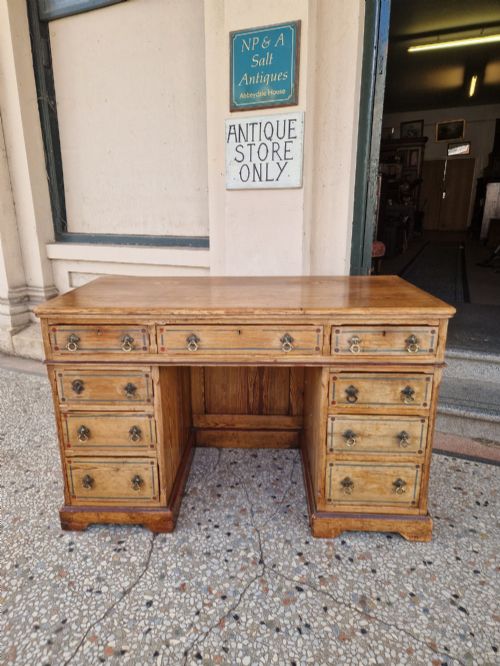
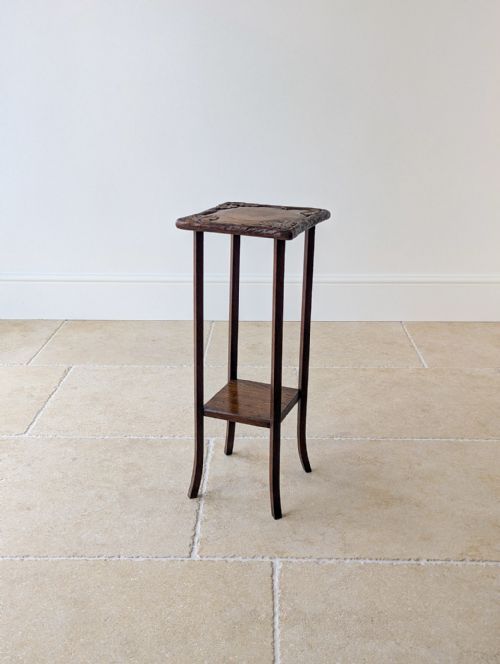
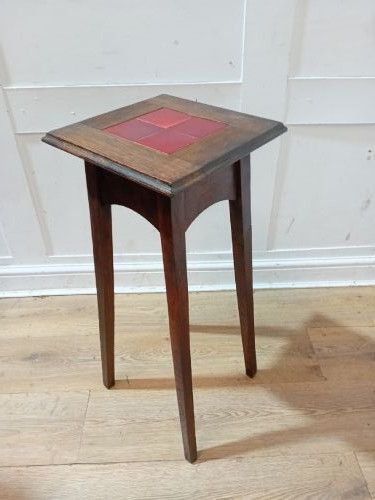
An arts and crafts pedestal serves primarily as a display surface for plants or decorative objects, or functions as a sturdy work desk with substantial drawer banks. You encounter these most frequently as oak plant stands, jardiniere stands, and heavy walnut or oak pedestal desks.
The selection ranges from tall ceramic and wooden plant stands dating to the Edwardian era and eighteen-nineties down to large twin pedestal office desks. Domestic forms dominate the available pool, alongside occasional brass stands and glazed earthenware columns.
Makers and designers of the movement favoured functional utility combined with visible craftsmanship, producing substantial furniture that anchors a room. Whether you select a small side table or a large kneehole desk, each piece reflects the design ethos of the period.
Materials and construction
Carpenters utilised solid oak, walnut, pollard oak, ash, and ebonised wood, often pairing these timbers with applied brass or copper hardware. Surfaces frequently show the natural grain of the wood, finished with simple lacquers or polishes rather than heavy veneers.
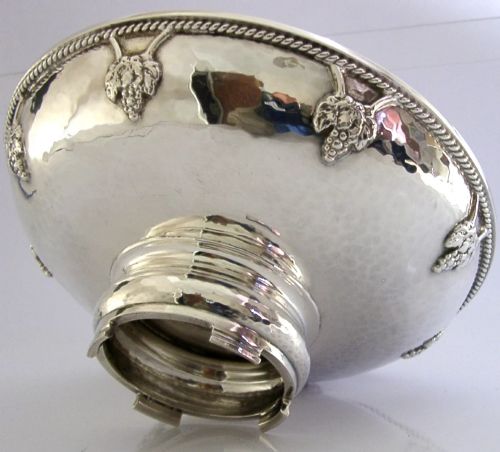
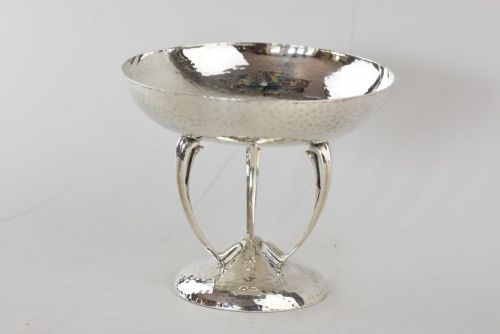
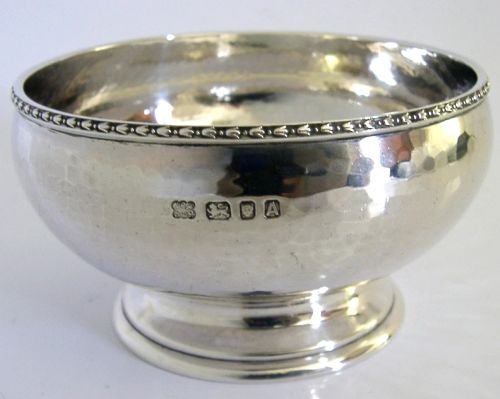
Ceramic stands incorporate glazed earthenware and faience, demonstrating specialised pottery techniques from workshops such as Burmantofts. Metal pieces use brass and copper for plant bowls and jardiniere liners, joined to wooden or metal frames with visible rivets.
Retail Price Guide 2026
Typical UK retail prices for arts and crafts pedestal, calculated from the Sellingantiques database of over a million retail prices indexed since 2003. This retail price guide relies exclusively on Sellingantiques data; no external sources or auction records are used, so the figures do not describe the wider market.
The listings show pieces spanning the Edwardian period, eighteen-nineties, and earlier eighteenth century, utilising oak, brass, walnut, and glazed earthenware.
Distinctions in quality
The distinction between standard domestic furniture and exceptional work lies in the selection of timber and the complexity of the hardware. Pieces utilising figured pollard oak or incorporating hand-beaten copper panels demonstrate a higher level of workshop ambition.
Proportion and structural integrity set finer examples apart from mass-produced items, particularly in heavy desks where joint work and drawer construction determine longevity. Makers who integrated art pottery columns or specialised lacquering achieved greater visual depth.
Burmantofts·Heals of London·Liberty and co·Hunt and Co
The Arts and Crafts Pedestal Glossary
- Jardiniere stand
- A tall piece specifically designed to support a plant pot or flower bowl at a convenient height. These often feature waterproof liners or raised rims.
- Kneehole desk
- A large writing table with two banks of drawers flanking a central recess for the user's legs. This form provides substantial storage capacity.
- Faience
- Tin-glazed earthenware popular for decorative columns and ceramic pedestals during the late nineteenth century. It provides a glossy, colourful surface.
- Ebonised wood
- Timber treated with a chemical stain or finish to imitate ebony. This dark surface was frequently used in Aesthetic Movement and arts and crafts design.
- Pollard oak
- Oak timber taken from pollarded trees, yielding a highly figured, mottled grain pattern. Cabinet makers utilised this for decorative panels on high-status desks.
Frequently Asked Questions
What is an arts and crafts pedestal?
These pieces comprise sturdy wooden plant stands, jardiniere holders, ceramic columns, and heavy pedestal desks from the late nineteenth and early twentieth centuries.
They reflect a design movement focused on honest materials, solid construction, and utility without excessive ornamentation.
How were plant stands used?
Victorian and Edwardian households placed these tall stands in bay windows or corners to elevate potted ferns and flowering plants.
This allowed greenery to catch maximum light and protected domestic flooring from water damage.
How do I date an arts and crafts pedestal?
Examine the timber species, construction joints, and any associated ceramic or metal elements to determine the period. Pieces often date from the eighteen-nineties through the Edwardian era.
Stylistic cues such as Aesthetic Movement lacquer or heavy Gothic oak framing help narrow the decade of manufacture.
How do I care for wooden desks?
Maintain solid oak and walnut surfaces with appropriate furniture wax, avoiding direct sunlight and excessive moisture. Regular polishing preserves the natural grain and protective finish.
Check drawer runners periodically and keep brass or copper hardware clean using non-abrasive cloths.