

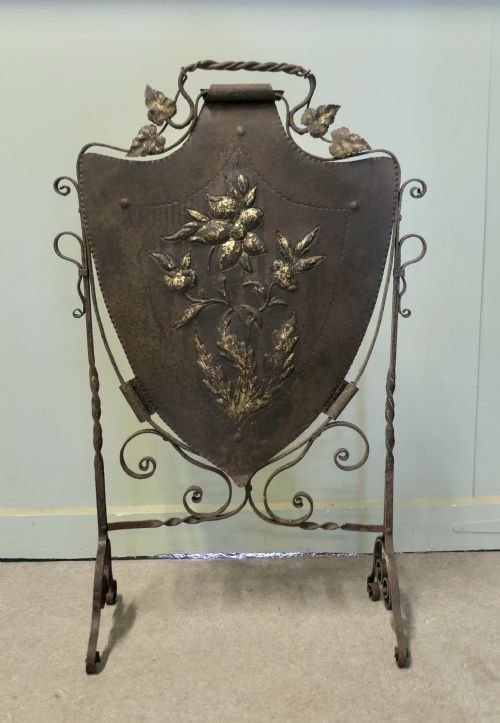
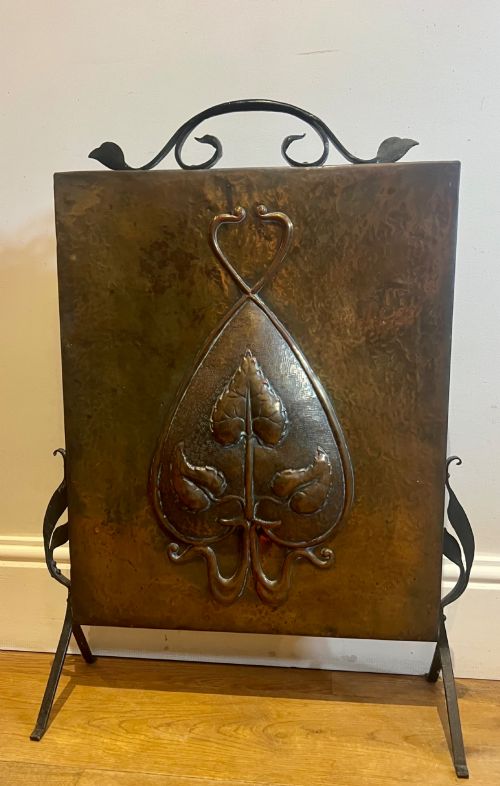
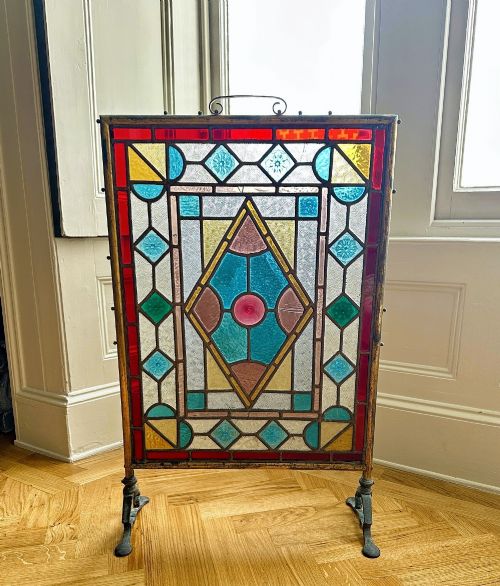


Arts and Crafts Fire Screen
These arts and crafts fire screen pieces combine utility and striking metalwork, protecting rooms from stray embers while displaying period craftsmanship.
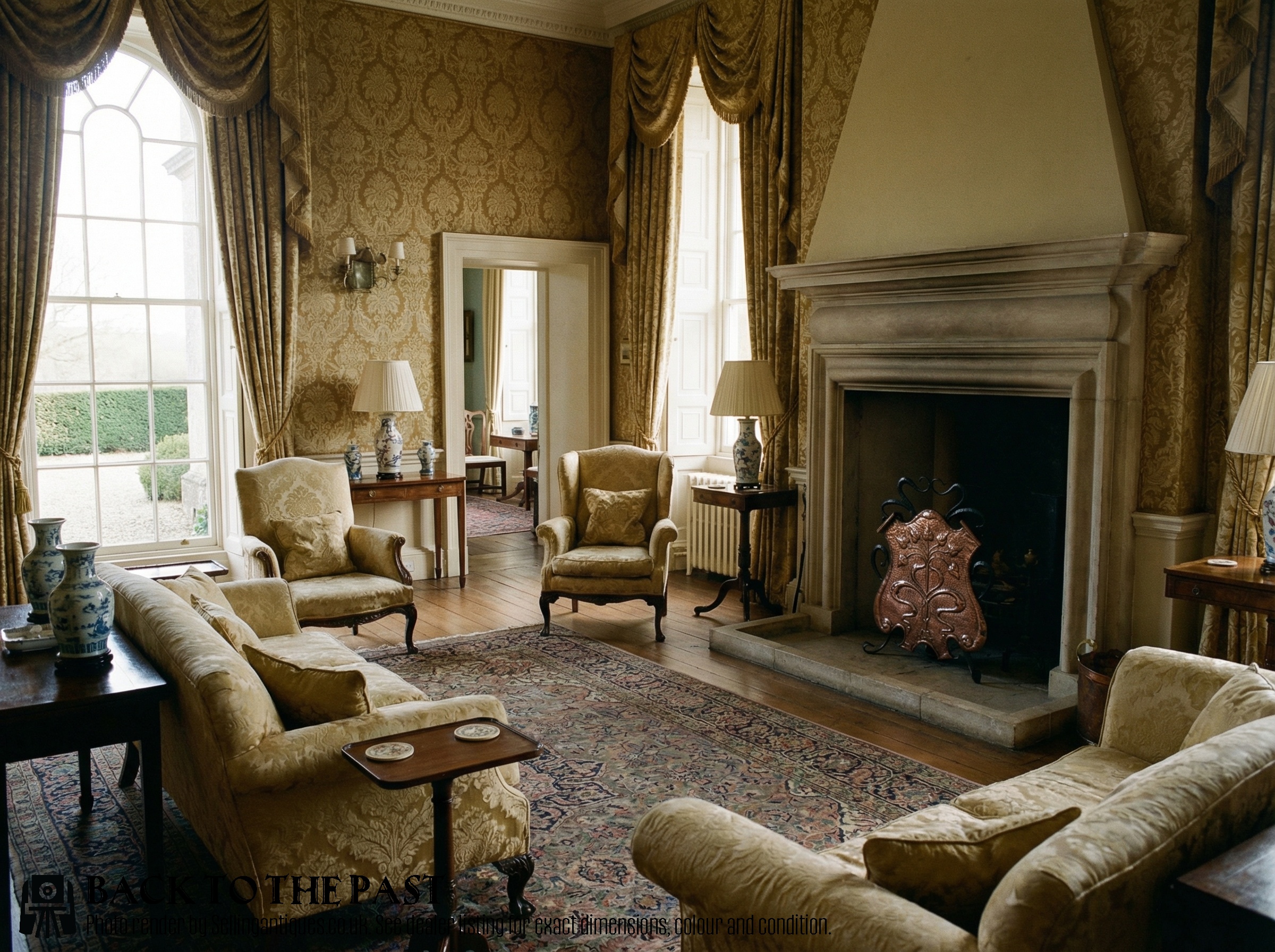
Arts and Crafts Fire Screen
An arts and crafts fire screen stands before an active hearth to block radiant heat and contain sparks, typically encountered in Victorian or early twentieth-century formats.
Most examples combine a sturdy metal frame with a decorative panel, utilising iron, brass, or copper alongside glass and mirror inserts.
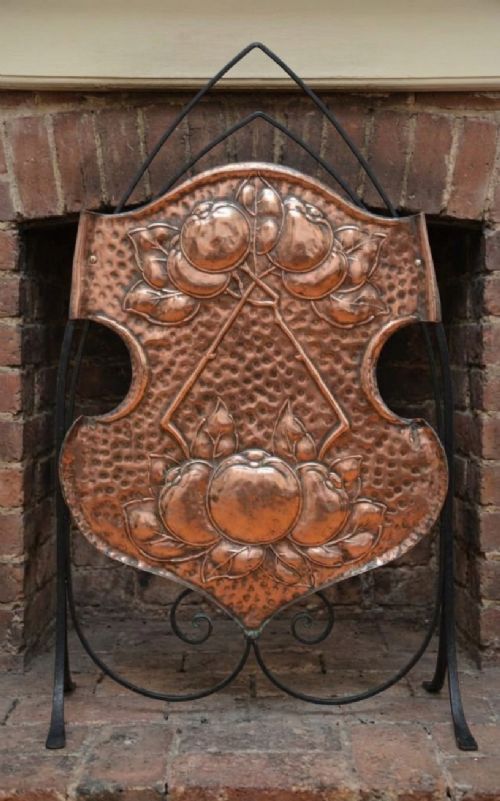
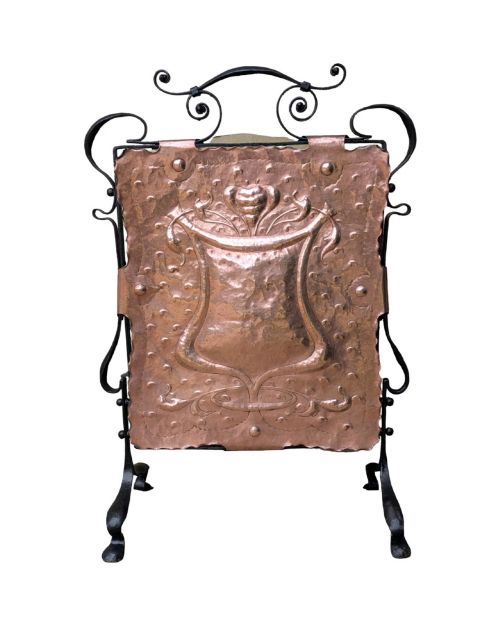
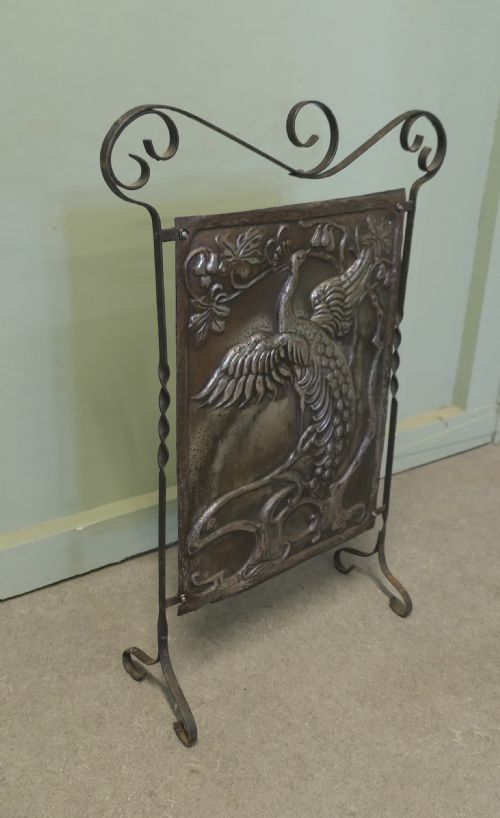
Surviving pieces span simple iron fire guards to elaborate hammered copper designs featuring birds, sunbursts, and geometric motifs.
Materials and construction
Makers shaped heavy wrought iron and cast iron into stable standing frames, often hand forging the metal to create utilitarian folding fireguards and supports.
Panels rely heavily on sheet copper and brass, frequently beaten by hand to produce textured surfaces, embossed pictorial scenes, and riveted joints.
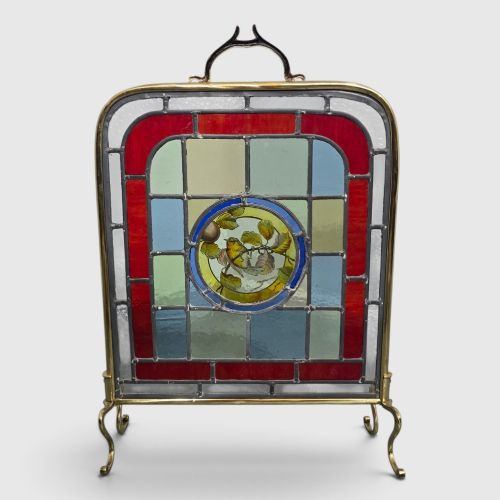
Some screens incorporate decorative elements such as stained glass, ceramic inlays, gilt, lead, and inset mirrors to catch the room's light.
Arts and Crafts Fire Screen Retail Price Guide 2026
Typical asking prices for arts and crafts fire screen among the pieces listed under this phrase on Sellingantiques today, from the lower quarter to the upper quarter. They describe what is for sale here now, not the wider market.
Recorded listings show materials spanning wrought iron, beaten copper, brass, lead, stained glass, and mirror panels across the Victorian and Edwardian periods.
Distinctions in quality
Quality rests on the depth and definition of the metalwork, distinguishing heavily hand-hammered copper panels and crisp iron forging from simpler pressed sheets.
The choice of secondary materials marks superior pieces, where original bevelled mirrors, intact stained glass, or enamel cabochons remain secure within the frame.
Structural integrity determines daily utility, separating rigidly assembled stands from loose, worn frames that wobble on uneven hearths.
The Arts and Crafts Fire Screen Glossary
- Beaten copper
- Sheet copper worked with hammers to create a textured, light-catching surface. This technique forms the pictorial panels of many prominent screens.
- Spark screen
- A protective barrier designed to catch flying embers from an open fire. These often take the form of curved or folding iron mesh guards.
- Gothic Revival
- An architectural and decorative style drawing on medieval forms. It appears on screens through pointed arches and heavy iron shields.
- Art Nouveau
- A decorative movement characterised by organic flowing lines and natural motifs. Storks, herons, and peacock designs frequently cross over into these pieces.
Arts and Crafts Fire Screen: Frequently Asked Questions
How do I use an arts and crafts fire screen?
Place the screen a safe distance in front of an active fireplace to deflect excessive heat and catch stray embers.
When the hearth is cold, the screen serves as a decorative focal point in the room, hiding the empty grate.
Are these screens safe to use with open fires?
Most sturdy iron and brass examples function effectively as spark guards, though fragile glass or mirror inserts require careful placement.
Consider the distance from intense flames to protect delicate materials like leaded glass and ceramic inlays from thermal shock.
How do I clean a copper fire screen?
Dust the surface gently with a soft dry cloth to remove soot and surface grime accumulated near the hearth.
Avoid harsh abrasive polishes that strip away the aged patina built up over decades of domestic use.
How do I date an arts and crafts fire screen?
Examine the construction methods, noting whether the ironwork is hand forged and if the copper panel shows individual hammer marks.
Compare stylistic motifs like peacock designs or Gothic revival shields against Victorian and early twentieth-century production patterns.