



Repousse Metal Fire Screen
A repousse metal fire screen shields the room from open flames while turning the hearth into a centrepiece of period design.
Repousse Metal Fire Screen
A repousse metal fire screen stands by the hearth to deflect the fierce heat of an open fire and block stray sparks. These guards take the form of fire screens or fireplace reflectors, designed to sit directly before the grate.
The versions most commonly met on this page belong to the Victorian era and the turn of the twentieth century. Makers worked within the Arts and Crafts and Art Nouveau styles, though examples stretch back as far as the seventeenth century with Dutch Renaissance Revival pieces.
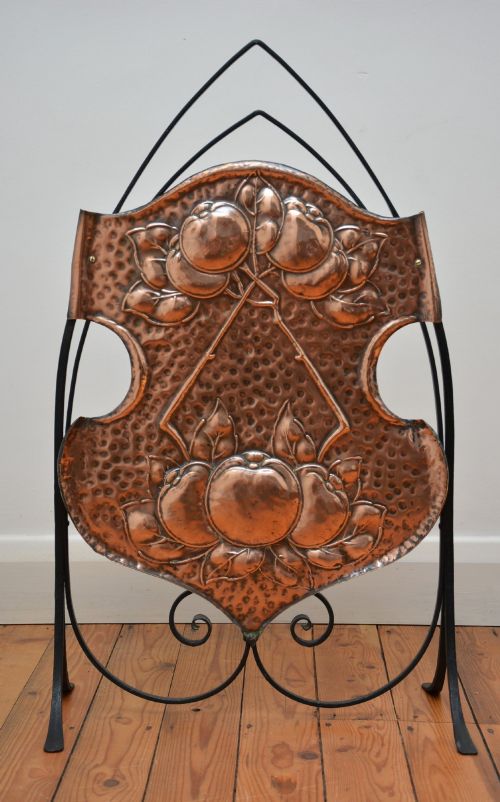
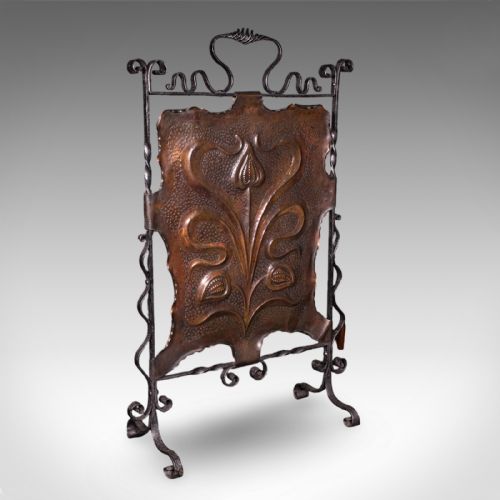
Forms range from simple brass frames to elaborate wrought iron and oak constructions centred on embossed panels. Many items incorporate framed metal panels depicting natural motifs, heraldry or geometric tracery.
How They Were Made
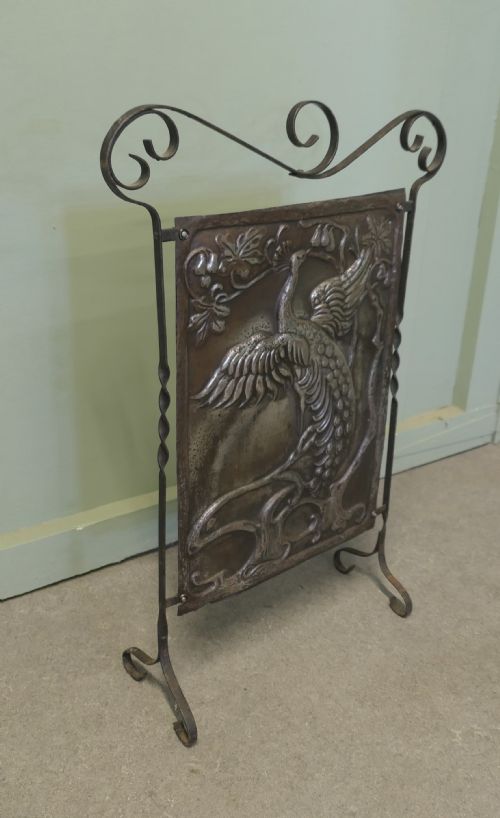
Craftsmen shaped these objects using copper, brass, wrought iron and iron, often mounting metal sheets within sturdy oak or iron frames. Copper panels frequently received surface treatments through embossing and chasing to raise decorative motifs in relief.
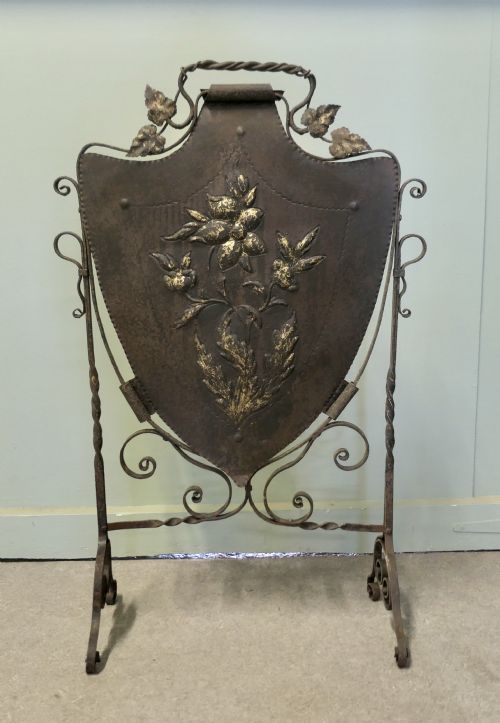
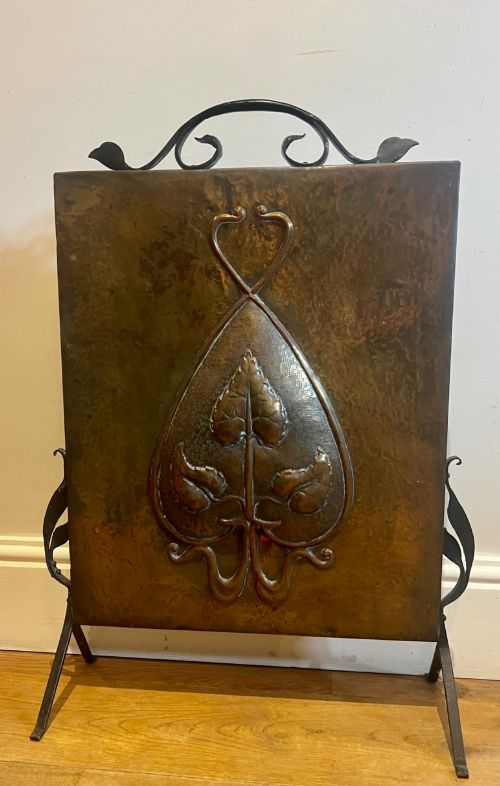
Makers utilised hammering techniques to build up textures on metal surfaces, visible in the peacock designs, coats of arms and botanical patterns recorded across the inventory. Gilt finishes and polished iron further enhanced the visual weight of the hearth furniture.
What Varies in Quality
Quality rests in the depth and crispness of the hand-worked metal relief, where deeply chased lines and deliberate hammer marks separate skilled metalwork from mechanical stamping. The integration of the metal panel within its wooden or iron armature determines the structural integrity of the piece.
Materials dictate the character of the screen, as heavier gauges of copper and substantial wrought iron framing offer greater durability than thinner sheet metals. The artistic ambition of the design, from simple plain sheets to intricate heraldic and avian compositions, defines the upper tier of production.
The Repousse Metal Fire Screen Glossary
- Repousse
- Metalworking technique where the artisan hammers the reverse of a sheet to form a raised design on the front. This process creates tactile surface relief on copper and brass panels.
- Chasing
- Working the front of metal with punches and chisels to refine and detail a repousse design. It sharpens the contours established during the initial hammering.
- Arts and Crafts
- Design movement valuing handcraftsmanship, natural materials and traditional techniques over industrial mass production. It heavily influences the decorative metalwork seen in these fire screens.
- Art Nouveau
- International style characterised by fluid, organic lines and botanical motifs. Pieces from this period favor sinuous plant stems and natural forms.
- Gothic Revival
- Architectural and decorative style drawing on medieval ecclesiastical forms, including pointed arches and heraldic shields. This aesthetic appears on iron and brass hearth furniture.
- Wrought Iron
- Iron worked by heating and hammering into shape by hand, resulting in a fibrous texture and strong structural frame. It provides durable support for decorative metal panels.
Repousse Metal Fire Screen: Frequently Asked Questions
What is a repousse metal fire screen?
A repousse metal fire screen is a decorative hearth guard featuring hand-hammered relief work on copper or brass. It serves to deflect heat and shield the room from sparks while adding texture to the fireplace.
These pieces typically combine metal panels with iron or oak frames, reflecting period aesthetics from the Victorian era onwards.
How were these fire screens used?
These screens stood directly in front of open fireplaces to manage radiant heat and contain stray embers during winter months. When the hearth was unlit, they masked the empty grate and decorated the room.
Owners positioned them to catch and reflect light from the fire or surrounding lamps into the living space.
How do I care for antique metal screens?
Maintenance requires gentle dusting and occasional cleaning appropriate for unlacquered copper, brass or iron surfaces. Avoid harsh chemical polishes that strip away historical patination.
Keep the screens away from excessive moisture to protect both the metal panels and the wooden or iron frames.
How can I tell Arts and Crafts from Art Nouveau?
Arts and Crafts pieces emphasise sturdy construction, honest materials and traditional hand-hammered surfaces often featuring birds, heraldry or geometric strapwork. The focus remains on the visible mark of the maker's hand.
Art Nouveau designs embrace fluid, asymmetrical lines, whiplash curves and stylised plant motifs inspired by natural growth patterns.
Are older fire screens heavier than later ones?
Seventeenth-century and early nineteenth-century pieces often utilise thicker timber frames and heavier gauge brass or iron elements. Construction methods varied according to the prevailing workshop practices of each era.
Weight depends as much on the materials chosen, such as solid oak versus tubular iron, as on the date of manufacture.