
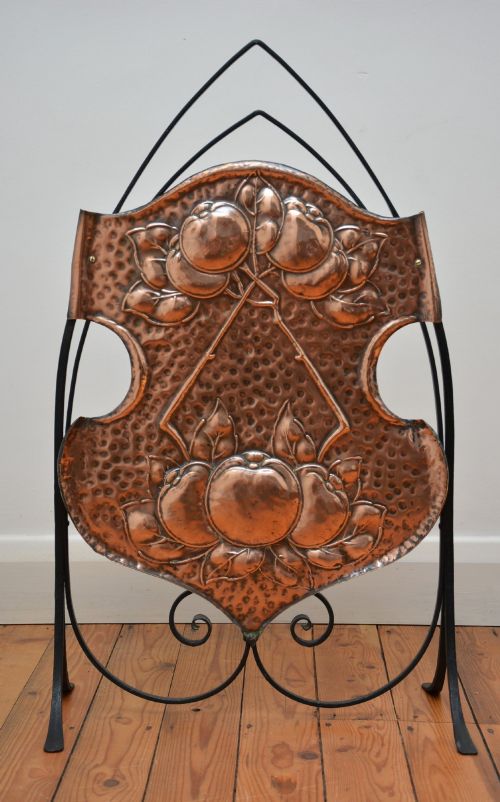


Edwardian Iron Fire Screen
These edwardian iron fire screen pieces bring robust utility and distinct period design to a hearth, combining sturdy metal frames with decorative panels.
Edwardian Iron Fire Screen
An edwardian iron fire screen provides a functional barrier for a fireplace while showcasing the era's metalworking and design tendencies. Buyers searching this phrase encounter protective guards designed to shield rooms from stray embers and sparks.
The pieces on this page span several related periods including Victorian, 19th Century, 1900, Edwardian, and 1910. Forms range from dedicated firescreens to nursery fenders with integrated clothes rails.
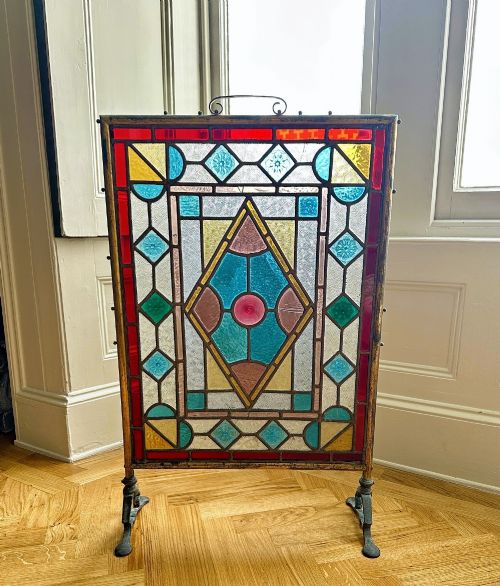
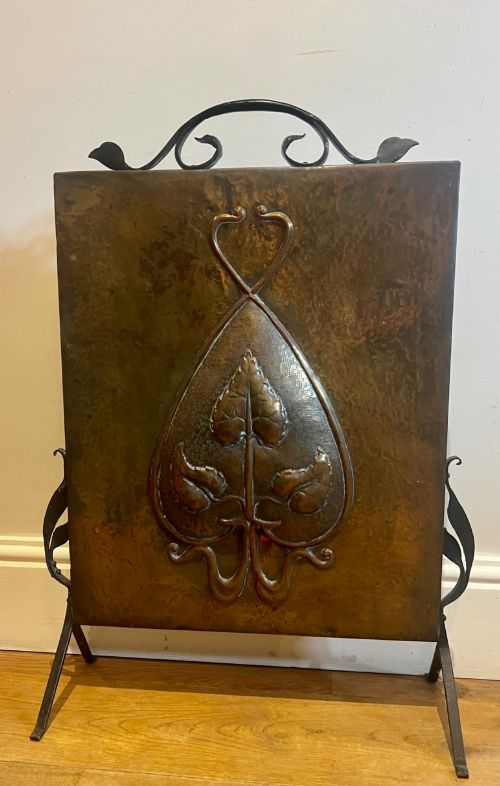
Stylistic influences heavily reflect Arts and Crafts, Gothic Revival, and Art Nouveau aesthetics. Makers combined sturdy iron frames with decorative elements such as copper panels, stained glass, and wire mesh.
Materials and construction
Makers utilised wrought iron, cast iron, and wire mesh to build the core structural frames of these screens. These foundational metals provided the necessary weight and durability to stand securely near an active hearth.
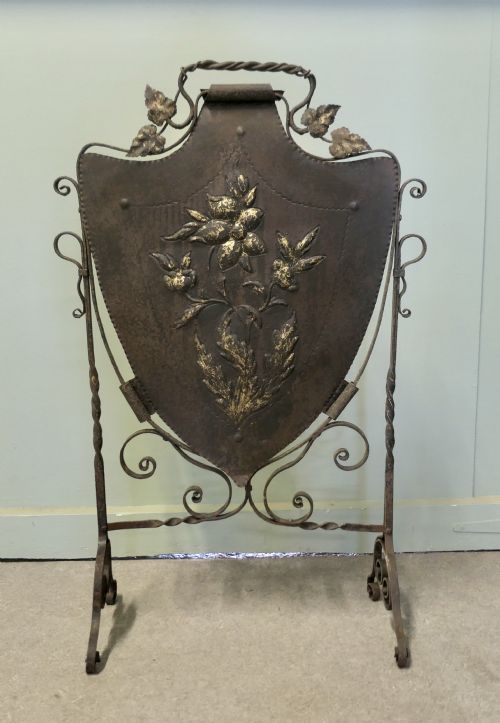
Decorative panels frequently incorporated beaten copper, leaded stained glass, and polished brass details. Artisans applied gilt and polished finishes to enhance the visual texture of the metalwork.
Construction methods merged blacksmithing techniques with decorative metal arts, particularly evident in the Newlyn style copper applications and Gothic shield motifs found across the pieces.
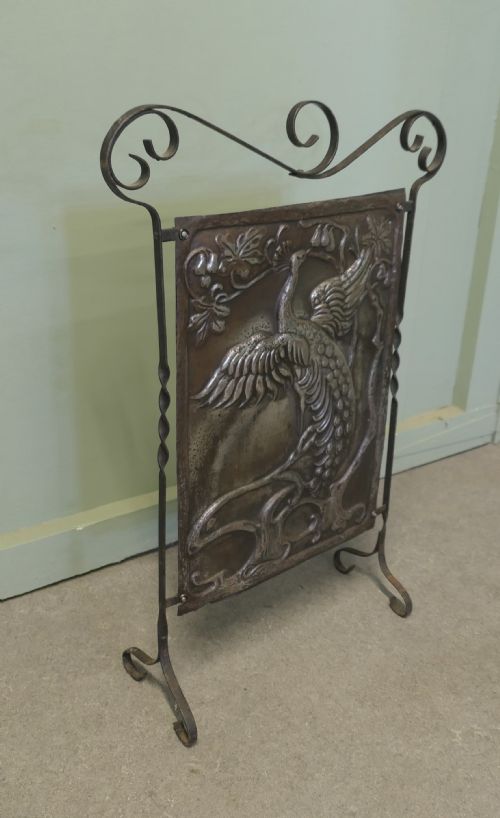
Several screens feature peacock designs, allowing a metal bird to proudly guard your hearth year-round.
Assessing quality and craftsmanship
Quality in an edwardian iron fire screen rests upon the integrity of the metalwork and the integration of decorative elements. Heavier, hand-forged ironwork and securely riveted joints separate superior examples from simpler utilitarian items.
The artistic execution of the panel design dictates the upper tier of pieces. Articulated peacock motifs, complex stained glass assemblies, and hand-beaten copper panels indicate higher workshop skill than plain wire mesh or standard cast frames.
The Edwardian Iron Fire Screen Glossary
- Firescreen
- A portable decorative barrier placed in front of a fireplace opening when the fire is not burning. It protects the room from draughts and conceals the empty grate.
- Nursery fender
- A low metal barrier designed to enclose a hearth area entirely. These often feature an integrated clothes rail to keep children at a safe distance from the fire.
- Arts and Crafts
- A design movement valuing traditional craftsmanship and simple forms. It frequently employs visible construction methods and natural motifs such as peacocks.
- Art Nouveau
- A style characterised by flowing, organic lines and floral motifs. It appears in the undulating copper panel designs associated with these screens.
- Wrought iron
- Iron that has been heated and shaped with tools by a blacksmith. This material offers superior strength and distinctive surface textures compared to cast iron.
Edwardian Iron Fire Screen: Frequently Asked Questions
What is an edwardian iron fire screen used for?
These screens serve primarily to block radiant heat and contain sparks or ash flying from an open fire. They also act as a decorative focal point for the hearth during warmer months when the fireplace is unlit.
Some variations include nursery fenders specifically built to create a physical boundary around the hearth to keep children and pets safe.
How do I distinguish Arts and Crafts screens?
Arts and Crafts pieces often feature hand-hammered copper panels, visible rivet construction, and stylised natural motifs like the peacock or Gothic shields. They emphasise honest materials and artisan craftsmanship rather than factory mass production.
In contrast, later Edwardian or standard Victorian pieces might lean towards simpler wire mesh frames or formal symmetrical ornamentation.
Can these screens be used with a working fire?
Most iron and wire mesh screens are designed to withstand hearth temperatures and block sparks effectively. However, screens incorporating stained glass or leaded components require careful placement to avoid thermal cracking from excessive heat.
It is wise to check the specific panel materials before positioning the screen too close to an active, roaring fire.
How do I clean and maintain iron fire screens?
Regular dusting with a soft, dry cloth helps prevent soot and ash buildup on the iron frame and decorative panels. Avoid harsh chemical cleaners that can strip polished or gilt surfaces.
For copper or brass sections, occasional gentle wiping preserves the metal lustre without removing desirable historical patina.