


Wrought Iron Fireguard
These wrought iron fireguard pieces combine practical hearth safety with the distinct hand-forged character of the Victorian, Edwardian and early twentieth-century periods.
What they are
A wrought iron fireguard provides a robust physical barrier before an open hearth, protecting rooms from stray embers while framing the fireplace. These functional hearth accessories appear primarily as folding guards, nursery fenders, and static screens designed for domestic coal or wood fires.
The pieces on this page span from the nineteenth century into the early decades of the twentieth century, with strong representation from the Victorian and Edwardian eras. Forms range from simple protective mesh panels to decorative items embodying the aesthetic movements of their time.
Makers of these wrought iron fireguard examples drew upon historical idioms, producing items that balance utility with period design. Collectors encounter both utilitarian nursery versions and highly decorative examples meant to command attention in a principal reception room.
How they were made
Blacksmiths and metalworkers shaped these objects using wrought iron, steel, and iron, frequently hammering the metal while hot to achieve structural integrity and pleasing curvature. Many examples incorporate wire mesh, metal mesh, or expanded steel mesh panels riveted or welded into the primary iron frames.
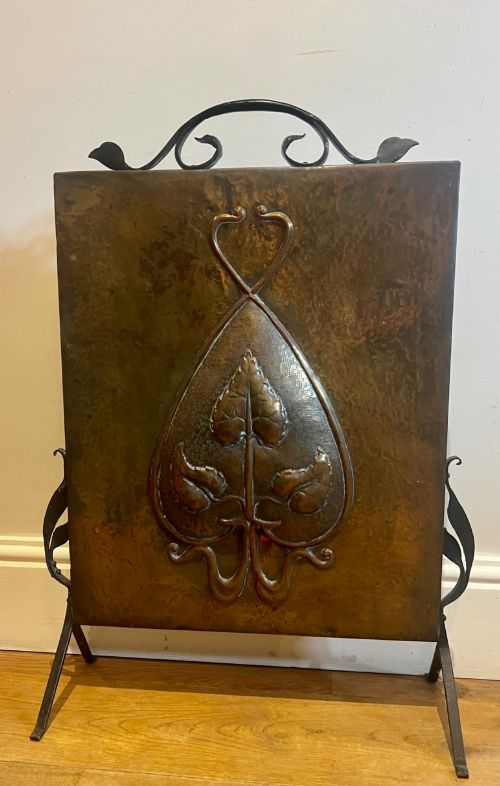
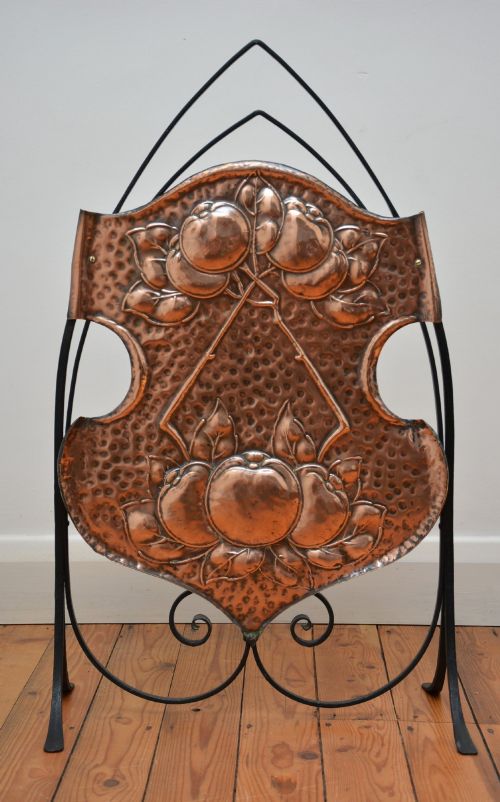
Makers introduced contrasting metals by mounting beaten copper panels onto the iron structures, particularly during the height of the Arts and Crafts movement. Polished iron finishes and darkened patinas reveal the manual labour involved in filing, fitting, and finishing each component.
Retail Price Guide 2026
Typical UK retail prices for wrought iron fireguard, calculated from the Sellingantiques database of over a million retail prices indexed since 2003. This retail price guide relies exclusively on Sellingantiques data; no external sources or auction records are used, so the figures do not describe the wider market.
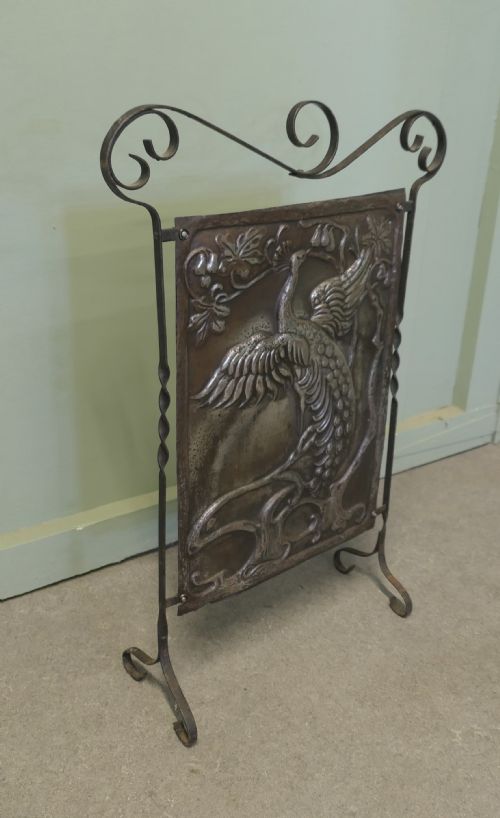
Some screens feature strutting peacocks in iron, ensuring your hearth is guarded by a very watchful bird indeed.
What varies in quality
Quality rests in the deliberateness of the hand-forged elements and the harmony between structural ironwork and decorative inserts like beaten copper panels or woven wire mesh. Heavier gauge iron frames and neatly secured joints separate substantial domestic pieces from lighter, purely utilitarian wire guards.
The artistic ambition of the design dictates distinction, moving from plain protective screens to sophisticated Arts and Crafts or Gothic Revival motifs. Superior examples display careful attention to surface finish, whether left with a deep historic dark tone or brought to an even polished iron lustre.
The Wrought Iron Fireguard Glossary
- Wrought iron
- Tough, malleable iron worked by hand while heated in a forge. Blacksmiths shaped this material into structural frames and decorative scrolls for domestic hearth equipment.
- Nursery fender
- A low protective barrier placed around a hearth to keep children at a safe distance from the fire. These guards typically feature sturdy wire mesh construction.
- Arts and Crafts
- A design movement valuing handcraftsmanship, traditional materials, and simple forms over mass production. Objects from this style often display visible hammer marks and contrasting copper elements.
- Gothic Revival
- An architectural and decorative style drawing inspiration from medieval forms. Pieces in this idiom incorporate pointed arches, quatrefoils, and heavy iron framework.
- Spark guard
- A fine metal mesh screen positioned to catch flying embers from an open fire. These functional items ensure room safety without blocking radiant heat.
Frequently Asked Questions
How do I clean a wrought iron fireguard?
Dust the iron framework regularly with a soft brush and remove stubborn soot using a dry cloth. Avoid harsh chemical cleaners that strip the historic surface patina.
Apply a light microcrystalline wax to polished or bare iron surfaces to protect against moisture and rust. Buff gently with a clean cloth to maintain a soft, even lustre.
Can I use an antique fireguard with a modern fire?
These historical screens serve effectively before modern open hearths, gas grates, and decorative fireplaces. Measure your hearth opening carefully to ensure adequate coverage before placing the screen.
Ensure the feet or base sit level on the hearth floor so the guard remains stable. Keep combustible materials at a safe distance from the barrier during use.
How do I date a wrought iron fireguard?
Examine the construction methods, tool marks, and materials to establish a period context. Hand-forged joints, heavy riveting, and integrated copper panels often point towards Victorian or Edwardian workshops.
Compare stylistic details like Gothic Revival motifs or Arts and Crafts ornamentation against dated examples. Standardised wire mesh and lighter frames frequently indicate early twentieth-century production.