
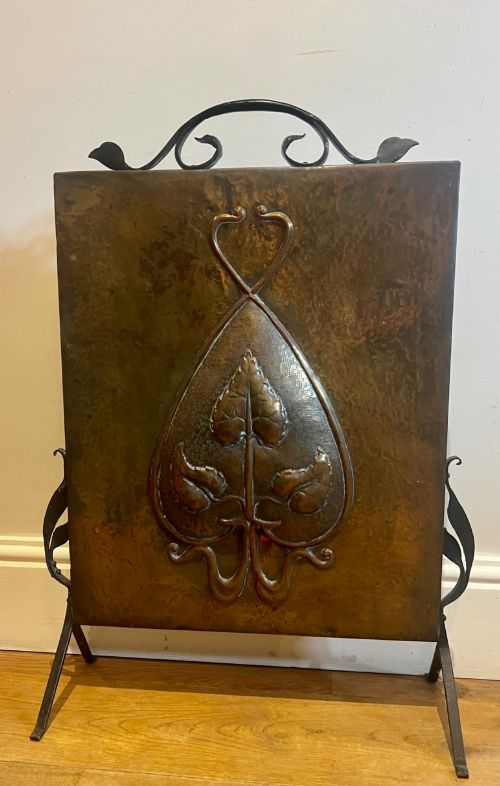
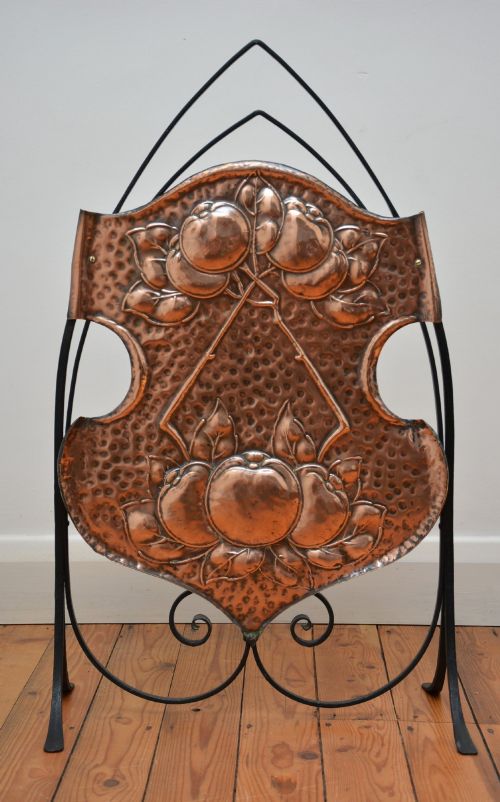
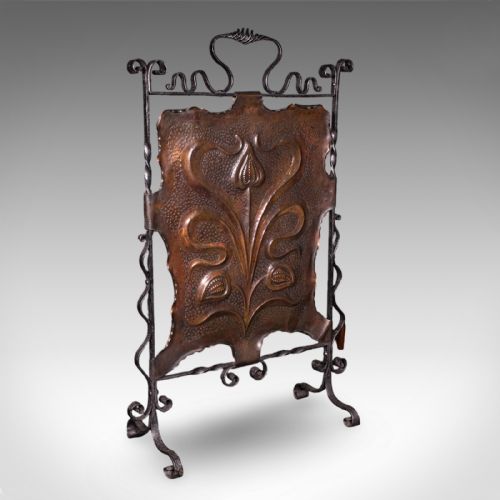


Copper Fire Screen
These copper fire screen pieces bring handcrafted metalwork and period style to your hearth.
Copper Fire Screen
A copper fire screen stands before an inactive hearth to shield the room from residual heat and drafts while adding a decorative focal point to the fireplace. When you search for a copper fire screen, you encounter hearth guards fashioned primarily during the late nineteenth and early twentieth centuries. These protective panels date from the Victorian period through the nineteen twenties, spanning Edwardian production and the peak of the Arts and Crafts movement.
The version you are most likely to meet on this page combines a beaten copper panel with a sturdy wrought iron or oak frame. Many examples display the flowing vegetal lines of Art Nouveau alongside the hammered textures typical of Arts and Crafts workshops. Some incorporate fine wire mesh or folding spark guards designed for safety during active fires.
Materials and construction methods
Makers shaped the central panels from sheet copper, employing repoussé and hand-beating techniques to raise motifs from the reverse side. These metal panels frequently feature embossed designs ranging from abstract sunbursts to birds and botanical forms.
Support structures rely heavily on hand-forged wrought iron, polished steel, or framed oak and elm. Rivets, brass accents, and occasional iron scrollwork secure the copper screen within its protective perimeter.
Copper Fire Screen Retail Price Guide 2026
Typical asking prices for copper fire screen among the pieces listed under this phrase on Sellingantiques today, from the lower quarter to the upper quarter. They describe what is for sale here now, not the wider market.
Listings feature pieces spanning the Victorian era, nineteen ten, and nineteen twenties, uniting copper with wrought iron, oak, and fine wire mesh.
Assessing quality and craftsmanship
Quality rests in the depth and crispness of the hand-beaten repoussé work on the copper panel. Superior pieces exhibit confident, purposeful hammer marks and intricate detailing rather than shallow, machine-pressed uniformity.
The integrity of the frame distinguishes finer examples from simpler utilitarian guards. Heavy gauge wrought iron, secure joints, and well-fitted wooden frames ensure the piece maintains stability around the hearth.
The Copper Fire Screen Glossary
- Repoussé
- A metalworking technique where the artisan hammers the design from the reverse side to create a raised relief on the front. This method defines the decorative panels found on many period hearth guards.
- Art Nouveau
- An international style of art and architecture characterised by serpentine lines and flowing organic motifs. Pieces bearing this aesthetic often feature stylized plant and animal forms.
- Arts and Crafts
- A design movement promoting traditional craftsmanship and simple forms over mass production. Objects from this movement emphasise visible hand-beating and honest construction in metals and wood.
- Spark Guard
- A protective barrier of fine wire mesh or perforated metal designed to catch flying embers. These practical additions allowed fires to burn safely while containing sparks within the hearth.
- Wrought Iron
- Iron that is heated and hammered into shape by hand rather than cast in a mould. This material provides the robust structural frames for supporting heavy metal panels.
Copper Fire Screen: Frequently Asked Questions
What is a copper fire screen?
A copper fire screen is a decorative and protective metal panel placed in front of a fireplace when a fire is not burning. It shields the room from drafts and ash while displaying period metalwork.
These pieces typically date from the late nineteenth and early twentieth centuries, incorporating hammered copper designs mounted in iron or wooden frames.
How do I date a copper fire screen?
Dating relies on stylistic clues such as the flowing organic curves of Art Nouveau or the honest construction of the Arts and Crafts movement. Construction methods like hand-forged ironwork and riveted joints also point to specific periods.
Most examples originate from the Victorian era up through the nineteen twenties, reflecting the prevailing design tastes of those decades.
How were copper fire screens used?
Historically, they served to block unsightly empty grates during warmer months and prevented uninvited drafts from entering the room through the chimney. They also acted as a decorative focal point for the living space.
Folding versions and those with fine wire mesh could additionally function as spark guards while a fire burned in the hearth.
How do I clean a copper fire screen?
Dust the surface regularly with a soft, dry cloth to prevent grime accumulation on the beaten metal. Avoid harsh chemical cleaners that strip the aged patina from the copper.
If polishing is desired, use a mild metal cleaner suitable for antique copper, taking care to avoid any wooden or iron framing elements.