


Arts and Crafts Fireguard
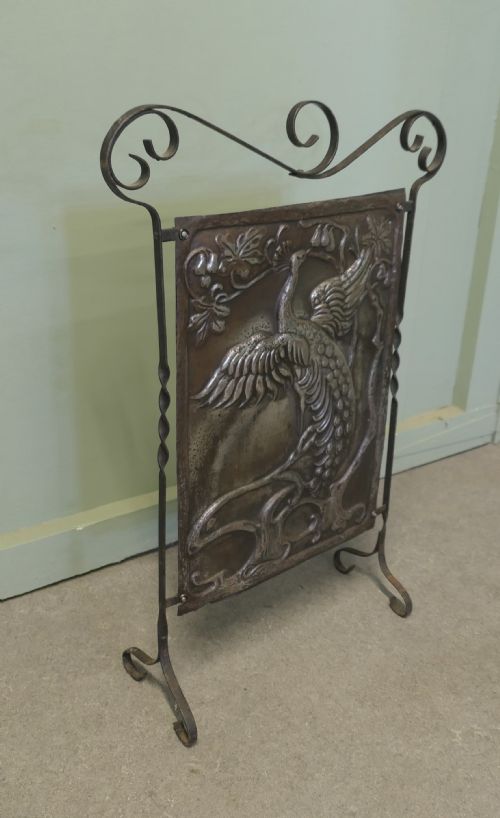
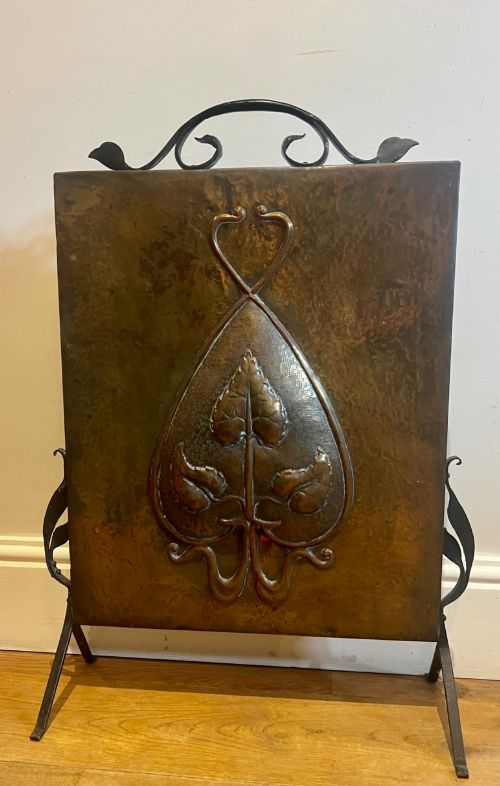
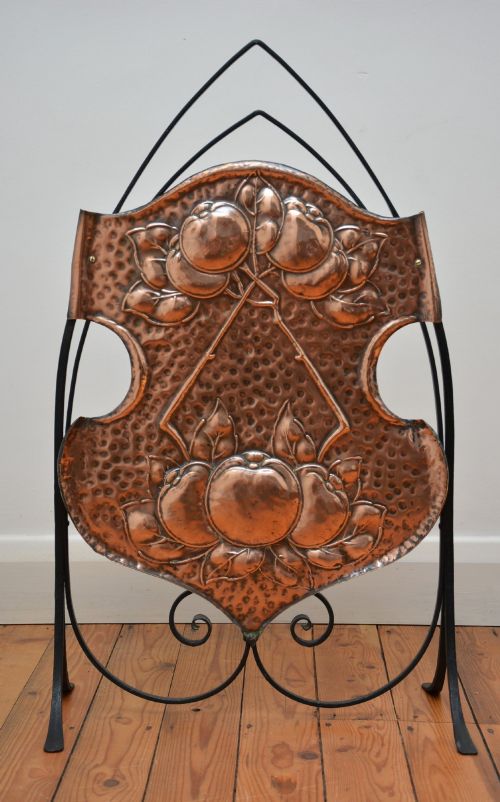
These arts and crafts fireguard pieces combine hand-beaten metal with sturdy iron frameworks to protect a room from stray embers.
What these arts and crafts fireguard examples are
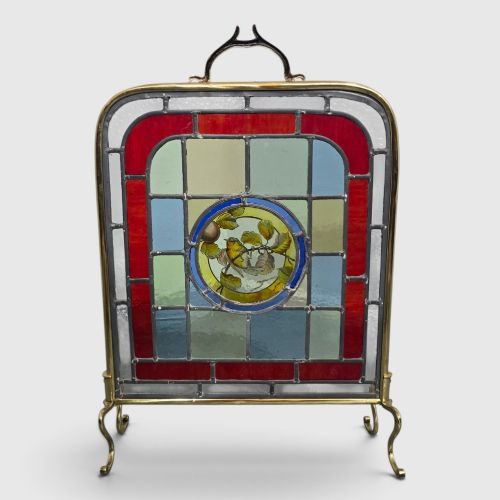
The arts and crafts fireguard typically takes the form of a freestanding screen designed to stand before an active hearth. The listings show forms primarily described as fire screens or fireplace screens, serving both a functional barrier and a decorative focal point.
Buyers will most frequently encounter designs that pair a prominent metal panel with a supporting iron or brass frame. The aesthetic relies heavily on the texture of the metalwork rather than excessive surface ornamentation.
How they were made
Makers constructed these fireguards using combinations of copper, wrought iron, and brass. The metal panels often display hand-beaten or repoussé surfaces that reflect the light of the hearth.
The heavy iron frames provide stability on the floor while securely holding the central metal plate in place. Rivets, bolts, and visible joins are often left unhidden to celebrate the manual labour involved in their creation.
Retail Price Guide 2026
Typical UK retail prices for arts and crafts fireguard, calculated from the Sellingantiques database of over a million retail prices indexed since 2003. This retail price guide relies exclusively on Sellingantiques data; no external sources or auction records are used, so the figures do not describe the wider market.
Every listed item in this category takes the form of a fire screen or fireplace screen utilising hand-worked metal panels.
What varies in quality
Quality in these pieces is dictated by the depth and character of the hand-working on the metal panel. Heavier gauges of copper and more expressive hammer marks distinguish finer workshops from standard production.
The rigidity of the iron frame and the integration of the panel within it also define the standard of the piece. Superior examples display thoughtful detailing in the joinery and a harmonious proportion between the metal screen and its supports.
The Arts and Crafts Fireguard Glossary
- Arts and Crafts
- A design movement originating in the late nineteenth century that prioritised traditional craftsmanship, simple forms, and natural materials over mass production.
- Repoussé
- A metalworking technique where a design is hammered into relief from the reverse side of the sheet. This creates tactile, three-dimensional patterns across the copper panels.
- Fire Screen
- A freestanding panel placed in front of a fireplace when not in use to conceal the empty grate or to block excess heat. They are typically portable and feature decorative fronts.
- Wrought Iron
- Iron that has been heated and shaped with tools by a blacksmith rather than cast in a mould. It provides a tough, fibrous structural support for the decorative metal panels.
Frequently Asked Questions
What is an arts and crafts fireguard?
An arts and crafts fireguard is a decorative protective screen placed in front of a domestic fireplace. It combines a solid metal panel, usually copper, with a supportive iron or brass frame.
These pieces emerged during the late nineteenth and early twentieth centuries. They reflect the movement's emphasis on visible hand-craftsmanship and honest materials.
How do I use a fire screen?
A fire screen stands on the floor directly in front of the hearth opening. It is primarily positioned when the fire is dying down to manage stray embers and sparks.
During warmer months when the fireplace is not in use, the screen remains in place to hide the empty grate. Its decorative metal panel adds visual warmth to the room.
What materials are used in these fireguards?
The primary materials found in these pieces are copper, wrought iron, and brass. Copper usually forms the central decorative panel, often featuring hand-beaten textures.
Frames are typically constructed from wrought iron or brass to ensure stability on the floor. These metals were chosen for their durability and how they patina over time.
How do I date an arts and crafts fireguard?
Dating relies on stylistic markers and construction methods characteristic of the period between the late nineteenth century and the 1910s. The integration of hand-beaten copper panels within exposed iron frameworks points firmly to this era.
Makers of this period favoured unpretentious construction where rivets and structural joins remain visible. These details separate authentic period pieces from later reproductions.