



Arts and Crafts Bowl
When you search for an arts and crafts bowl, you find vessels formed in copper, pewter and silver that champion hand craftsmanship over factory uniformity.
Arts and Crafts Bowl
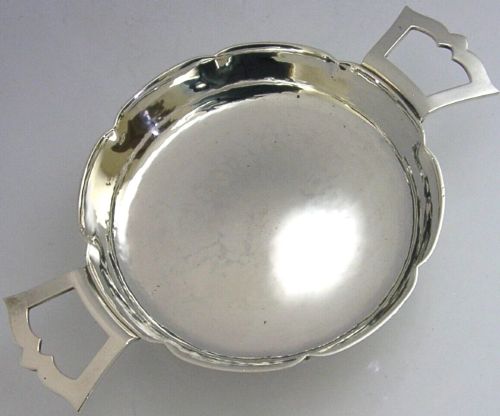
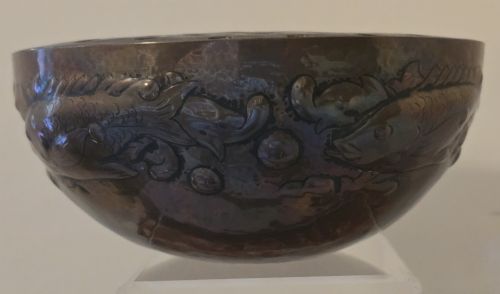
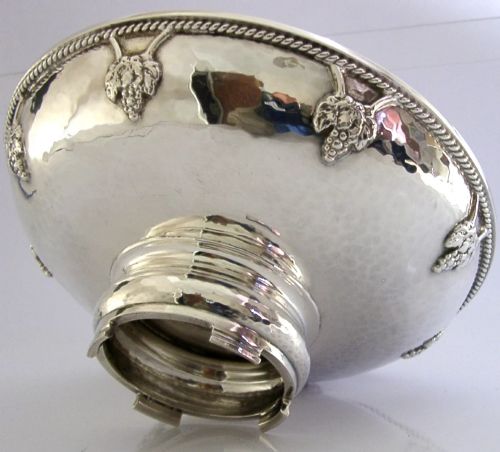
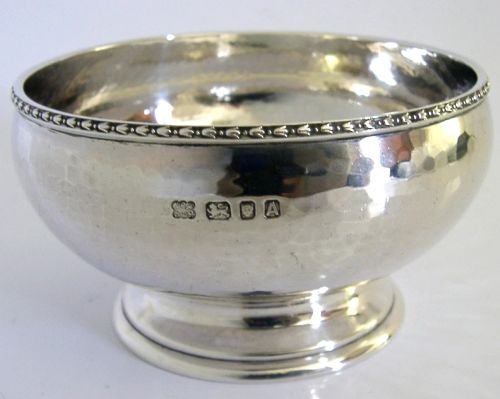
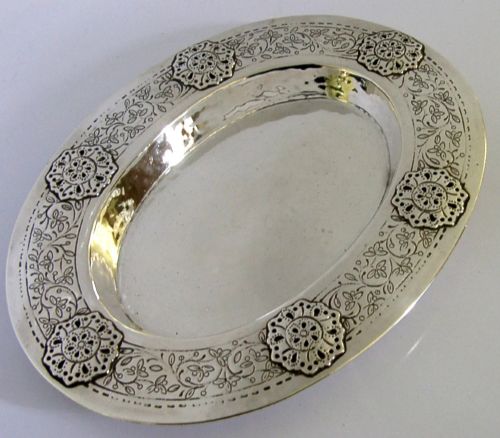
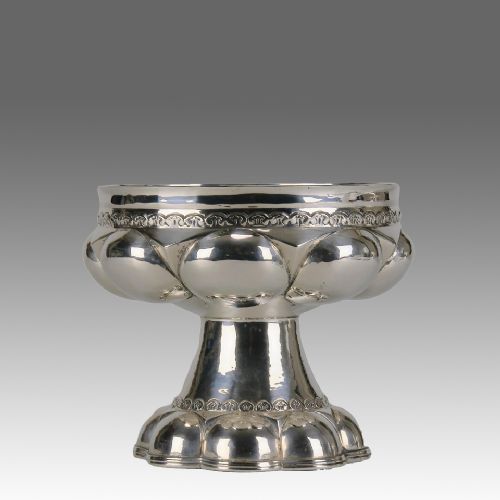
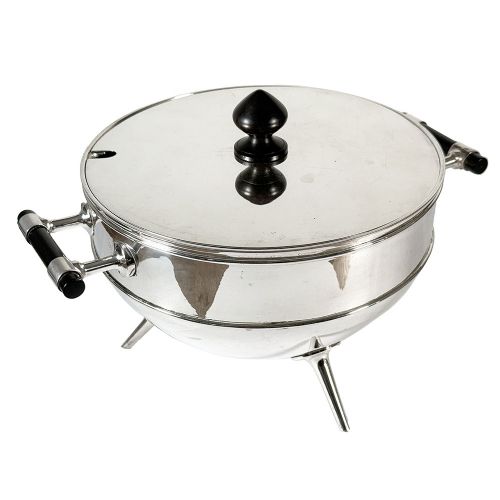
An arts and crafts bowl encompasses domestic vessels created across the late nineteenth and mid twentieth centuries, drawing heavily on aesthetic movement and art nouveau idioms. You will frequently encounter heavy copper centerpieces, hammered silver rose bowls and pewter dishes produced by dedicated guilds and independent metalworkers.
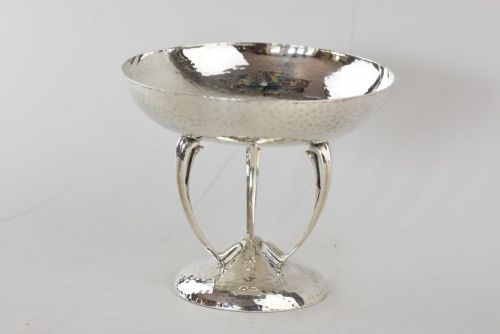
The domestic forms range from simple sugar basins and porringers to pedestal tazze and lidded rose bowls, often embellished with naturalistic motifs. These pieces reflect a deliberate shift toward vernacular design and visible craftsmanship during an era of industrial expansion.
How They Were Made
Makers shaped sheet metals like copper, brass and sterling silver by hand, raising the metal from a flat disc over a stake with repeated hammer blows. This planished technique left characteristic facets across the surface that catch the light and record the physical labour of the artisan.
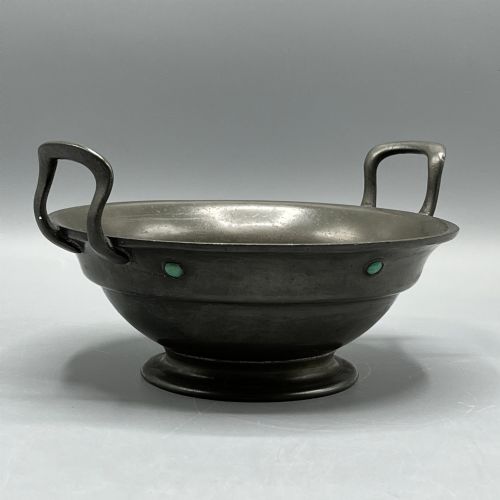
Workshops utilised pewter alloys and cast bronze for vessels, frequently incorporating applied enamel cabochons, Ruskin ceramic inserts or carved oak elements to add texture and contrasting colour. Surface decoration often featured stylised foliage, clover flowers and Celtic interlace patterns integrated directly into the metal body.
Arts and Crafts Bowl Retail Price Guide 2026
Typical asking prices for arts and crafts bowl among the pieces listed under this phrase on Sellingantiques today, from the lower quarter to the upper quarter. They describe what is for sale here now, not the wider market.
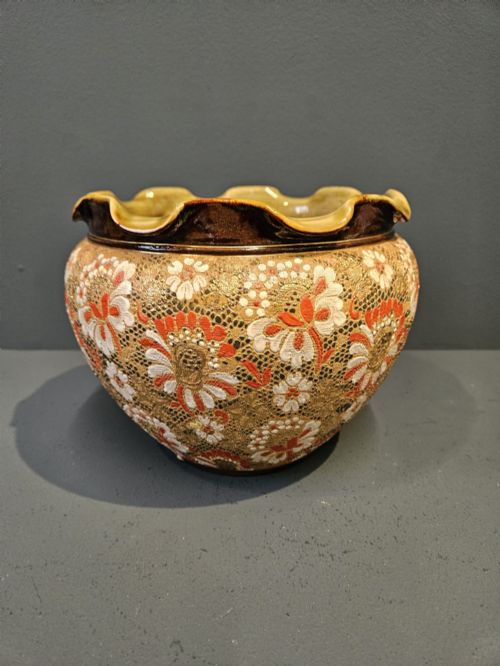
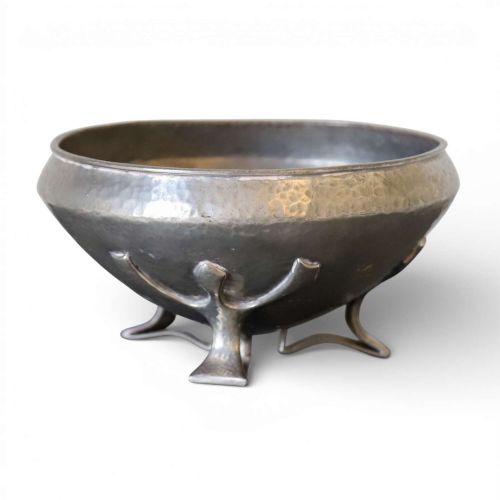
Listings feature hammered silver, copper and Tudric pewter forms alongside Doulton Lambeth stoneware and Moorcroft ceramic bowls.
What Varies in Quality
The distinction between standard commercial output and superior studio work lies in the depth and regularity of the hand-hammering and the integrity of the design. Master silversmiths and guild metalworkers ensured that proportions, weight and surface texture worked in harmony rather than relying on stamped ornamentation.
Quality also rests in the selection of supplementary materials, such as genuine Ruskin pottery cabochons, hand-cut glass inserts or cleanly cast pewter mounts. Pieces retaining original patination and uncompromised structural joins demonstrate a higher grade of original execution.
Liberty and Co·R E Stone·A E Jones·Nathan and Hayes·Doulton Lambeth·Hukin and Heath·John Pearson
The Arts and Crafts Bowl Glossary
- Planishing
- The process of smoothing and shaping sheet metal with a polished hammer, leaving small flat facets across the surface. This technique hardens the metal while creating the characteristic shimmering texture seen on quality bowls.
- Tazza
- A shallow ornamental cup or bowl raised on a high foot and stem, frequently used as a centrepiece dish. These elevated forms allowed makers to display elaborate hammering and applied cabochons.
- Tudric
- The trade name used by Liberty & Co. for their range of pewter holloware, developed in the early twentieth century. It often denotes designs by notable figures like Archibald Knox or Oliver Baker.
- Cabochon
- A convex, polished gemstone or enamelled ceramic piece set without facets into the metal body of a bowl. They provide vibrant splashes of colour against patinated copper or pewter.
Arts and Crafts Bowl: Frequently Asked Questions
How do I clean an antique pewter bowl?
Pewter requires gentle washing in warm soapy water followed by thorough drying with a soft cloth to preserve its natural grey patina. Avoid modern abrasive metal polishes that strip away the historical surface character.
Active rubbing can remove subtle hammer marks and soften the soft grey finish built up over a century of handling.
What is Tudric pewter?
Tudric is a brand of pewter introduced by Liberty and Co. during the early twentieth century, utilising high quality metal alloys. It is distinguished by artistic designs often created by prominent guild designers.
These pieces frequently feature organic motifs, stylized foliage and inset enamel or ceramic cabochons typical of the period aesthetic.
How can I date an arts and crafts bowl?
Dating relies heavily on maker marks, guild stamps, registry numbers and silver hallmarks stamped directly into the metal base or rim. Stylistic clues such as the presence of Ruskin ceramic cabochons or distinct art nouveau lines also help narrow the production era.
Comparing model numbers with known factory catalogues provides a precise production window for pieces by major retailers like Liberty.