


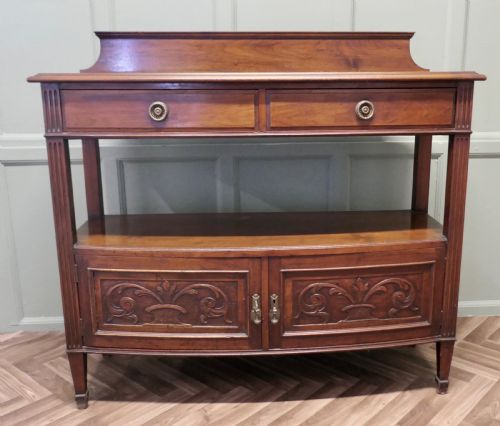


Art Nouveau Side Cabinet
An art nouveau side cabinet brings sinuous natural lines and fine timber into a room, offering both display space and concealed storage.
Art Nouveau Side Cabinet
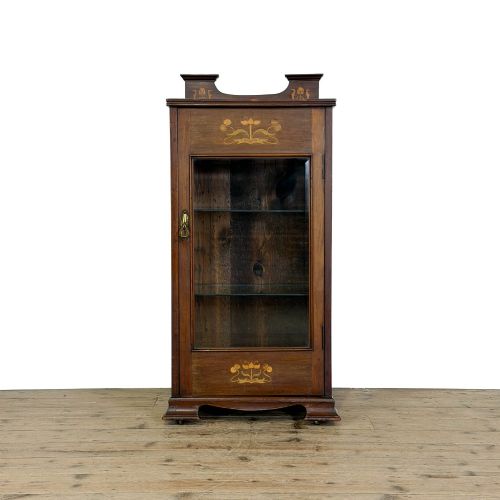
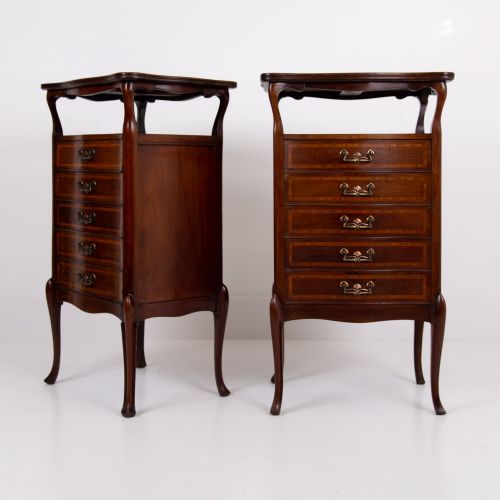
An art nouveau side cabinet spans forms from tall display cupboards and sideboards to bedside tables and music cabinets produced during the late nineteenth and early twentieth centuries. The pieces on this page emerge primarily from the Edwardian period and around nineteen hundred, alongside Victorian examples.
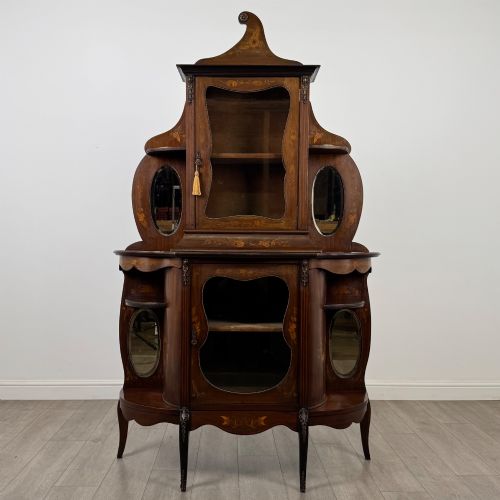
Makers shaped these items in mahogany, walnut, oak, and satinwood, frequently incorporating marble tops, mirror backs, and brass hardware. Buyers encounter both English craftsmanship and French workshop productions, including pieces with marquetry veneers and wood inlay.
How they were made
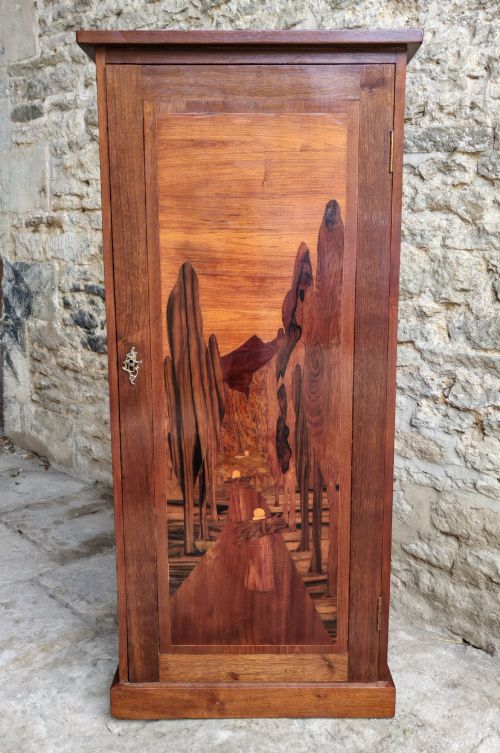
Cabinetmakers constructed carcass frames in solid mahogany, walnut, or oak, applying contrasting satinwood and wood inlay to form floral and botanical motifs. Marquetry veneers added decorative grain patterns across door panels and drawer fronts.
Workshops fitted polished marble slabs to table surfaces and mounted bevelled mirror glass into backboards, securing the structure with brass handles, hinges, and escutcheons.
Listings feature items spanning the Victorian, Edwardian, and nineteen hundred periods, constructed in mahogany, walnut, oak, and satinwood.
What varies in quality
Quality rests upon the precision of the wood inlay and the depth of the carved organic lines, where crisp definition distinguishes superior workshop output from simpler production. The selection of timber grain, particularly in figured mahogany and walnut veneers, dictates visual depth.
The integration of materials such as heavy marble tops and fitted brass hardware separates standard utility items from refined display pieces designed for formal interiors.
J.M Greenhalge & Co.
The Art Nouveau Side Cabinet Glossary
- Marquetry veneers
- Thin sheets of decorative wood arranged to create pictorial designs on furniture surfaces. Craftsmen apply these veneers across door panels to depict flowing floral motifs.
- Wood inlay
- Pieces of contrasting timber fitted into recessed cavities within a solid wood surface. This technique forms geometric and naturalistic patterns characteristic of the style.
- Marble top
- A polished stone slab fitted to the upper surface of a cabinet. This surface provided a durable, heat-resistant top for bedside and side pieces.
- Mirror back
- A glass mirror incorporated into the upper superstructure of a cabinet or sideboard. It reflects light and displays objects placed on the shelf below.
- Coromandel
- A dense, dark exotic timber with contrasting light figuring used for cabinet construction. Artisans valued this hardwood for its distinctive grain patterns.
Art Nouveau Side Cabinet: Frequently Asked Questions
Where were art nouveau side cabinets placed?
These cabinets served multiple functions in period homes, appearing in bedrooms as bedside storage and in reception rooms as display furniture.
Larger sideboards and buffet pieces stood in dining spaces, while smaller tables functioned as music cabinets or occasional stands.
What woods were used for these cabinets?
Mahogany and walnut form the structural foundation for the majority of these pieces, providing a stable base for detailed carving and veneer work.
Satinwood and diverse timber inlays added lighter contrast, while oak and exotic coromandel appeared in specific workshop productions.
How do I date an art nouveau cabinet?
Dating relies on stylistic markers combined with timber choice, hardware design, and construction methods recorded across Victorian and Edwardian examples.
Pieces carrying dates from eighteen ninety to nineteen ten exhibit the transitional shift from late nineteenth-century revival styles to full floral art nouveau.
Are marble tops original to these cabinets?
Marble tops frequently appear on bedside cabinets and wash stands from the late nineteenth and early twentieth centuries to provide a resilient surface.
French and English workshops integrated these stone slabs directly into the timber frame to withstand daily use.