
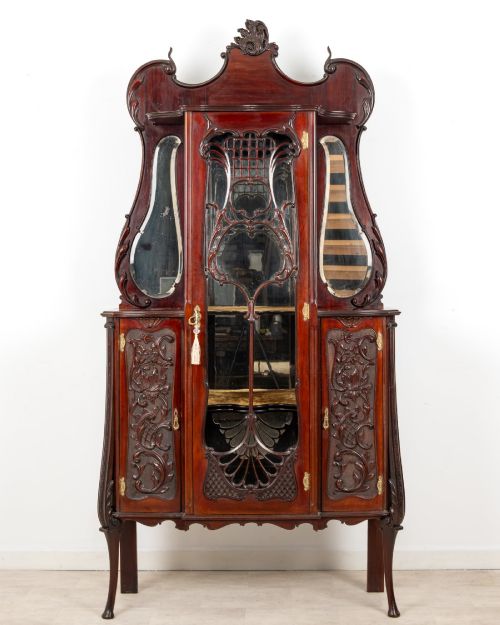
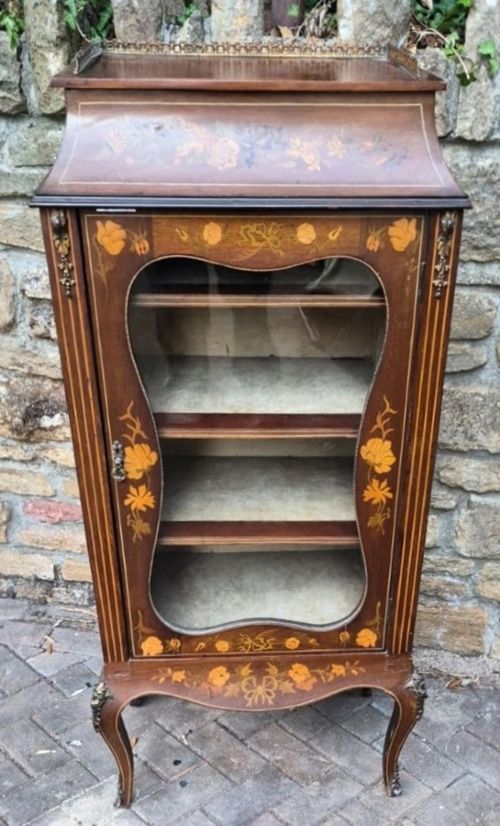
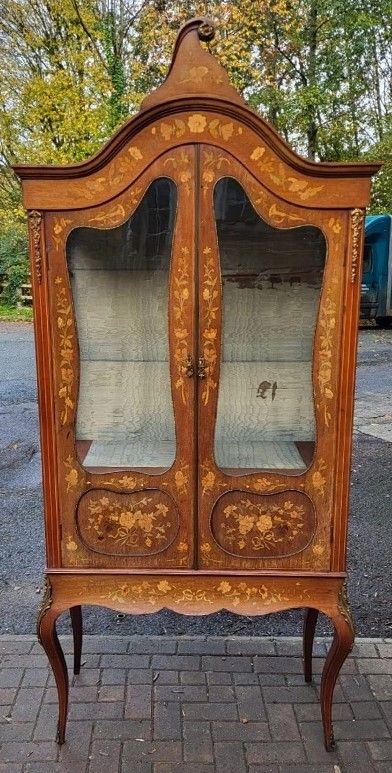


Art Nouveau Curio Cabinet
An art nouveau curio cabinet brings organic line and fine timberwork into a room, offering a glazed display space for treasured objects.
Art Nouveau Curio Cabinet
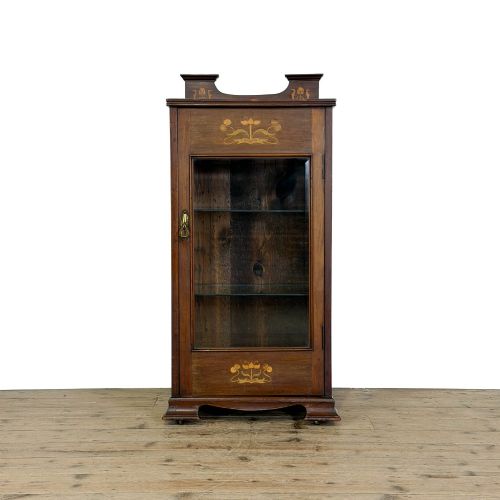
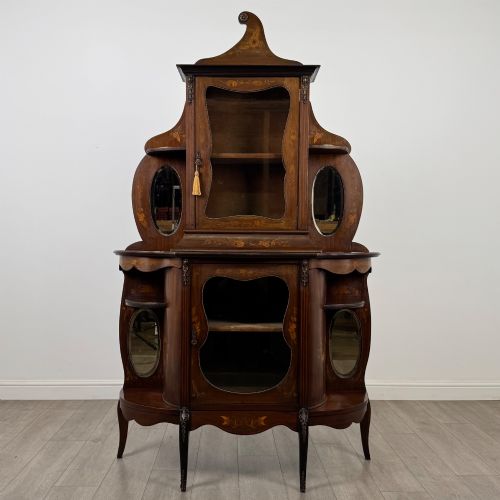
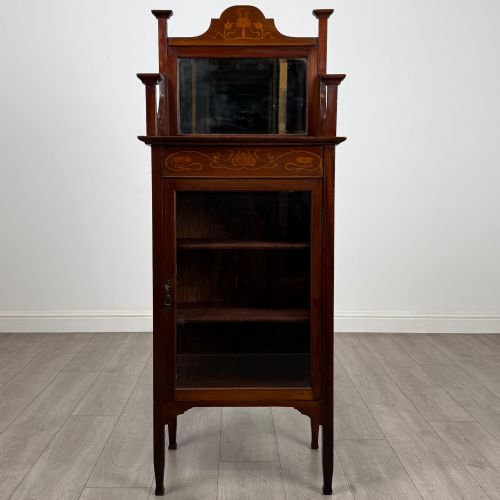
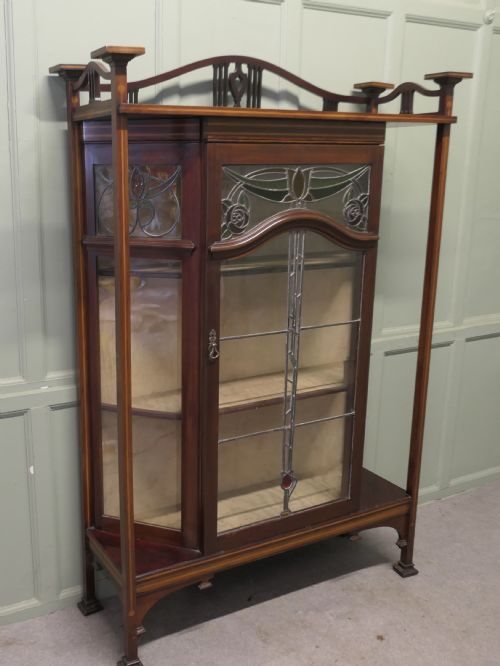
When you search for an art nouveau curio cabinet, you encounter display furniture created during the late nineteenth and early twentieth centuries, spanning the Victorian, Edwardian, and 1900 periods. These pieces serve primarily to exhibit small collections behind glass doors while displaying the characteristic decorative language of the style.
The examples available here take the form of display cabinets, side cabinets, and pedestal cabinets designed to stand against a wall or in a corner. Most pieces adopt upright proportions, featuring glazed upper sections supported by timber frameworks.
Makers drew upon late Victorian and Arts and Crafts traditions, integrating organic motifs into domestic storage. You find both restrained architectural forms and pieces carrying flowing plant-inspired ornament.
How they were made
Construction relies heavily upon mahogany as the primary timber, complemented by fruitwood and satinwood for decorative inlay and marquetry. Workshops employed detailed wood inlay techniques to render floral and curvilinear patterns across the flat surfaces of the cabinetry.
Cabinetmakers incorporated brass hardware for hinges, handles, and escutcheons, often shaping the metal to echo the sweeping lines of the woodwork. Glass panels are set into doors and side panels to permit light into the interior display shelves.
Internal spaces frequently utilise mirror glass at the back to reflect light through the displayed objects. Carved details appear on selected timber frames, adding texture alongside the flat marquetry scenes.
Some cabinets hid their best floral secrets inside the marquetry until light caught the satinwood just right.
What varies in quality
The standard of a piece depends upon the ambition of the timber selection and the execution of the marquetry inlay. Cabinets featuring complex floral marquetry in contrasting fruitwoods and satinwood represent a higher level of workshop output than plain timber carcasses.
The integration of design influences also marks a distinction between standard production and distinguished workshop pieces, such as those originating from specific designer drawings. Hardware finish and the crispness of any carved wooden elements further separate standard utility items from finer examples.
Shapland and Petter
The Art Nouveau Curio Cabinet Glossary
- Marquetry
- Decorative patterns formed by inserting pieces of contrasting veneer into a timber surface. This technique allows for detailed floral and pictorial designs across cabinet doors.
- Fruitwood
- Timber derived from fruit-bearing trees such as pear, apple, or plum, valued for its fine grain and light colour. Cabinetmakers utilised it for subtle colour contrast in inlaid work.
- Satinwood
- A pale, lustrous hardwood sourced from tropical trees, prized for its golden sheen. It appears frequently in detailed inlay work to catch the light.
- Bijouterie cabinet
- A specialised display case designed for small valuable items, jewellery, or curiosities, usually featuring a glazed top or upper section for downward viewing.
- Jugendstil
- The continental European variant of the Art Nouveau movement, sharing the same emphasis on flowing natural forms. Pieces bearing this descriptor display distinct stylistic ties to German and Austrian design currents.
Art Nouveau Curio Cabinet: Frequently Asked Questions
What is an art nouveau curio cabinet?
It is a glazed display piece for small items, made during the late Victorian and Edwardian eras. These cabinets use organic decorative motifs and wood inlay.
They combine practical storage with the characteristic flowing design lines of the period.
How were these cabinets used?
They were placed in sitting rooms and parlours to display collected ornaments, ceramics, and small valuables. The glass doors protected delicate pieces from dust while keeping them visible.
Mirrored backs inside the cabinets helped to brighten the interior and show items from multiple angles.
How do I care for mahogany cabinetry?
Keep the timber away from direct sunlight and heat sources to prevent the wood and veneer from drying out. Dust the surface regularly with a dry cloth.
Apply traditional furniture wax occasionally to maintain the finish of the mahogany and inlaid sections.
How do I distinguish Edwardian pieces?
Edwardian cabinets date from the early twentieth century and frequently incorporate lighter timbers and refined floral marquetry. They often show a lighter, more restrained interpretation of earlier Victorian styles.
Examining the construction methods and secondary woods inside the cabinet helps clarify the period of manufacture.